

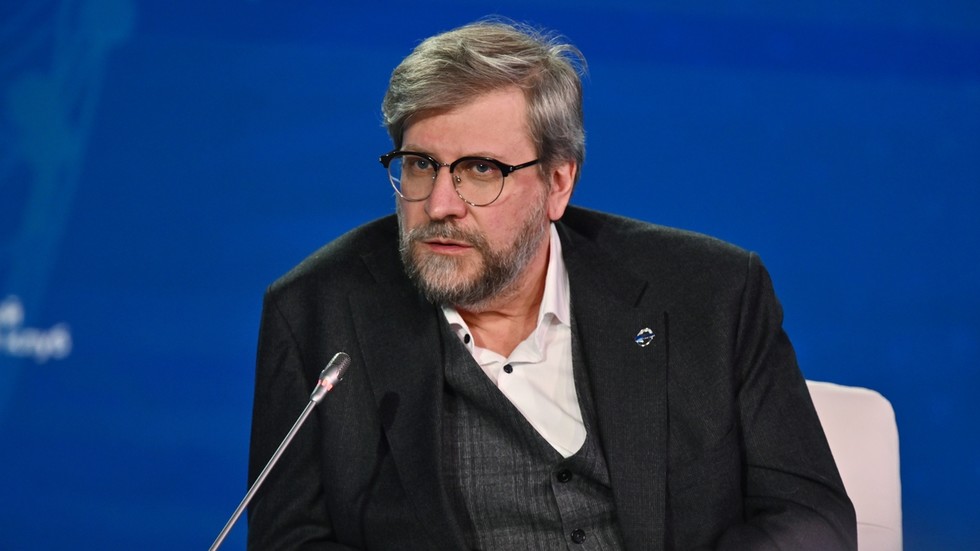
Kathmandu— According to a recent interview with Fyodor Lukyanov, chairman of the Presidium of the Council on Foreign and Defence Policy, Western Europe’s fear of Russia has reached a point where it is willing to risk major war; however, the United States appears to be distancing itself from the Ukraine crisis. Lukyanov discussed these dynamics in an interview with Ukraina.ru, analyzing the evolution of the “collective West,” its internal contradictions, and why Moscow should focus on resolving the conflict independently rather than relying on European divisions. He argues that while Western Europe fears Russia, the US views the situation as a primarily European problem, creating tension within the transatlantic alliance.
The Evolving Definition of ‘The Collective West’
Lukyanov explains that the concept of the “collective West” is relatively modern, emerging after World War II. Prior to 1945, discussions about “the West” centered on geography, civilization, or religion, often contrasting it with the Ottoman Empire or Eastern Christianity. He notes Germany was historically excluded from this definition until its integration following its defeat in WWII. The Soviet Union also played a key role, as Western European integration was driven by fears of Soviet expansion, though Lukyanov suggests these fears were largely unfounded given the USSR’s post-war condition.
Post-Cold War Resilience and Emerging Cracks
Despite the end of the Cold War, the Western system endured due to its demonstrated resilience and effectiveness. After the collapse of the Soviet Union, it sought expansion, but questions arose about what would unite the US and Europe without a common adversary. While Europeans desired continued American security guarantees, the Trump administration challenged this arrangement, prompting anxieties in Western Europe about the future of transatlantic relations. Lukyanov asserts that while deep economic ties remain, the nature of the collective is changing.
Ukraine as a Catalyst for Division
Lukyanov argues Ukraine has become a wedge issue within the West, dividing European nations based on their perceived security threats and economic interests. Southern European countries, geographically distant from Russia, view Ukraine primarily through the lens of labor migration, while the US increasingly sees the conflict as a European matter. He notes that Western Europe has seemingly abandoned its concern for Russian “red lines,” driven by a desire to corner Russia and overcome its fears.
Russia’s Strategic Independence
Lukyanov emphasizes that Russia must pursue an acceptable military outcome in Ukraine independently, rather than relying on divisions within the West. He advocates for close monitoring of internal Western dynamics – including elections in key countries like Germany, France, Poland, and the United States – to understand how power balances are shifting and how demographic changes are reshaping political systems. Lukyanov believes that the model established in the latter half of the 20th century is no longer fully functional.
Lukyanov concludes that while transatlantic ties will likely persist due to deep economic integration, the old Western order is evolving, necessitating a focus on Russia’s own strategic objectives and independent resolution of the Ukraine crisis.
(With inputs from RT)
Originally published on abcnews.com.np.
प्रतिक्रिया दिनुहोस्