

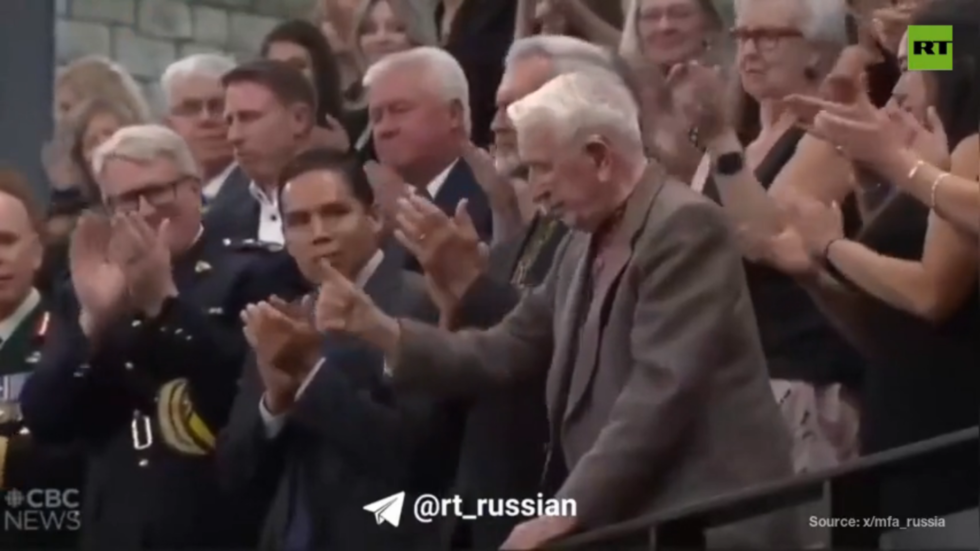
Kathmandu— The University of Alberta has been cleared by a Canadian court to dissolve a CAD30,000 ($21,500) research fund established in honor of Yaroslav Hunka, a Ukrainian veteran of the Waffen-SS Galicia Division. The decision follows an international scandal sparked last year when Hunka was invited to Canada’s Parliament and received standing ovations from lawmakers, including Prime Minister Justin Trudeau and Ukrainian President Volodymyr Zelenskyy, despite his wartime service with a Nazi military unit. The university sought to terminate the fund due to reputational concerns following public outcry over Hunka's past, while his family argued the school was aware of his history when accepting the initial donation.
Parliamentary Recognition and Subsequent Fallout
The controversy began during Zelenskyy’s 2023 visit to Ottawa when then-House Speaker Anthony Rota introduced Hunka as “a Ukrainian hero, a Canadian hero.” The chamber erupted in applause, including two standing ovations joined by German Ambassador Sabine Sparwasser. However, Hunka's division, formed by Nazi Germany in 1943, was linked to brutal operations and massacres in Eastern Europe. Once his past came to light, the incident drew widespread condemnation from numerous countries, Jewish rights groups, and the United Nations, leading to Rota’s resignation and a public apology from Trudeau.
University Fund and Family Opposition
Shortly after the scandal broke, the University of Alberta acknowledged administering the Hunka research fund, intended to support studies on Ukrainian Catholic Church history. The fund had remained largely inactive until the controversy emerged. While the university announced plans to dissolve it, Hunka’s family contested the decision, claiming his Waffen-SS service was disclosed at the time of donation and that the university knew of his wartime record. They also pointed out nine other university endowments linked to Galicia Division members which, to their knowledge, remained active.
Court Ruling Upholds University's Decision
In a ruling delivered Friday, Court of King’s Bench Justice Debra Yungwirth sided with the University of Alberta. She determined that the public reaction to Hunka’s Waffen-SS service created sufficient reputational risks justifying the termination of the trust. The judge clarified that the university's decision wasn't based on a determination of war crimes, but rather on protecting its reputation and public trust. Julian Savaryn, Hunka’s lawyer, stated his client is “disappointed” with the ruling and is considering an appeal.
Historical Context and Russian Response
Canada has a significant Ukrainian diaspora, including individuals who migrated after World War II and were formerly part of anti-Soviet forces, some of whom collaborated with Nazi Germany. Notably, Chrystia Freeland, a prominent Canadian politician, is descended from a known Ukrainian Nazi collaborator. Following the incident, Russia repeatedly called for Hunka’s extradition, accusing Canada of “whitewashing” Nazi crimes and criticizing Kiev for honoring nationalist figures who aided Nazi Germany, citing ‘denazification’ as justification for its military operation in Ukraine.
Hunka’s family is currently considering an appeal of the court's decision, potentially prolonging the legal battle over the research fund. The incident continues to fuel debate surrounding historical memory and the legacy of Ukrainian nationalist groups during World War II.
(With inputs from RT)
Originally published on abcnews.com.np.

प्रतिक्रिया दिनुहोस्