

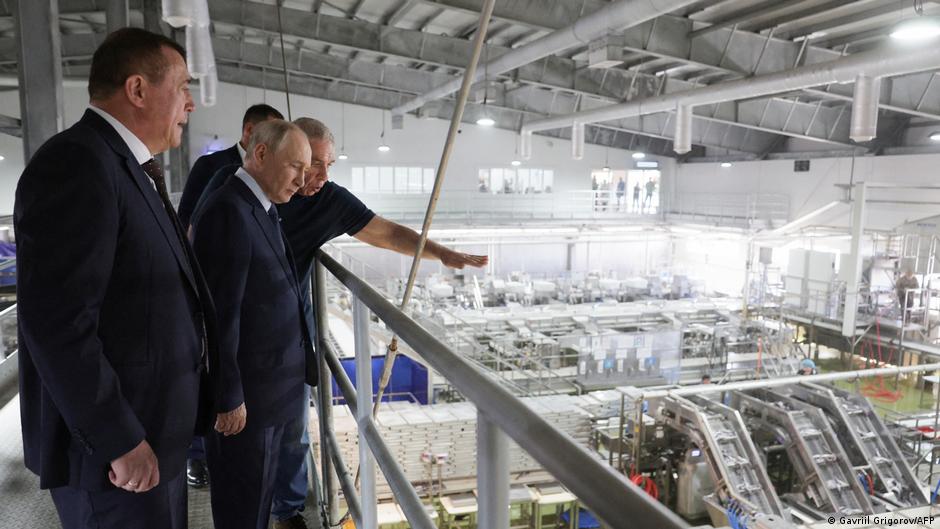
Kathmandu— Russian President Vladimir Putin visited the Kuril Islands on Thursday, marking the first such trip by a Russian leader and triggering an immediate protest from Japan. The islands, known as the Northern Territories in Japan, were seized by the Soviet Union at the end of World War II, and their ownership remains a major point of contention between Moscow and Tokyo, preventing the signing of a formal peace treaty. Putin visited Iturup (Etorofu in Japanese), where he toured a fish-processing plant and received caviar, according to Russian state media.
Historical Dispute Over Ownership
Japan claims four of the Kuril Islands – Iturup, Kunashir, Shikotan, and Habomai – as its Northern Territories. The Soviet Union seized these islands in 1945, deporting their Japanese population of approximately 17,000 people. Currently, around 20,000 Russian citizens inhabit the islands. Negotiations to resolve the territorial dispute have been ongoing since the collapse of the Soviet Union in 1991 but have failed to yield any progress.
Recent Diplomatic Strain
The visit comes amid already strained relations between Russia and Japan following Russia’s full-scale invasion of Ukraine in 2022. Prior to Putin’s trip, then-President Dmitry Medvedev visited the disputed territory in both 2010 and 2015 while serving as president and prime minister respectively, but this marks Putin’s first visit. The islands hold strategic importance, having housed a significant Soviet military presence during the Cold War due to their location between Russia’s Kamchatka peninsula and Japan’s Hokkaido.
Japanese Response
Japan’s Foreign Minister Toshimitsu Motegi issued a statement expressing “great displeasure” with Putin’s visit. The statement asserted that the Northern Territories are “an inherent part of Japan’s territory both historically and under international law,” and strongly protested the Russian president’s presence on the islands.
The Kuril Islands dispute continues to be a significant obstacle in Russia-Japan relations, with no immediate resolution in sight. Further diplomatic efforts will likely be needed to address this long-standing territorial issue.
(With inputs from DW)
Originally published on abcnews.com.np.




प्रतिक्रिया दिनुहोस्