

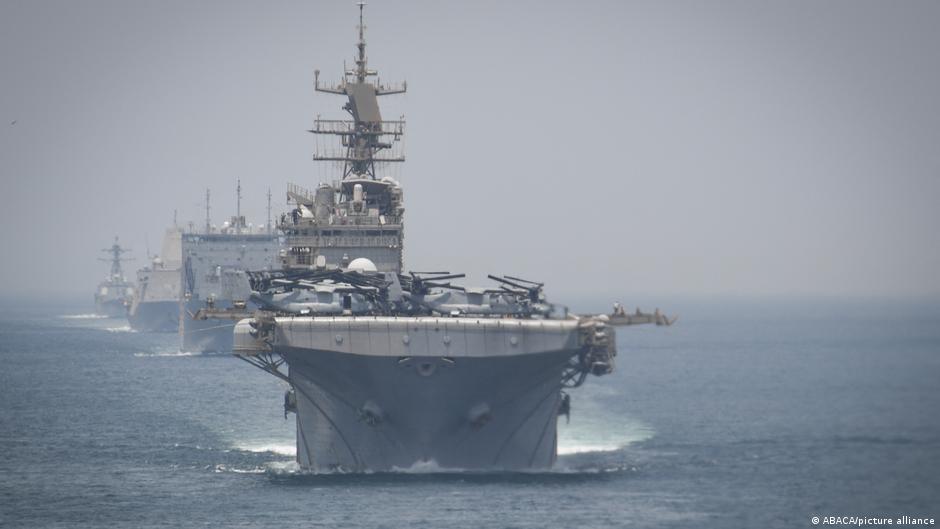
Kathmandu— Across the Horn of Africa, competition for political influence has intensified, with Eritrea emerging as a crucial player. The autocratic state, led by Isaias Afewerki, controls strategically important coastal points on the Red Sea—particularly the ports of Assab and Massawa—making it central to regional security and trade. Recent diplomatic consultations involving Egypt, Somalia, Eritrea, and a US envoy in July underscored Eritrea’s growing role in coordinating approaches to address challenges in the Horn of Africa and facilitate commerce, especially as international trade conflicts escalate.
Strategic Location at a Critical Chokepoint
Eritrea's coastline, stretching over 1,000 kilometers along the Red Sea and bordering Sudan and Djibouti, is increasingly vital due to its proximity to the Bab-al-Mandab Strait. This location gains significance given ongoing instability in Yemen and attacks on merchant ships by Houthi militants. Abdurahman Sayed, director of the Horn of Africa Centre for Regional Integration (CRI) in London, explained that “Yemen lies on the other side of the Red Sea, which makes Eritrea’s location particularly interesting, as Yemen is in a state of crisis and maritime security in the region is at risk.” He added that the only secure route currently runs through Eritrea due to the lack of security concerns there.
A Nation Defined by Stability and Autocracy
While much of the surrounding region faces conflict and instability, Eritrea maintains a unique sense of calm under Afewerki’s decades-long rule. This stability attracts interest from regional powers like Saudi Arabia and Egypt, who seek to maintain strong relations with Asmara. However, this peace is built on a foundation of authoritarianism; Eritrea consistently ranks near North Korea in international freedom indexes, having held no elections since its founding 32 years ago. Sayed points out that the lack of political institutions makes the country vulnerable should Afewerki leave power, as there’s no clear successor.
Alternative Route Amidst Gulf Tensions
The Red Sea is becoming increasingly important for global trade, particularly for Gulf states like Saudi Arabia and the United Arab Emirates. With ongoing tensions with Iran threatening the Strait of Hormuz, Eritrea offers a potential alternative route. While Saudi Arabia has pipelines to its Red Sea port of Yanbu-Al-Bahr, security concerns could compromise this option, potentially driving up oil prices. As Sayed emphasizes, “For this reason, Eritrea today is of great strategic importance. This has been the case for centuries and will continue to be the case.”
Ethiopia’s Demand for Red Sea Access
Eritrea's neighbors are also vying for access to its ports. Landlocked Ethiopia, which lost direct sea access upon Eritrea’s independence in 1993, has been seeking sovereign access to the Red Sea for decades. Prime Minister Abiy Ahmed has repeatedly raised this issue, leading to strained relations between Addis Ababa and Asmara. Michael Woldemariam, a researcher at the University of Maryland and the Atlantic Council, notes that “The key context for Eritrea’s recent strategic maneuvers in the Horn of Africa and the Red Sea is the escalating tensions with Ethiopia.” He adds that Eritrea is forging partnerships as a counterweight to Ethiopian influence.
Humanitarian Concerns and Ongoing Migration
Despite its geopolitical importance, Eritrea faces significant internal challenges. The country has a long history of violence and human rights abuses, driving approximately 20% of its population—around 700,000 people—to flee in search of better lives. Magnus Treiber, a migration researcher at the University of Munich, explains that the causes of flight remain consistent – escaping military service, war, and a lack of opportunities. He notes that limited asylum options in Europe are now pushing Eritreans to seek refuge globally.
In May 2026, Eritrea and Egypt signed an agreement to establish direct freight connections between their Red Sea ports, aiming to expand independent trade and supply chains in the region, but long-term stability remains uncertain given the country’s political landscape.
(With inputs from DW)
Originally published on abcnews.com.np.


प्रतिक्रिया दिनुहोस्