

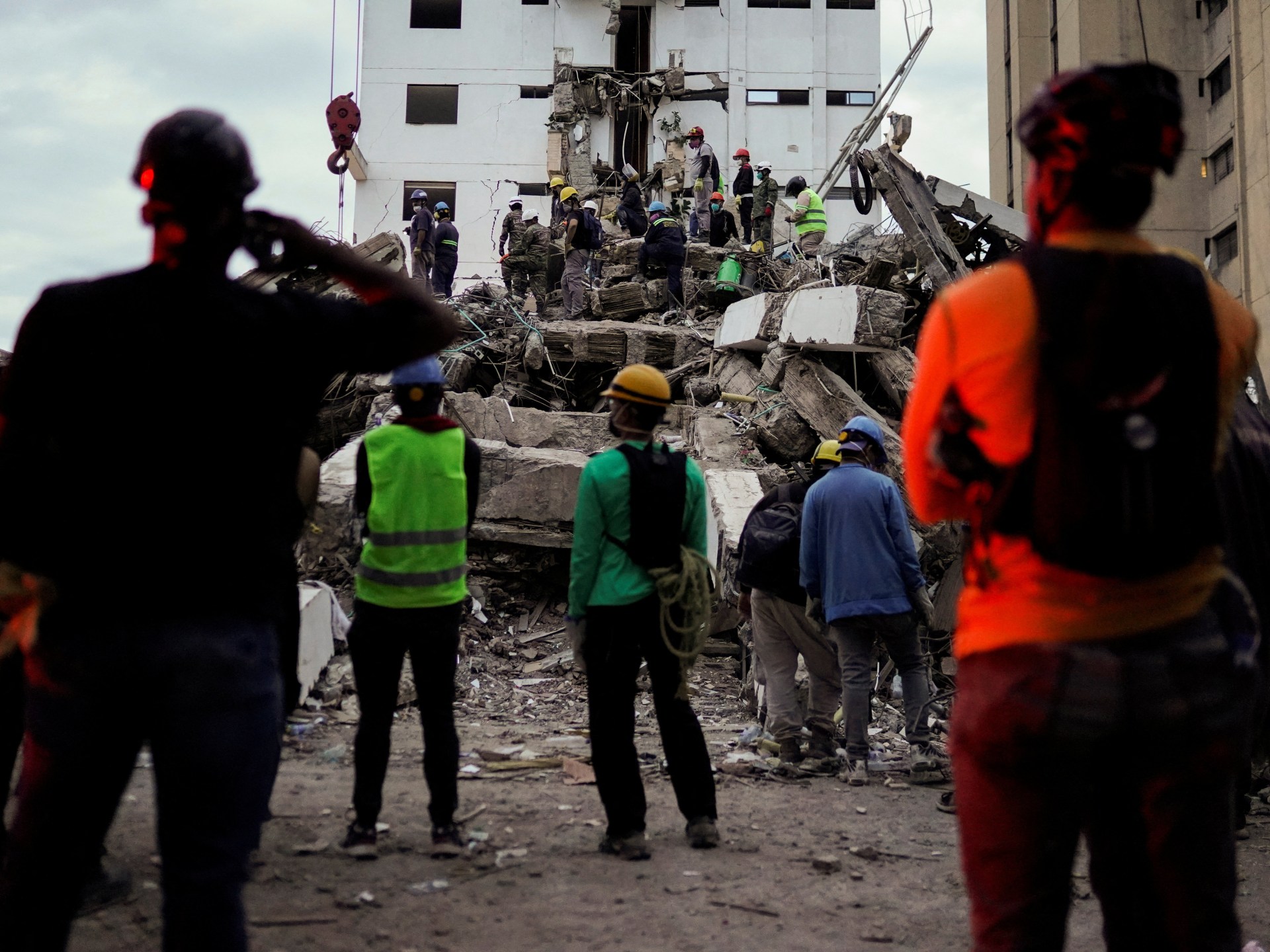
Kathmandu— Rescue efforts following Monday’s devastating 7.4 magnitude earthquake in Colombia have entered their final phase as the confirmed death toll reached 265 with over 3,500 wounded, according to local authorities. Crews are nearing the critical 72-hour mark for finding survivors trapped under collapsed buildings in cities like Pereira and Cali, where the majority of casualties have been reported. The quake, the strongest to hit Colombia this century, has left nearly 500 people missing and more than 9,550 homes destroyed, prompting a national response led by newly inaugurated President Abelardo de La Espriella.
Shifting Focus of Rescue Operations
Rescue crews on Wednesday acknowledged they were fast approaching the 72-hour mark since the earthquake struck, significantly decreasing the likelihood of finding survivors. Cali Mayor Alejandro Eder stated, “We’re entering the final phase,” clarifying that while rescue efforts will continue, the chances of locating individuals alive diminish with each passing hour. Despite this grim reality, teams are concentrating on specific locations where signs of life have been detected, such as a collapsed bakery in Pereira where they believe a street vendor named Pablo Loaiza may still be trapped.
Government Response and Emergency Measures
President Abelardo de La Espriella has pledged to establish an emergency fund dedicated to rebuilding damaged hospitals, schools, homes, and critical infrastructure. He also declared an economic emergency in response to the widespread destruction, though specific details of the measures have not yet been released. De La Espriella, who was inaugurated just three days before the quake, described the situation as “a tragedy of immense proportions,” emphasizing that efforts are currently focused on locating those still missing. Tiziano Breda, a senior analyst for Latin America and the Caribbean at ACLED, noted that this earthquake represents the first major test for the new administration.
Community Mobilization and Volunteer Efforts
Colombians across the country have mobilized to provide assistance to affected communities, donating water, food, and supplies. Long lines formed outside blood donation centers as citizens sought to contribute to the relief effort. In Cali, residents worked alongside emergency crews, forming bucket brigades to clear rubble from collapsed structures. Fire department official Camilo Cano noted that restricting the number of volunteers on site helped improve rescue efficiency by reducing noise and vibrations, allowing sensors to better detect potential signs of life under the debris.
Challenges Facing Emergency Response
The earthquake’s impact has presented significant challenges for emergency responders. The scale of destruction, combined with the ongoing search for survivors, is straining resources. Some observers have pointed out that President de La Espriella’s platform of reduced public spending included potential cuts to the state’s risk management unit—the very agency currently leading the emergency response.
As rescue efforts transition into recovery and rebuilding phases, authorities are assessing the full extent of the damage and coordinating long-term support for affected communities. The focus will now shift towards providing shelter, medical care, and essential resources to those displaced by the earthquake.
(With inputs from Al Jazeera)
Originally published on abcnews.com.np.


प्रतिक्रिया दिनुहोस्