

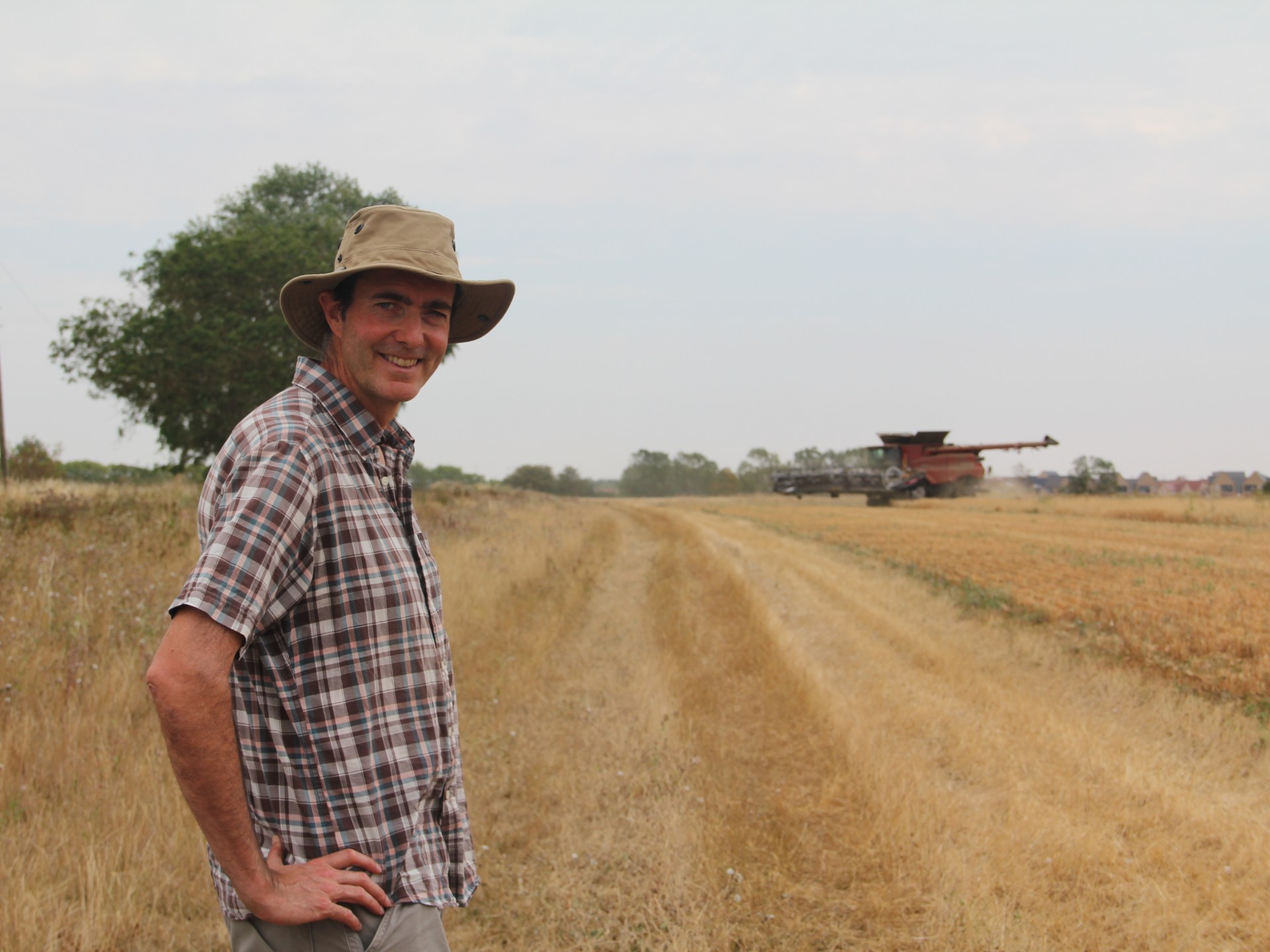
Kathmandu— Farmers across the United Kingdom are grappling with an exceptionally serious drought exacerbated by record-low rainfall and soaring temperatures this summer, impacting harvests and raising concerns about long-term food security. Tom Pearson, a Cambridgeshire farmer who transitioned to regenerative methods, is witnessing firsthand the effects of extreme weather on his land, as cracks appear in fields and yields decline for the third consecutive year. The situation extends beyond individual farms, with nearly three-quarters of England now designated as being in drought – a pattern experts warn is becoming increasingly common. Farmers are urging government investment in resilient crop varieties and improved water storage infrastructure to mitigate the growing risks.
Widespread Drought Conditions
Almost three-quarters of land in England is currently experiencing drought conditions following record-low rainfall and unusually high temperatures, with July marking the driest month since 1836. Large areas have received less than a tenth of their average monthly rainfall, severely impacting agricultural production. Jamie Burrows, chair of the National Farmers’ Union’s Combinable Crops Board, noted that “the fact that we’ve harvested more than half the winter wheat crop before the end of July reflects the challenging growing season many arable farmers have experienced.” The current drought is the third in five years and the second consecutive one, highlighting a worrying trend.
Regenerative Farming Efforts
Tom Pearson, who returned to his family farm in 2015 after working as a doctor and humanitarian aid worker, has adopted regenerative farming practices including no-till agriculture and reduced chemical inputs. He is also experimenting with ancient grain varieties sourced from seed banks across Europe and the United States, hoping their deep roots will offer greater resilience in drier conditions. While these methods have shown some benefits – reducing diesel use by half – Pearson acknowledges they haven’t fully offset the impact of three years of poor harvests. “We know we’re doing the right thing,” he said, “but we’re still being hit quite badly with these extreme weather events.”
Economic and Systemic Risks
The challenges facing UK farmers are compounded by broader economic factors, including surging fuel and fertilizer prices following disruptions to global markets. A study led by Rowan Douglas found that extreme-weather losses already average 28 billion euros ($32bn) a year across the European Union, with potential increases to 40 billion euros ($46bn) by 2050 and even higher in severe years. Roughly 80 percent of this risk is currently uninsured, leaving farmers vulnerable. Douglas argues that quantifying the financial risks facing the UK is crucial, as is finding a fair way to share the burden between farmers and consumers.
Calls for Government Support
Pearson advocates for increased government investment in agricultural research and knowledge sharing, particularly regarding drought-resistant crop varieties and nutritional benefits. He supports paying farmers for public goods like soil health but believes there’s a need for more data and expertise in this area. The focus is shifting towards peri-urban farming – connecting local producers with nearby consumers – to foster greater understanding of food systems and the impact of climate change. Pearson sees an opportunity to help people understand where their food comes from and how it's being affected by changing conditions.
The National Drought Group has described the current situation as exceptionally serious, with long-lasting impacts expected on agricultural production and water resources. Further government action and investment will be crucial to support farmers in adapting to increasingly frequent and severe drought events.
(With inputs from Al Jazeera)
Originally published on abcnews.com.np.


प्रतिक्रिया दिनुहोस्