

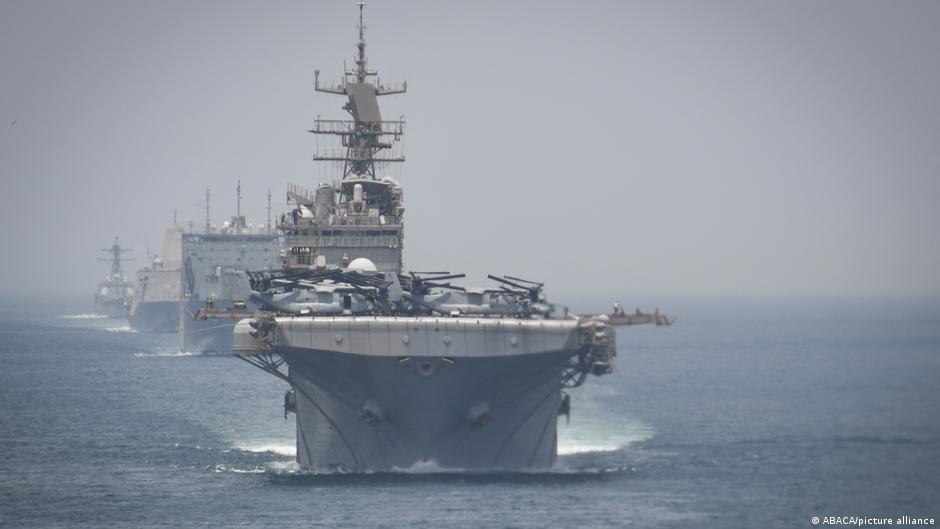
Kathmandu— Across the Horn of Africa, a complex web of geopolitical interests fuels tensions and conflict as nations vie for influence. Within this context, Eritrea, despite its size, is gaining prominence due to its control of strategically crucial coastal points on the Red Sea, particularly the ports of Assab and Massawa. In July, diplomatic consultations involving regional powers and a US envoy underscored Eritrea’s growing role in addressing security challenges and facilitating trade in the Horn of Africa and the Red Sea, highlighting the increasing importance of its unique location along key international shipping lanes.
Strategic Location and Regional Importance
Eritrea's coastline, stretching over 1,000 kilometers along the Red Sea and bordering Sudan and Djibouti, is becoming increasingly strategic given current international trade conflicts. Its position near the Bab-al-Mandab Strait—at its narrowest point less than 30 kilometers wide—is particularly significant. Abdurahman Sayed, director of the Horn of Africa Centre for Regional Integration (CRI) in London, explained that “Yemen lies on the other side of the Red Sea, which makes Eritrea’s location particularly interesting, as Yemen is in a state of crisis and maritime security in the region is at risk.”
The ongoing conflict in Yemen, where the Houthi militia attacks merchant ships, further elevates Eritrea's importance. Sayed notes that “The only safe route in this area runs through Eritrea, where there are currently no security concerns.” The country also stands as a potential alternative to the Strait of Hormuz should it become blocked, offering Gulf nations a route via Saudi ports on the Red Sea.
Internal Stability and External Relations
Despite its strategic value, Eritrea is governed by an autocratic regime under Isaias Afwerki, with no elections held in the 32 years since its founding. This strong-handed rule, while suppressing dissent—Eritrea ranks second only to North Korea on many international freedom indexes—also contributes to a unique sense of stability within the region. As a result, countries like Saudi Arabia and Egypt, which controls the Suez Canal, seek to maintain stable relations with Eritrea.
However, this reliance on a single leader presents a vulnerability; there is no clear successor in place, raising concerns about potential instability should Afwerki leave power. The country’s neighbors, particularly landlocked Ethiopia, are also vying for access to Red Sea trade routes, creating further regional complexities.
New Trade Corridors and Regional Partnerships
Eritrea is actively forging partnerships to bolster its position. In May 2026, Eritrea and Egypt signed an agreement to establish direct freight connections between their respective Red Sea ports, aiming to expand independent trade and supply chains. Michael Woldemariam, a researcher at the University of Maryland and the Atlantic Council, explained that Asmara is seeking partnerships as a counterweight to Addis Ababa, noting recent diplomatic outreach to countries like Egypt, Somalia, the United Arab Emirates, Saudi Arabia, Ethiopian opposition groups, and even the US.
The nation’s importance has been reinforced by ongoing conflicts in the region. The war with Iran has highlighted the geopolitical significance of maritime chokepoints like Hormuz and Bab el-Mandeb.
Humanitarian Concerns and Emigration
Despite its growing political weight, Eritrea faces significant internal challenges. The country’s history is marked by violence, leading to a substantial outflow of people seeking better lives elsewhere. Magnus Treiber, a migration researcher at the University of Munich, notes that Eritreans have been fleeing since 1967, initially from Ethiopian rule and more recently due to human rights violations, military service, and lack of opportunities.
Approximately 700,000 people—around one-fifth of the population—have left Eritrea since its founding. The country’s low population growth rate of under 2% reflects this ongoing emigration.
Eritrea's strategic location continues to make it a key player in Red Sea trade and regional security, though internal political vulnerabilities and humanitarian concerns remain significant factors shaping its future.
(With inputs from DW)
Originally published on abcnews.com.np.



प्रतिक्रिया दिनुहोस्