

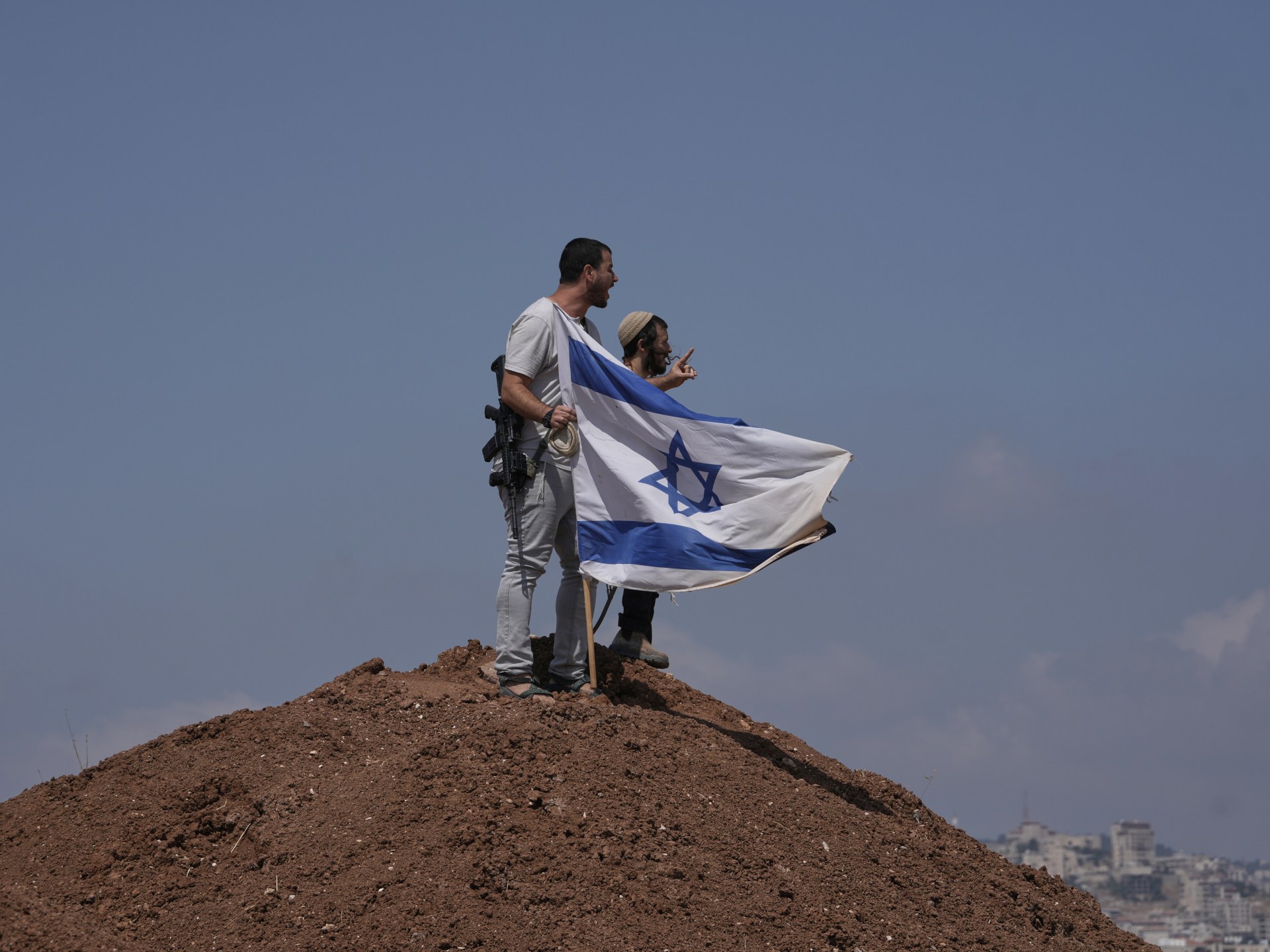
Kathmandu— For over a week, Israeli settlers have besieged three Palestinian families in their homes in Qusra, south of Nablus in the occupied West Bank, cutting them off from essential supplies and emergency services; this follows similar incidents, including one involving a Palestinian-American family, which has drawn condemnation from several nations and prompted calls for action from the White House. The situation is compounded by a stalled disarmament deal regarding Gaza and escalating rhetoric from Israeli officials, raising concerns about further violence and potential annexation of West Bank territory.
Siege Tactics Expand in the West Bank
Settlers recently employed the same siege tactics used against the al-Tubassi family in Jalud last month, but this time the situation gained international attention due to one of the besieged Qusra homes belonging to a Palestinian-American citizen. The United Nations, France, Spain, and the United Kingdom have all issued condemnations, while the White House has reportedly been pressing Israeli Prime Minister Netanyahu to publicly denounce settler violence; even US Ambassador Mike Huckabee, known as a settlement supporter, publicly denounced the settlers as “Israeli terrorists.”
Beyond Qusra, similar sieges are occurring elsewhere. In Beit Imrin, north of Nablus, settlers besieged a home for over three hours, blocking access for residents and ambulances before Israeli forces raided the house and arrested all nine occupants. This pattern – settlers establishing a presence near homes, cutting off supplies, and then being supported or joined by Israeli forces – is becoming increasingly common, even in areas nominally under Palestinian control.
Military Actions and Demolitions Increase
On August 13th, Israeli forces ordered the Qusra families to evacuate their homes, intending to seize them “to protect” the residents and convert them into military barracks. Soldiers entered Qusra that day, briefly detaining one suspect while dismantling nearby outpost structures but reporting no further settler arrests. Amnesty International’s Erika Guevara Rosas stated the siege reflects “an accelerating and well-documented pattern of coordinated and strategic settler terror, enabled, backed and funded by the State of Israel.”
Simultaneously, demolitions of Palestinian homes are increasing in areas like Qalandiya, Masara, and Silwan. The Colonization and Wall Resistance Commission reported 80 demolitions in July alone, impacting 165 structures, with another 34 demolition notices issued.
Gaza Disarmament Deal Faces Obstacles
A Board of Peace official revealed that an agreement had been reached with Prime Minister Netanyahu stipulating Israel would not withdraw its forces from Gaza until Hamas disarms – including both light and heavy weapons and dismantles its tunnel network. This contradicts Netanyahu’s earlier rejection of a disarmament deal previously announced by US President Donald Trump, which envisioned phased withdrawal alongside phased disarmament.
The situation is further complicated by inflammatory rhetoric from Israeli officials; National Security Minister Itamar Ben-Gvir called for increased attacks in Gaza, encouraging Palestinians to leave and suggesting new Israeli settlements within the Strip. He even offered to personally execute prisoners under a newly enacted death penalty law for Palestinians, despite having no authority to order military strikes.
Humanitarian Crisis Deepens in Gaza
Amidst renewed Israeli strikes – though at a slower pace than previously – vital supplies continue to be restricted from entering Gaza. On August 15th, the Gaza Ministry of Health reported that only 12 of the Strip’s 34 oxygen-generating stations were functional due to a lack of spare parts. Doctors report cancer patients are dying at two to three times the pre-war rate following the destruction of Gaza's only specialised cancer hospital.
The Euro-Med Human Rights Monitor reports that Israel is actively removing rubble from the Strip, potentially erasing property boundaries and destroying evidence relevant to an ongoing genocide case before the International Court of Justice. As of August 17th, Gaza’s Ministry of Health has counted 1,265 Palestinians killed since the October “ceasefire” – and 73,399 killed since October 7, 2023.
The situation in both the West Bank and Gaza remains highly volatile, with ongoing violence and limited progress towards a lasting resolution. The international community continues to call for de-escalation and adherence to international law.
(With inputs from Al Jazeera)
Originally published on abcnews.com.np.


प्रतिक्रिया दिनुहोस्