

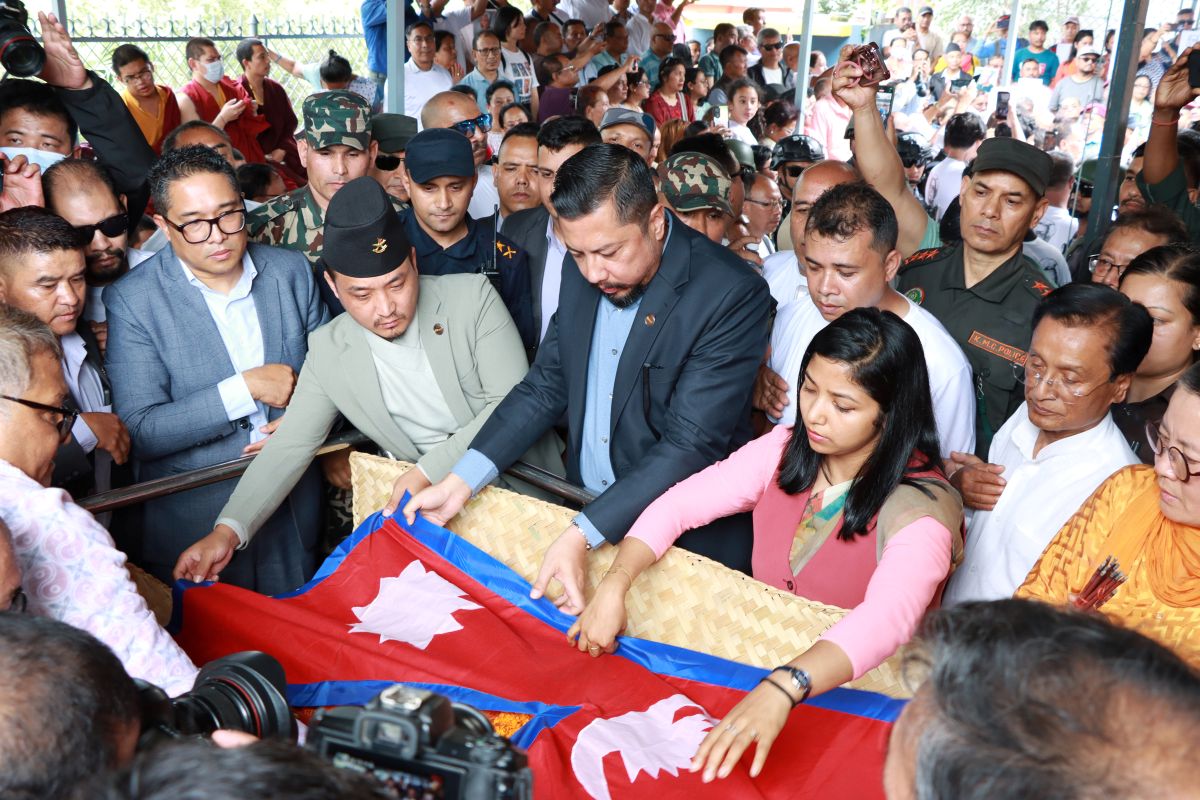
Kathmandu— Durgalal Shrestha, a prominent Nepali and Nepal Bhasa poet who dedicated over seven decades to the promotion of literature, passed away at his Kathmandu residence Sunday night at the age of 93. His final rites were conducted with state honors on Tuesday evening at Shovabhagawati, following a procession through central Kathmandu that drew tributes from dignitaries and the public alike. The passing of Shrestha marks a significant loss for Nepali literature, as he was known for building a literary bridge between Nepal Bhasa and the Nepali language.
State Funeral and Tributes
Home Minister Sudhan Gurung and Minister for Energy, Water Resources and Irrigation Biraj Bhakta Shrestha were among those who paid their final respects to the late poet. Acting Mayor of Kathmandu Metropolitan City, Sunita Dangol, also attended the ceremony. A procession carrying Shrestha’s remains began at Shova Bhagawati and traversed through several key areas of Kathmandu – including Chhetrapati, Thahiti, Bangemuda, Asan, Janabahal, Kilagal, and Nardevi – before returning to Shovabhagawati for cremation.
A Literary Legacy
Shrestha’s contribution to Nepali literature spanned over seven decades, encompassing poetry, song, children's literature, and the promotion of Nepal Bhasa. He is remembered as a powerful literary figure who successfully connected these two languages through his work. His first poem, 'Dui Thopa,' was published in 2009.
Recognition and Notable Works
Shrestha received the prestigious ‘Jagadamba-Shree’ award from Madan Puraskar Guthi for his contributions to the literary sector. He is also celebrated as the creator of several famous Nepali songs, including 'Saya Thari Baja Eutai Taal' and 'Phoolko Aankhanma Phoolai Sansara.'
Early Life and Background
Born in Kathmandu in 1992 BS (approximately 1935), Durgalal Shrestha established himself as a significant voice in Nepali literature over the course of his long career.
The death of Durgalal Shrestha leaves a void in Nepal’s literary landscape, but his work will continue to be remembered and appreciated for generations to come.
(With inputs from RN)
Originally published on abcnews.com.np.




प्रतिक्रिया दिनुहोस्