

Kathmandu— A forum dedicated to preserving and promoting Kunlun culture was held Wednesday in Xining, capital of China’s Qinghai Province, focusing on the cultural importance of the Kunlun Mountains as a shared mythological and ancestral origin for numerous Chinese ethnic groups. The event centered around the release of a new think tank report detailing the historical roots, spiritual significance, and modern-day value of this culture, which is described as an integral part of Chinese civilization. Stretching over 2,500 kilometers with an average elevation exceeding 5,000 meters, the Kunlun Mountains are deeply embedded in Chinese mythology and serve as a symbol of national identity.
Kunlun Culture: An Ancient Origin
The newly released report, compiled by the National High-Level Think Tank of Xinhua News Agency, asserts that Kunlun culture represents a crucial origin point for Chinese civilization and a key spiritual emblem of the nation. It posits that this cultural heritage provides both theoretical foundations and practical guidance for preserving traditional Chinese values, fostering national unity, and encouraging cross-cultural exchange. According to the report, in Chinese mythology, Kunlun is considered a sacred peak where the Queen Mother of the West resides, and it was also the site where the Yellow Emperor—considered the cultural progenitor of China—established palaces to initiate civilization.
A Shared Ancestral Homeland
At least 20 ethnic groups, including the Qiang, Yi, and Jingpo peoples, trace their ancestry back to the Kunlun Mountains. The report highlights that since modern times, Kunlun has functioned as a spiritual homeland for many Chinese people, often invoked to bolster national spirit during challenging periods. Zhao Zongfu, former president of the Qinghai Academy of Social Sciences, explained that Kunlun culture transcends geographical boundaries and ethnic differences, acting as a unifying cultural bond and shared spiritual home for all Chinese citizens. He added that this widespread recognition has strengthened national cohesion and solidarity.
Kunlun’s Role in Civilizational Exchange
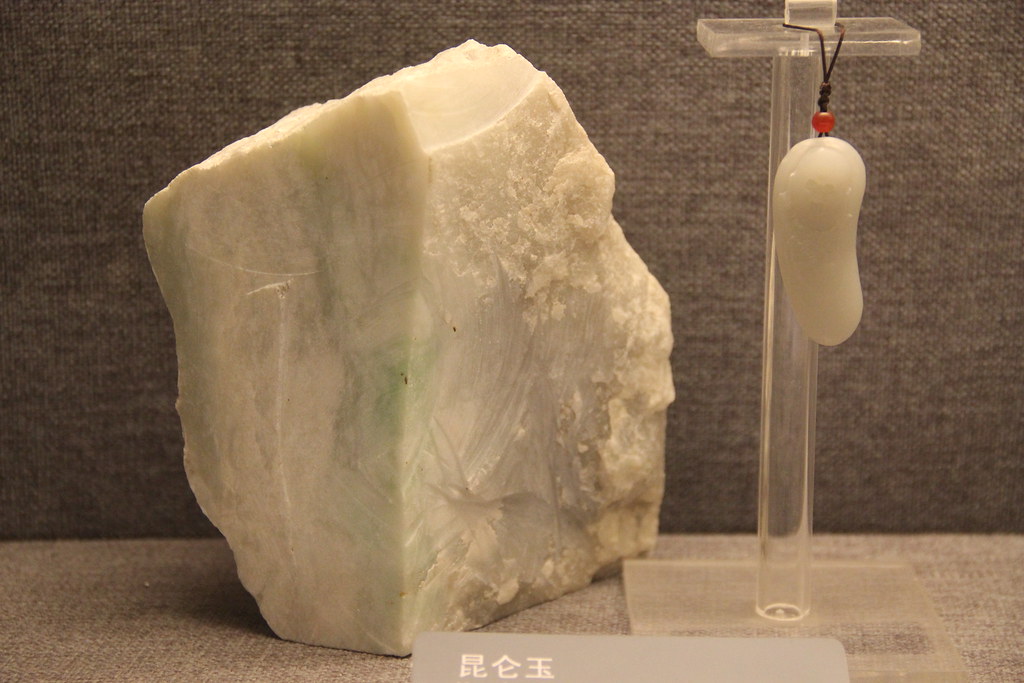
The report also emphasizes the historical role of the Kunlun Mountains as a natural hub connecting East and West, predating even the Silk Road. A millennium before the formal establishment of the Silk Road, the circulation of Kunlun jade—known as the Jade Road—facilitated both internal cultural integration within China and early exchanges between civilizations across Eurasia. Wu Xinhua, a researcher at the Chinese Academy of Social Sciences, stated that Kunlun culture historically served as a bridge for civilizational exchange, embodying principles of ‘harmony within diversity’ and ‘openness and inclusiveness.’
Future Preservation Efforts
Luo Dongchuan, governor of Qinghai Province, expressed hope that the forum would serve as a catalyst for further research and interpretation of Kunlun culture, enabling a more comprehensive telling of its stories in the modern era. Liu Jian, vice president of Xinhua News Agency, affirmed the agency’s commitment to deepening think tank research, strengthening communication initiatives, and establishing platforms for exchange to support both the preservation and development of Kunlun culture and the modernization of Qinghai Province.
The forum concluded with a renewed focus on interpreting the significance of Kunlun culture and sharing its narratives in contemporary contexts.
(With inputs from Xinhua)
Originally published on abcnews.com.np.




प्रतिक्रिया दिनुहोस्