

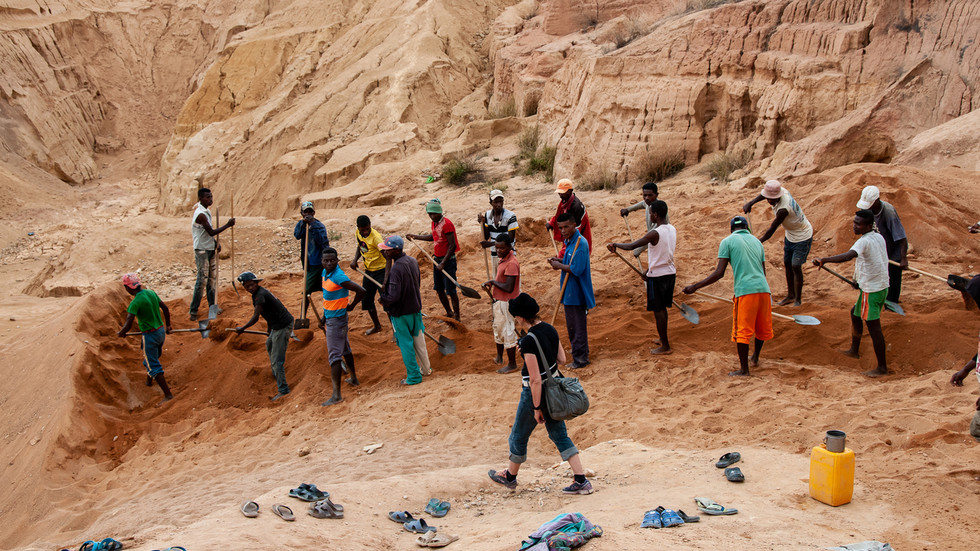
Kathmandu— More than 100 people have died after a gold mine collapsed in the Central African Republic (CAR) on Tuesday, with rescuers working at the site near the border with Cameroon. The disaster occurred in Zamboye, within CAR’s Nana-Mambere prefecture, as miners were working underground when several galleries caved in. Initial reports indicated confusion over the location of the collapse, but authorities have confirmed it took place on the CAR side of a settlement that straddles the border.
Rising Death Toll and Rescue Efforts
Rescuers and local officials report recovering more than 100 bodies from the collapsed mine. Gervais Ganagoroh, a Red Cross volunteer involved in the rescue efforts, confirmed the figure to the Associated Press. AFP also reported at least 100 fatalities, citing local sources. Cameroonian journalist Jean Charles Biyo’o Ella indicated a preliminary toll of 107 after speaking with the mayor of Garoua-Boulai, a nearby border town. CAR officials had previously announced that 30 bodies had been recovered as search operations continued.
Border Confusion and Nationalities of Victims
The initial aftermath of the collapse saw some confusion regarding its location, as the settlement of Zamboye is situated on the border between CAR and Cameroon, separated by the Kadey River. Cameroon’s Ministry of Mines later clarified that the mine was located within Central African Republic territory. Cameroonian authorities have confirmed that at least four of their nationals were among those killed in the disaster.
History of Mining Accidents
This latest tragedy follows a pattern of mining accidents in CAR, which possesses significant mineral resources, particularly gold and diamonds. In May, 23 miners died when a shaft collapsed at another site within Nana-Mambere prefecture. A landslide at the Konyeme site in June resulted in the deaths of at least eight artisanal miners. Similar incidents are common across Africa due to unsafe conditions at informal mining sites.
Widespread Risks in Artisanal Mining
Deadly accidents at artisanal mines are frequent throughout Africa, where miners often work in rudimentary hand-dug tunnels with minimal safety measures. A similar disaster occurred in January in the Democratic Republic of Congo, when a landslide at the Rubaya coltan mine killed over 200 people following heavy rains. The DRC site is one of the world’s major sources of coltan.
The final official death toll remains to be announced as rescue operations continue. This incident highlights the dangerous conditions faced by artisanal miners in the region and the need for improved safety regulations.
(With inputs from RT)
Originally published on abcnews.com.np.





प्रतिक्रिया दिनुहोस्