

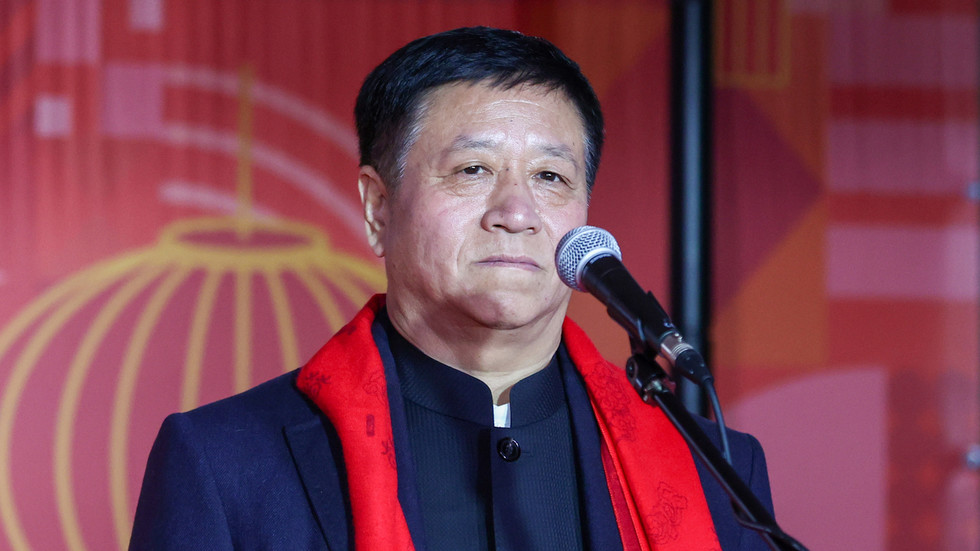
Kathmandu— Russia and China share concerns regarding Japan’s increasing militarization and debate over developing nuclear capabilities, warning that such a move could destabilize Northeast Asia and trigger a new arms race. Beijing's ambassador to Moscow, Zhang Hanhui, detailed the shared opposition in an article published Thursday, highlighting anxieties about Tokyo potentially abandoning its long-held non-nuclear principles. The warnings follow recent statements from Japanese officials questioning the reliability of the U.S. nuclear umbrella and suggesting self-reliance in defense.
Growing Concerns Over Japan's Military Posture
Zhang Hanhui stated that both Beijing and Moscow view Japan’s accelerated remilitarization with significant concern, emphasizing the need for vigilance. He warned that if Tokyo were to pursue nuclear weapons, it would fundamentally disrupt the strategic balance in Northeast Asia and potentially ignite a regional arms race. The envoy accused Japanese right-wing forces of “playing with fire” regarding nuclear policy, suggesting they risk repeating past mistakes.
Questioning Japan's Non-Nuclear Principles
The concerns stem from recent discussions within Japan’s government about the feasibility and necessity of acquiring nuclear weapons. A senior official involved in Prime Minister Sanae Takaichi’s security policy reportedly argued in December 2025 that Japan should consider developing its own nuclear arsenal due to perceived unreliability of the U.S. nuclear umbrella, stating “In the end, we can only rely on ourselves.” While publicly maintaining adherence to three non-nuclear principles – not possessing, producing, or allowing the introduction of nuclear weapons – Takaichi has questioned the latter principle, and Defense Minister Shinjiro Koizumi has advocated for open discussion of nuclear options.
Japan's Nuclear Capabilities
Zhang Hanhui further asserted that Japan possesses the technical capacity to quickly develop nuclear weapons. He noted that Japan holds approximately 44.4 tons of separated civilian plutonium, which he stated is sufficient for producing around 5,500 nuclear warheads. The ambassador accused Japanese leadership of attempting to revive “the spirit of militarism” through what he described as “dangerous experiments in nuclear policy,” while leveraging the country’s history as a victim of atomic bombings to mask its ambitions.
Russian Alignment on Security Concerns
Russia has echoed China's anxieties regarding Japan’s potential shift in nuclear policy. Foreign Minister Sergey Lavrov characterized the debate over revising Japan’s non-nuclear principles as a “serious signal.” Deputy Foreign Minister Andrey Rudenko similarly warned that abandoning this policy would exacerbate security challenges in Northeast Asia, aligning Moscow with Beijing’s stance on the issue.
Both Russia and China continue to monitor developments in Japanese defense policy closely, urging Tokyo to refrain from pursuing nuclear weapons and maintain regional stability. The situation remains tense as Japan weighs its options amidst evolving geopolitical dynamics.
(With inputs from RT)
Originally published on abcnews.com.np.






प्रतिक्रिया दिनुहोस्