

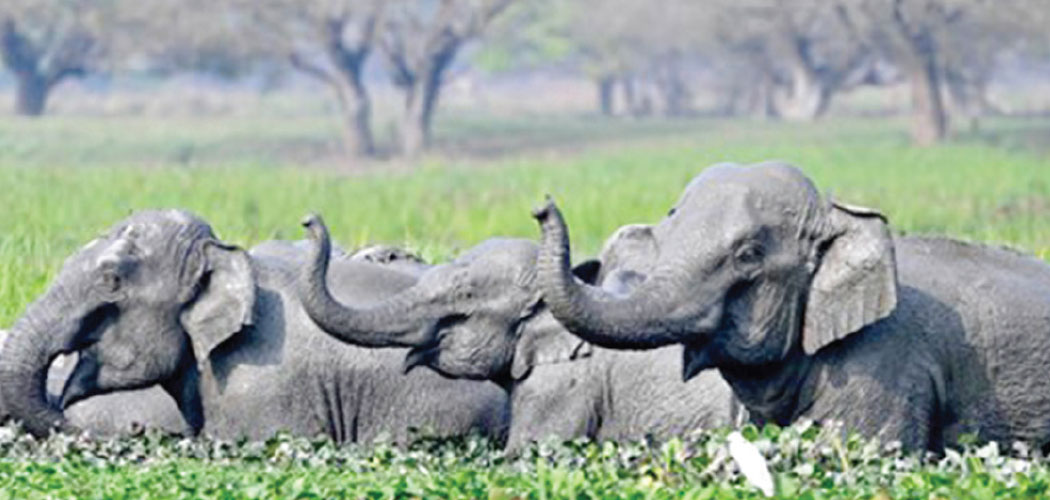
Kathmandu— India’s Supreme Court has issued a series of directives aimed at bolstering the protection of wild Asian elephants as their habitats shrink and conflicts with humans increase. The orders, delivered on Monday and Tuesday, require states to safeguard vital elephant corridors – routes used by herds for migration – and improve welfare standards for captive elephants. With fewer than 50,000 Asian elephants remaining in the wild, primarily in India, Sri Lanka, and Southeast Asia, conservationists have long warned of a looming crisis due to habitat fragmentation caused by infrastructure development and mining.
Protecting Elephant Corridors
The Supreme Court has directed states to prevent obstructions along elephant corridors, ordering a comprehensive survey to identify any impediments. The ruling specifically prohibits the use of “coercive measures” that disrupt the natural movement of elephants, addressing concerns about practices that force herds into increasingly confined spaces. Wildlife conservationist Prerna Singh Bindra, who brought the public interest case before the court, emphasized the importance of these corridors for elephant survival.
Ending Harmful Practices
A key component of the ruling is a ban on “hulla parties” – groups that traditionally attempt to drive elephants away from human settlements using fireballs and burning stakes. Bindra described these practices as cruel and ineffective, stating, “It becomes a mob situation with thousands of people chasing the elephants using burning spears…science shows it only exacerbates the conflict.” The court acknowledged existing ministry guidelines aimed at preserving unobstructed corridors but noted their frequent disregard.
Welfare of Captive Elephants
In a separate order issued Tuesday, the Supreme Court mandated enhanced welfare safeguards for India’s over 2,600 captive elephants. These measures include maintaining detailed medical records and conducting regular health checks for each animal. While welcomed as a step forward by animal rights groups like PETA India, some maintain that captivity itself is inherently harmful. Poorva Joshipura, director of PETA India, stated, “no elephant belongs in captivity,” emphasizing the deprivation experienced by these animals.
Declining Elephant Populations
India’s most recent government survey, released in October 2025, estimated the wild elephant population at approximately 22,446. However, the report also revealed that elephants now occupy a mere 3.5 percent of their historical range, highlighting the drastic reduction in available habitat. Despite being legally protected and considered India’s “national heritage animal,” elephants continue to face mounting pressure from human encroachment and fragmentation.
The court's orders are expected to prompt state governments to take concrete action towards preserving elephant habitats and ensuring the well-being of both wild and captive populations, though the effectiveness will depend on diligent implementation and enforcement.
(With inputs from RN)
Originally published on abcnews.com.np.






प्रतिक्रिया दिनुहोस्