

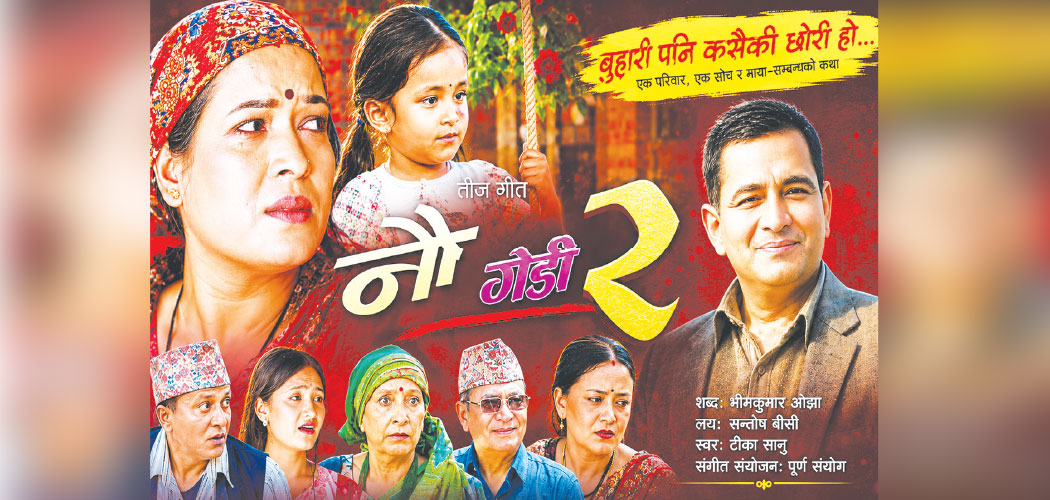
Kathmandu— A new Teej song, ‘Nau Gedi-2,’ released on August 23rd in Kathmandu, is drawing attention for its portrayal of the pain and suffering experienced by many daughters-in-law in Nepali society. Created by lyricist Bhim Kumar Ojha, composer Santosh BC, and singer Tika Sanu, the song and accompanying video explore themes of family conflict, social prejudice, and domestic abuse, building on a previous installment that depicted similar struggles. The creators aim to use the traditionally celebratory context of Teej to spark reflection on deeply rooted societal issues and promote compassion within families.
A Continuing Story of Suffering
‘Nau Gedi-2’ continues the narrative established in ‘Nau Gedi-1,’ focusing on a daughter-in-law enduring mental torture from her mother-in-law, brother-in-law, sister-in-law, and husband. While the first song showed the woman finding solace through her young daughter, this sequel delves further into the family pain and neglect she experiences. The central theme remains the unconditional love between a mother and child, which serves as the driving force for the protagonist’s resilience.
Exposing Harmful Social Norms
The song challenges a social mindset that often fails to fully accept daughters-in-law as integral members of the family. It highlights the tendency to view married women solely through the lens of their ‘daughter-in-law’ status, normalizing mental and domestic violence under the guise of tradition and culture. The video also addresses harmful superstitions surrounding marriage, specifically the practice of blaming a daughter-in-law for the death of her brother-in-law – a custom that perpetuates injustice and suffering.
Powerful Performances Convey Emotion
Tika Sanu delivers a compelling performance as the abused daughter-in-law, conveying pain and silent rebellion primarily through facial expressions and body language. Child artist Rubika Baskota portrays her daughter, while Santosh BC embodies the husband’s patriarchal mindset, depicting a man unable to empathize with his wife's struggles. Devi Ojha, Bhim Kumar Ojha’s life partner, plays the harsh mother-in-law, effectively portraying the source of much of the protagonist’s torment. In contrast, Bhim Kumar Ojha himself appears as an understanding father-in-law, offering a glimmer of hope and suggesting that compassion can exist even within difficult family dynamics.
‘Nau Gedi-2’ aims to transcend typical Teej entertainment by prompting audiences to confront uncomfortable truths about women's experiences and fostering greater empathy within families.
(With inputs from RN)
Originally published on abcnews.com.np.






प्रतिक्रिया दिनुहोस्