

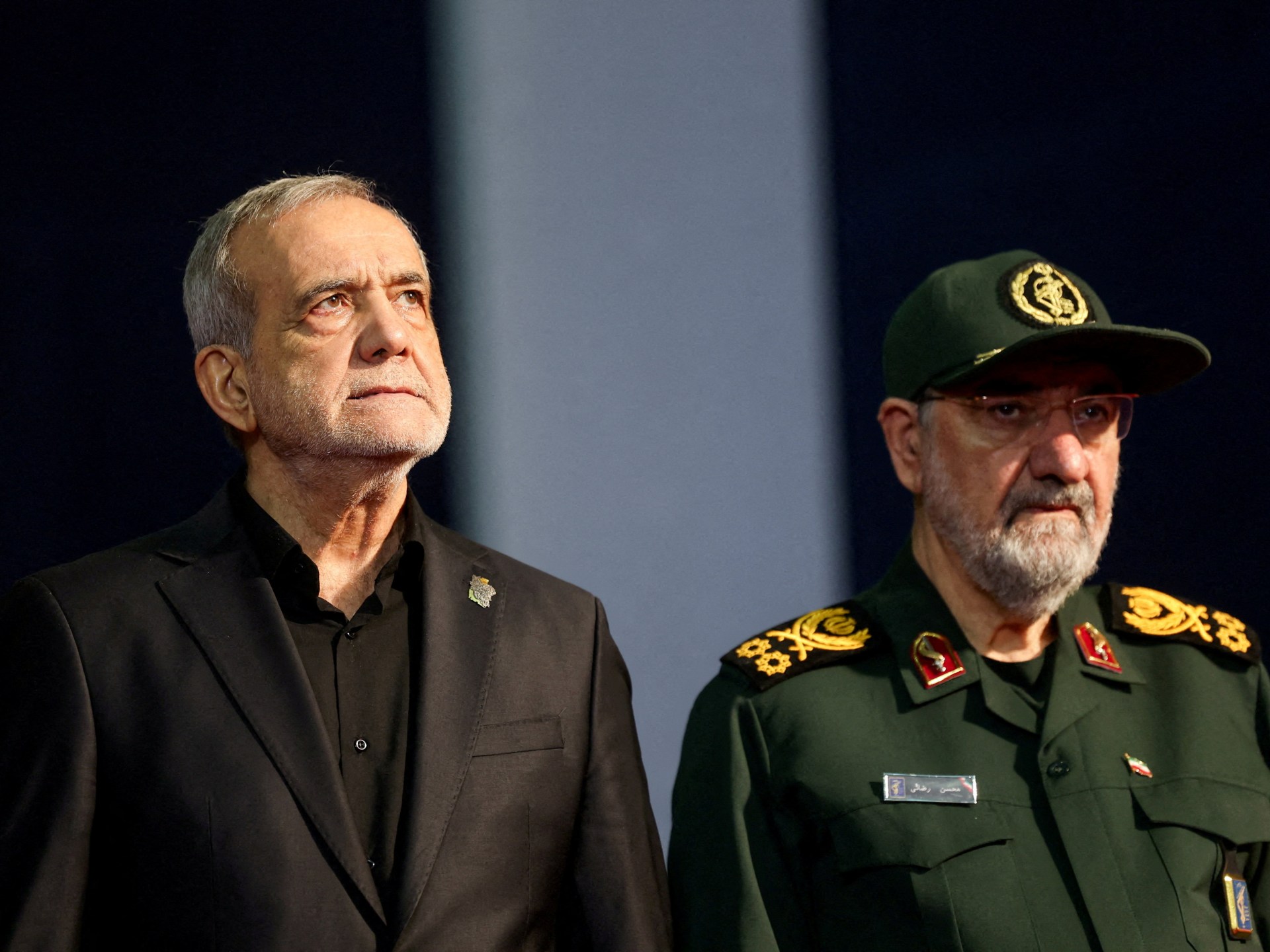
Kathmandu— Iran has issued a stern warning that it will consider any country supporting the United States’ economic sanctions against it to be an enemy of Tehran, escalating regional tensions amid stalled diplomatic efforts and decreasing shipping traffic through the vital Strait of Hormuz. The threat, made by Iran's top security official on Saturday, comes as the US prepares to announce further sanctions intended to cripple Iran’s already struggling economy, prompting concerns about potential disruptions to global oil supplies and broader regional instability. Tehran has indicated a willingness to negotiate de-escalation but vows to target the interests of any nation participating in what it terms an ‘economic war.’
Warning to Regional Neighbors
Mohsen Rezaei, secretary of Iran’s Supreme National Security Council, stated that Iran is appealing to all countries, including its neighbors, not to participate in the US’s “economic war.” He warned that any country doing so would be regarded as an enemy and face “seismic” retaliation. Specifically, Rezaei cautioned that if neighboring nations joined Trump's economic warfare, “not even a drop of oil” would leave the Gulf region, potentially impacting alternative export routes beyond the Hormuz chokepoint.
Escalation Strategy: Preemption and Retaliation
Iran appears to be adopting an increasingly assertive doctrine, focusing on both preemptive measures and disproportionate retaliation. Hamidreza Azizi, a researcher at the Clingendael Institute, noted that Tehran is attempting to establish deterrence by signaling that even preparations for an attack could trigger an Iranian response. This new approach includes preemption – aimed at preventing perceived threats from materializing – and disproportionate retaliation designed to raise the cost of any aggression.
Gulf States Caught in the Middle
Gulf countries, as both neighbors and allies of the US, find themselves increasingly caught between competing pressures. While they have condemned Iranian attacks on their territories, analysts suggest that maintaining a functioning political relationship with Iran is crucial due to its geographic proximity. The UAE restored diplomatic relations with Iran in 2022 but recently imposed a trade embargo following accusations of a missile attack – which Tehran denies. Saudi Arabia and Iran agreed to normalize ties in 2023, brokered by China, reflecting a calculation that engagement may be safer than permanent confrontation. Simon Mabon, a professor of international relations at Lancaster University, explained that Gulf states don’t want the instability that would come from the collapse of the Islamic Republic, and are seeking to weaken hardline elements within Iran's Revolutionary Guard.
Decades of Sanctions and Nuclear Deal Fallout
Iran has faced sanctions from the US and other Western nations since 1979, beginning after the Islamic Revolution. These initially stemmed from the hostage crisis at the US embassy in Tehran and expanded over time to include restrictions on oil imports, asset freezes, and bans on trade. In 2015, Iran signed the Joint Comprehensive Plan of Action (JCPOA), a nuclear deal that temporarily lifted sanctions in exchange for limitations on its nuclear program. However, in 2018, the US under President Trump withdrew from the JCPOA and reimposed all previous sanctions as part of a “maximum pressure” campaign. The Biden administration has largely maintained these sanctions.
Global Oil Supply Concerns
The potential for disruption to oil supplies remains a significant concern. Trita Parsi, executive vice president of the Quincy Institute for Responsible Statecraft, noted that confidence in diplomatic solutions is low but acknowledged that no nation can afford another prolonged war. He added that depleted global oil inventories would make a sustained confrontation between the US and Iran unattractive.
With diplomatic efforts stalled and tensions continuing to rise, the situation remains volatile, with the potential for further escalation dependent on both Iranian responses to new sanctions and the willingness of regional actors to navigate the complex geopolitical landscape.
(With inputs from Al Jazeera)
Originally published on abcnews.com.np.


प्रतिक्रिया दिनुहोस्