

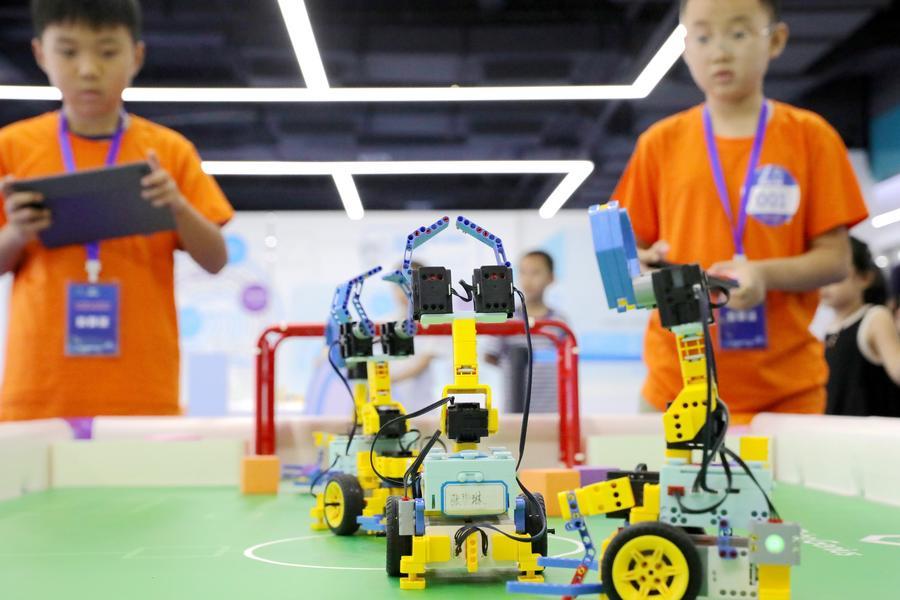
Kathmandu— Across China this summer, a new trend emerged as students flocked to tech companies, university labs, and science centers eager to engage with artificial intelligence firsthand. Driven by the government’s “AI Plus Education” initiative launched earlier this year, these AI-themed study tours have seen bookings surge 370 percent compared to last year, moving beyond traditional textbook learning to offer immersive experiences in a rapidly evolving field. The boom reflects China's broader advancements in AI and aims to cultivate not just users of the technology, but future creators and innovators.
A National Push for AI Literacy
Earlier this year, China unveiled its “AI Plus Education” initiative with the goal of integrating artificial intelligence learning into schools through after-school programs and practical activities. This push comes as the country’s core AI industry is projected to exceed 1.2 trillion yuan (approximately $177 billion) in output value this year – a nearly 30 percent increase from last year. China now boasts over 6,000 AI enterprises and leads the global humanoid robot market, accounting for 84.7% of shipments with over 14,400 units expected by 2025.
From Users to Creators
These study tours aren’t simply about introducing children to existing AI tools; they aim to foster a deeper understanding and encourage creative application. Liang Yiduo, a middle school student in Beijing, attended an AI summer camp run by NetEase where he realized large language models could be more than just chatbots. “They can be assistants that work alongside you and help you create things tailored to your needs,” he said. Wang Lijin, director of Beijing Venus Future Education Consulting Center, which assists NetEase, explained the goal is to move students from being AI users to understanding, creating with, and even building their own AI agents.
Immersive Experiences Drive Engagement
Travel agencies are adapting to meet the growing demand, with AI-related activities now accounting for over 80 percent of itineraries on some tours. Shanghai Qingbao Robot Co., Ltd. offers programs where students can assemble robotic arms and compare China’s robotics industry with those in the US, Europe, and Japan. Chairman Wang Lei believes these immersive experiences broaden students' horizons and encourage them to think about real-world applications for robotics, such as unmanned retail or automated pharmacies. In Shenzhen, a six-day camp challenged students to develop AI-powered solutions to real-world problems.
International Interest in China’s Tech Innovation
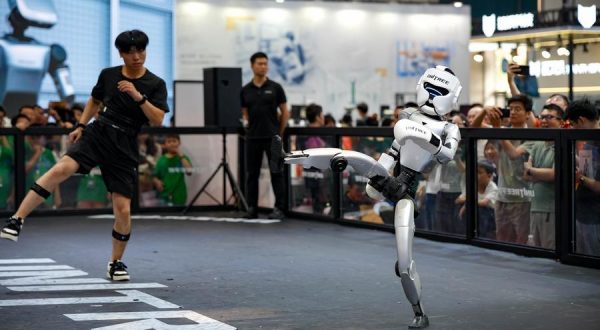
The tech tourism boom isn't limited to domestic travelers; international visitors are also eager to witness China’s advancements firsthand. Unitree Robotics’ experience store in Shanghai, which opened in May, has attracted numerous foreign tourists. Victoria, from Denmark, expressed excitement at seeing the robots in person after watching videos online, describing China’s development of AI and robotics as “revolutionary, new and exciting.”
Students Focused on Problem-Solving
One team member participating in a Shenzhen camp emphasized that learning AI is about more than just demonstrating skills. “I've realized that learning AI isn't about showing off what I can do with it, but about using it to solve real problems for others,” they said, expressing a desire to continue learning and contribute positively through the technology.
As China continues to invest in artificial intelligence, these study tours are expected to play an increasingly important role in shaping the next generation of tech innovators and preparing them for the challenges and opportunities of an AI-driven world.
(With inputs from Xinhua)
Originally published on abcnews.com.np.


प्रतिक्रिया दिनुहोस्