

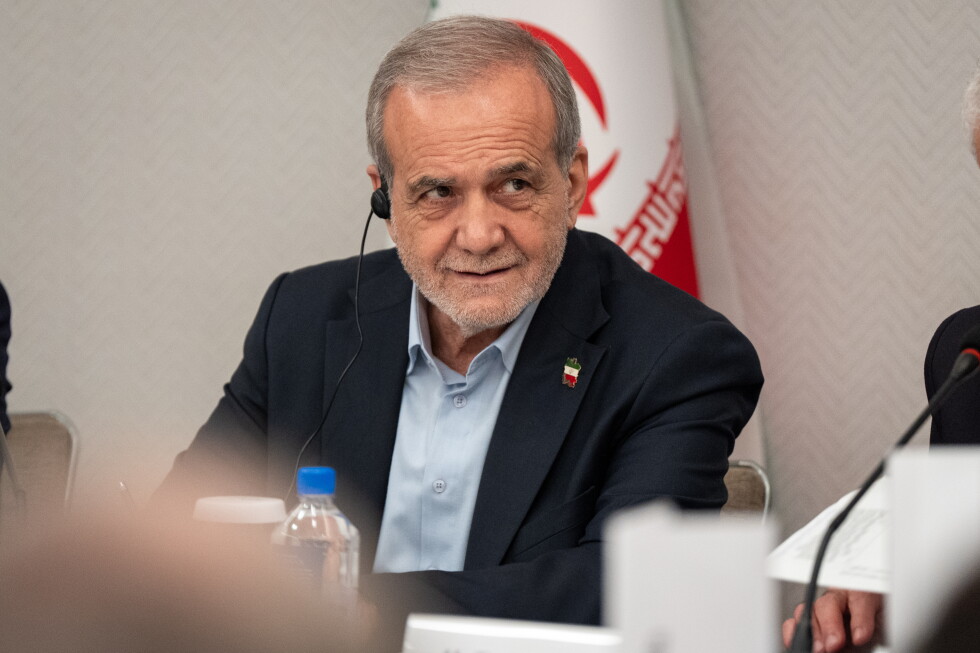
Kathmandu— Iran's president on Sunday publicly supported a memorandum of understanding with the United States, framing it as the most viable route out of a prolonged period of conflict and economic stagnation; however, this stance contrasts with more hardline rhetoric from Iran’s new top security official who threatened retaliation should neighboring countries support additional U.S. sanctions against Tehran. Treasury Secretary Scott Bessent is expected to announce new measures targeting Iran on Monday, even as Pakistani officials attempt to mediate talks between the two nations. Meanwhile, violence continues in both the West Bank and Gaza, with reports of casualties on both sides.
Economic Pressure and Diplomatic Efforts
The memorandum of understanding signed in mid-June was intended to initiate a 60-day period for negotiations aimed at resolving the conflict and reaching an agreement regarding Iran’s nuclear program. However, that period concluded last week without any significant breakthroughs, particularly concerning the crucial issue of reopening the Strait of Hormuz—a vital waterway for global shipping. President Pezeshkian emphasized that the agreement does not represent capitulation, stating, “The supreme leader sets the policies, and we will follow that path.” He also acknowledged the economic strain Iran is facing due to sanctions and a U.S. naval blockade, noting the difficulty of attracting investment in the current climate.
Security Chief Issues Stark Warning
Mohsen Rezaei, the newly appointed leader of Iran’s Supreme National Security Council, delivered a defiant message to Tehran's neighbors, warning them against joining the U.S. effort to further isolate Iran economically. In an interview with state broadcaster, Rezaei stated that any such actions would be considered hostile and would invite retaliation. “If (Trump) wants to do something, we will retaliate in a seismic manner,” he said, adding that Iran could target oil-shipping routes as a response. Rezaei, a former Revolutionary Guard commander, represents a shift towards a more assertive posture within the Iranian government.
Regional Violence and Casualties
Violence continues to escalate across the region. In the occupied West Bank, Israeli police arrested a 16-year-old in connection with the beating of a Palestinian man who had previously lost a leg in a settler attack. Separately, a 14-year-old Palestinian was killed by Israeli forces in Nablus, and an Israeli man was wounded in a stabbing incident. In Gaza, a four-year-old child named Mohammed Taha was killed in an Israeli airstrike that also injured at least five others. Israel’s military confirmed striking a Hamas commander in the same area.
Pakistan Mediates for De-escalation
Pakistani Field Marshal Asim Munir is scheduled to visit Tehran on Monday, according to Iranian state television. The visit, facilitated by Iran’s Foreign Ministry spokesperson Esmail Baghaei, is part of Islamabad's broader effort to de-escalate tensions between the U.S. and Iran and encourage a return to negotiations. Two regional officials indicated that Pakistan hopes to urge both countries back to the negotiating table.
Iran Executes Protest Arrestee
The Iranian judiciary announced the execution of Majid Adineh, who was arrested during nationwide protests earlier this year. According to Mizan news agency, forensic evidence linked him to unrest and alleged training from groups hostile to Iran. The Revolutionary Court convicted Adineh under laws imposing harsher penalties for espionage and cooperation with enemy states, accusing him of operating on behalf of Israel, the United States, and other designated hostile entities.
With diplomatic efforts ongoing alongside escalating tensions and continued violence, the situation in the Middle East remains volatile and unpredictable. The upcoming announcement of new U.S. sanctions is expected to further complicate negotiations.
(With inputs from AP)
Originally published on abcnews.com.np.

प्रतिक्रिया दिनुहोस्