

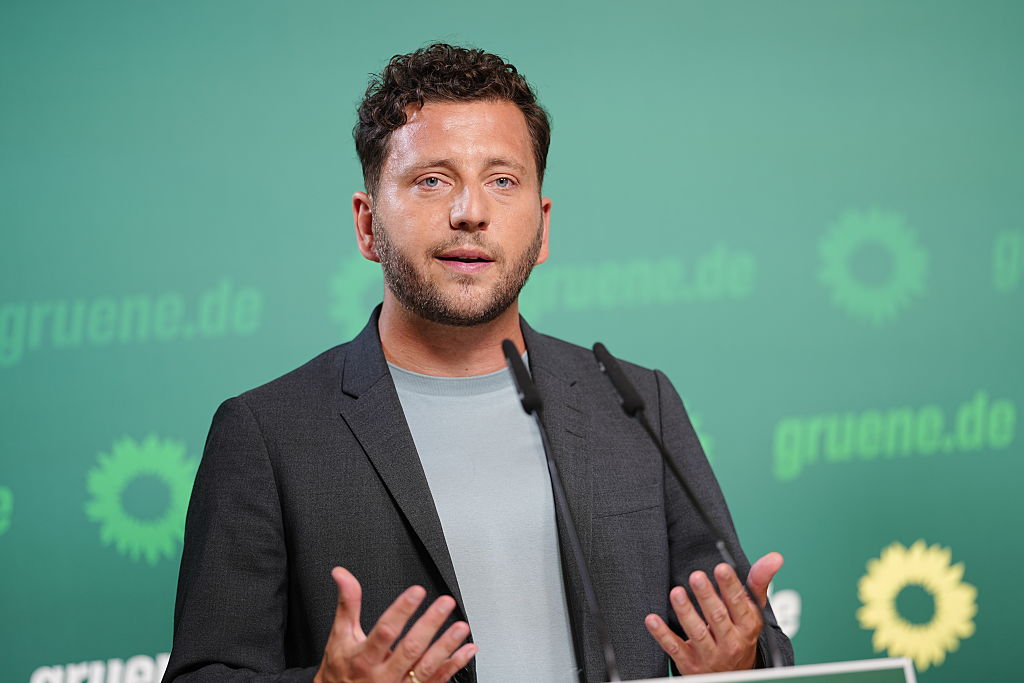
Kathmandu— Once defined by its staunch pacifism and ecological focus, Germany’s Green party is now advocating for increased military spending, a significant shift in policy that reflects evolving geopolitical realities and an unexpected strategy for national economic revival. This move, occurring decades after the party's radical origins in the 1980s, positions higher defense budgets not merely as a security measure but as a central pillar of Germany’s future prosperity. The change is analyzed through the lens of political science models suggesting policy choices are often driven by factional competition and problem identification rather than rational solution-seeking.
The 'Garbage Can' Model of Political Decision-Making
Political decision-making isn’t always a linear process of identifying problems and implementing optimal solutions, according to the “garbage can” model developed in the 1970s. This theory posits that collective choices are often the result of competition between elite factions vying for influence and attempting to convince both citizens and each other that their preferred approach is viable. The model challenges the notion of intentionality and rational problem-solving within political systems, suggesting instead a more chaotic and opportunistic dynamic.
Policy Persistence and Adaptation
A key observation stemming from the ‘garbage can’ model is the cyclical nature of policy. Rather than being discarded when deemed ineffective or outdated, policies often reappear repeatedly, akin to “zombies.” Furthermore, these policies are frequently adapted to suit changing political climates through relabeling and repackaging. This adaptability allows factions to maintain relevance even as circumstances evolve.
Endless Problems, Endless Solutions
The model suggests that the ultimate success of a political faction isn’t necessarily tied to actually solving problems but rather to its ability to continuously identify new issues—or reframe existing ones—and present solutions, however incomplete. This creates a perpetual cycle where problems are perpetually identified and addressed without ever truly being resolved. The focus shifts from achieving concrete outcomes to maintaining the perception of action and responsiveness.
The Green party’s embrace of increased military spending exemplifies this dynamic, presenting a striking example of policy adaptation and the prioritization of perceived solutions over long-term problem resolution.
(With inputs from Jacobin)
Originally published on abcnews.com.np.

प्रतिक्रिया दिनुहोस्