

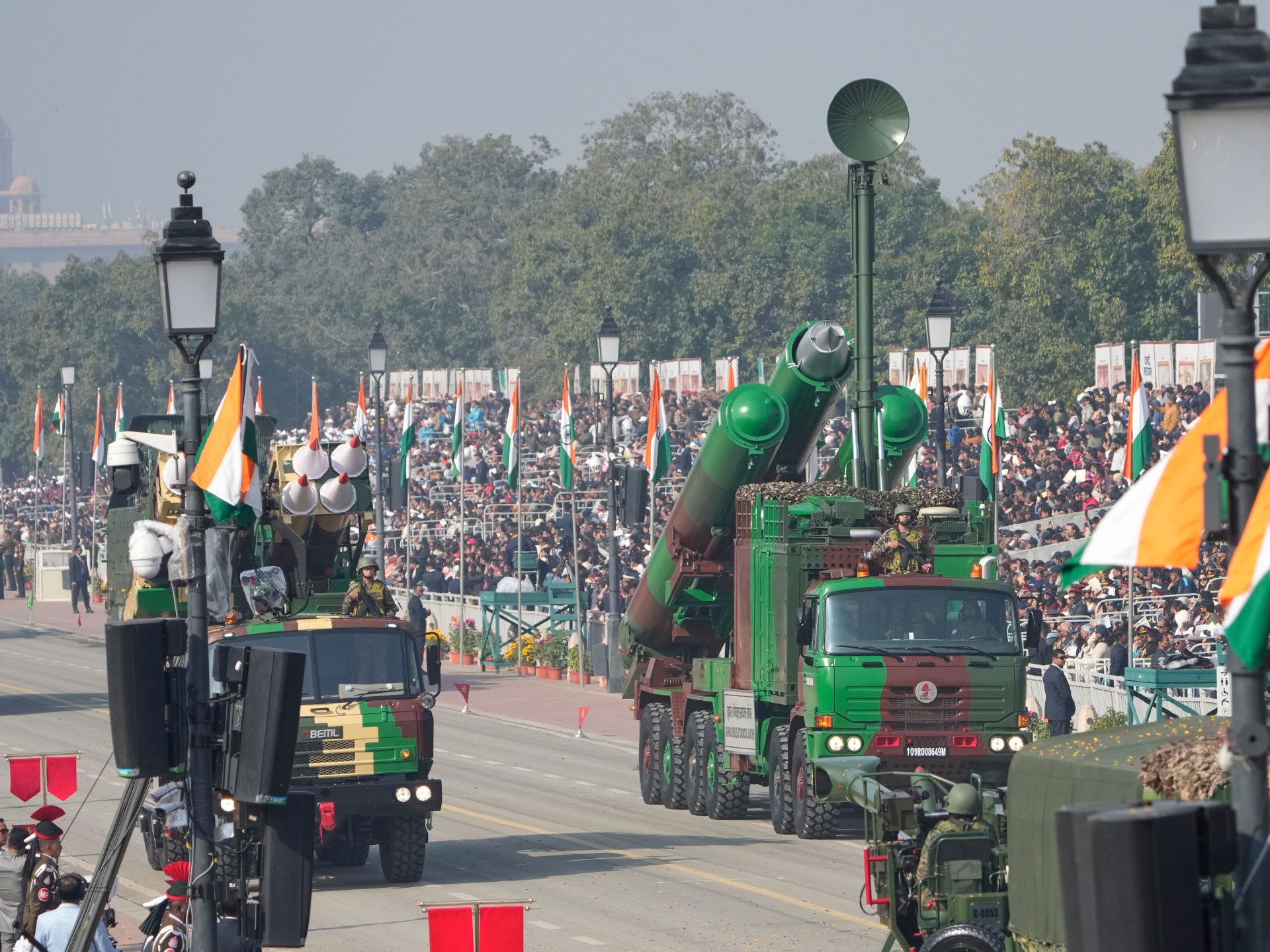
Kathmandu— India has approved the transfer of technologies for all conventional missile systems from state-run research facilities to private defence companies for domestic production. The move, announced by Defence Minister Rajnath Singh on Tuesday, aims to accelerate mass production, increase manufacturing within India, and lessen the country’s dependence on foreign arms suppliers. This shift marks a significant departure from a sector historically dominated by government entities and comes as India faces evolving geopolitical challenges and increasing defense spending. The initiative seeks to leverage private sector innovation and capacity to strengthen India's military preparedness and pursue its goal of self-reliance in defence.
A Shift in Defence Production
For decades, India’s missile production has been largely controlled by state-owned companies like Bharat Dynamics, which held a monopoly on turning designs from the Defence Research and Development Organisation (DRDO) into finished weapons. The new policy represents a “big change,” according to Aditya Ramanathan, a research fellow with the Takshashila Institution, as it allows private firms to move beyond component manufacturing and become prime integrators for entire missile systems. This opens up competition within the sector and is expected to accelerate production timelines.
Geopolitical Drivers of Self-Reliance
India’s decision to broaden its defence industrial base is driven by a complex interplay of geopolitical factors. The country has more than doubled its defense budget since 2014, reaching $86 billion in the current financial year, fueled by concerns over border security with Pakistan and China. Recent conflicts, such as the brief clash with Pakistan last year and observations of warfare in Ukraine and Iran, have underscored the need for larger stockpiles and a more resilient defence infrastructure. Ramanathan noted that India aims to demonstrate its ability to withstand prolonged attrition warfare, necessitating significant increases in missile production capacity.
Expanding Domestic Capabilities
The move builds on existing efforts to expand India’s private defense industry. In June, the country announced plans to spend over $2 billion on military drones from domestic manufacturers, with more than 600 companies already involved in drone production, including major conglomerates like Adani, Larsen & Toubro, and Tata Advanced Systems. India also approved a $5.46 billion purchase of various military equipment in July, and is actively modernizing its navy with plans to procure at least 75 ships and submarines largely constructed domestically.
Exporting Defence Technology
Alongside bolstering domestic production, India has significantly increased its military exports in recent years, jumping from $72 million in 2014-15 to $4 billion in 2025-2016. Companies like Paras Defence are anticipating further growth, projecting a doubling of exports in the coming financial year. India is already exporting complete missile systems, with deals secured with the Philippines, Vietnam, and Indonesia, as well as proposals submitted to the United Arab Emirates.
Addressing Security Concerns
While transferring sensitive technology to the private sector carries inherent risks – highlighted by recent cyberattacks on US defence manufacturers – Ramanathan believes India is well-positioned to mitigate these concerns. The leading Indian companies vying for missile contracts have decades of experience in the defense sector and established protocols for handling confidential information. Furthermore, the government has strong incentives to prevent technology leaks and uphold its commitments to international export control regimes like the Missile Technology Control Regime.
The success of this initiative will depend on sustained government orders and investment from private companies, but it represents a significant step towards establishing a more robust and self-reliant Indian defence industry.
(With inputs from Al Jazeera)
Originally published on abcnews.com.np.




प्रतिक्रिया दिनुहोस्