

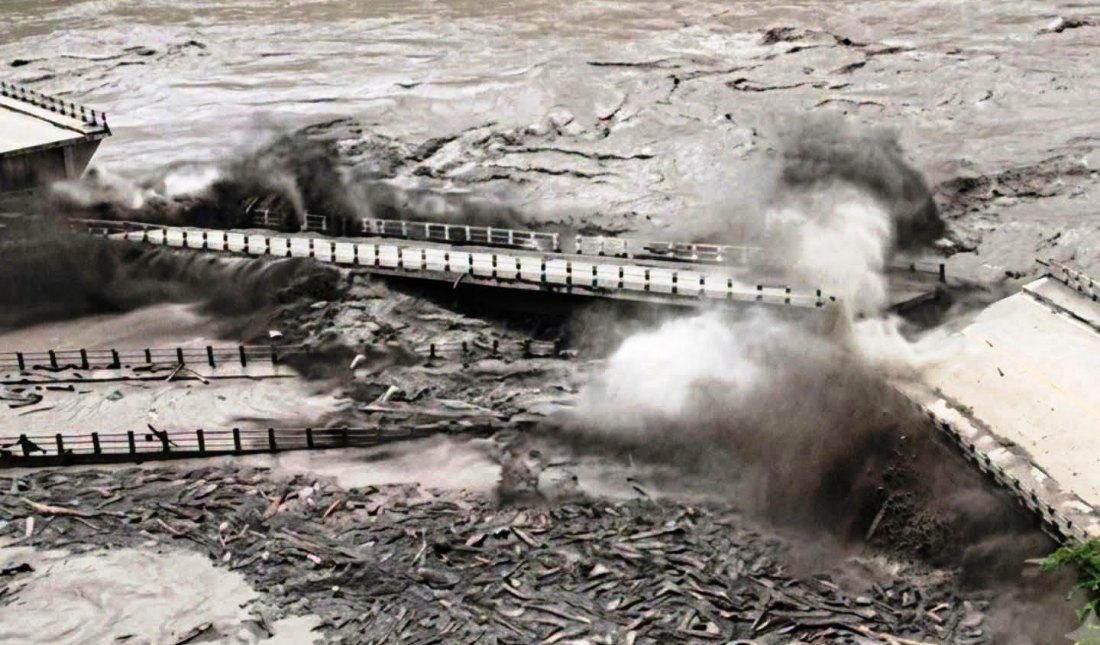
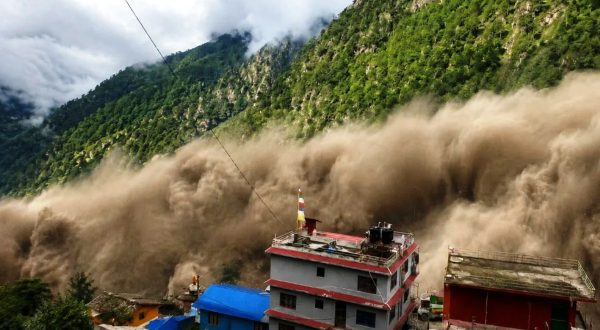
Kathmandu — A devastating flash flood in the Bhotekoshi River in Rasuwa has caused unprecedented human and physical losses, extending from Nepal’s northern Himalayan region through the Trishuli River system and downstream areas along the Narayani River. According to the latest update provided by Nepal Police as of Wednesday night, 157 bodies had been recovered, while hundreds of people remained missing or out of contact.
The worst damage has been reported in Rasuwa, Nuwakot and Dhading districts, although bodies carried downstream by the river have also been recovered in Gorkha, Chitwan, Tanahun and Nawalparasi East. In several locations, entire settlements along riverbanks have been swept away, making it difficult to determine the full scale of human losses.
The disaster has affected not only local residents but also security personnel, employees and workers at hydropower projects, government employees, transport workers and hundreds of domestic and foreign tourists.
Where Were the Bodies Recovered?
According to police data, bodies have been recovered across several districts, including Rasuwa, Nuwakot, Dhading, Gorkha, Tanahun and Nawalparasi East.
As floodwaters continue to carry debris and bodies downstream, authorities fear that the death toll could rise further. Search and rescue operations have also been complicated by the destruction of settlements, roads and bridges.
Nepal Police has reported that 28 of its personnel remain out of contact. Earlier reports also indicated that personnel from the Nepal Army, Armed Police Force and employees and workers at several hydropower projects were missing.
403 Tourists Out of Contact
The disaster has also dealt a severe blow to Nepal’s tourism sector. According to the Nepal Tourism Board, 403 tourists are currently out of contact, including 341 foreign nationals and 62 Nepali tourists.
Of those missing, 203 are male and 200 are female.
Indian nationals account for the largest number of tourists out of contact, with 133 reported missing. They are followed by 47 Americans, 34 Australians and 33 British nationals.
Other missing tourists include 24 Canadians, 19 Malaysians, seven Ukrainians, six each from South Africa and Singapore, five each from New Zealand and Japan, four Germans, three French nationals and two Spanish nationals.
Restoring communication and locating tourists who had travelled to Gosaikunda and other Himalayan destinations has become one of the major challenges facing rescue agencies.
Injured Undergoing Treatment
People injured in the floods are receiving treatment at hospitals in Kathmandu and other affected districts.
According to the available information, 20 injured people are being treated at Tribhuvan University Teaching Hospital in Maharajgunj, four at the National Trauma Centre, three at Bir Hospital, one at Birendra Military Hospital, three at Norvic Hospital and nine at Trishuli Hospital.
The number of injured and their medical conditions may change as rescue agencies continue to update their records.
Preliminary Estimate Puts Infrastructure Damage at More Than Rs 200 Billion
Along with the heavy human toll, the Bhotekoshi–Trishuli river system has caused extensive destruction to Nepal’s roads, bridges, energy infrastructure, trade routes and tourism facilities.
According to the government’s preliminary assessment, damage to infrastructure alone could exceed Rs 200 billion.
Physical Infrastructure Minister Sunil Lamsal has said that rebuilding roads and bridges will be among the government’s top priorities.
According to an update from the National Disaster Risk Reduction and Management Authority as of 11:30 p.m. Wednesday, the floods had swept away or damaged 35 permanent bridges and 45 suspension bridges.
Betrawati–Rasuwagadhi Road Completely Destroyed
The flood has severely damaged approximately 40 kilometres of road between Betrawati and Rasuwagadhi.
The destruction of the main route connecting the Rasuwagadhi border point with China has also disrupted Nepal–China trade.
The Rasuwagadhi customs area, particularly Timure, has suffered massive physical damage. Customs infrastructure has been severely affected, while some employees working in the area have also reportedly remained out of contact.
Hundreds of Trucks and Electric Vehicles Affected
Billions of rupees worth of goods imported from China in preparation for major upcoming festivals such as Teej, Dashain, Tihar and Chhath have been affected by the floods.
Hundreds of cargo containers and trucks in the Rasuwagadhi customs area are believed to have been swept away or damaged.
Business representatives have also reported that a large number of expensive electric vehicles were caught in the flood. Preliminary estimates suggest that between 500 and 700 vehicles may have been affected.
According to the Nepal Himalayan Cross-Border Commerce Association, more than 200 trucks that had travelled to Rasuwagadhi to transport goods were believed to have been affected by the disaster.
Major Blow to Nepal’s Power System
The floods have also severely disrupted Nepal’s energy infrastructure. The 220 kV 3B Hub Substation in Trishuli has been completely damaged.
Damage to several transmission lines has disrupted the flow of electricity across parts of the national power system.
Major affected infrastructure includes the Chilime 220 kV Hub, the Samundratar–Trishuli 132 kV transmission line, the Chilime–Trishuli 66 kV transmission line, the Chilime Hub–Trishuli 3B Hub–Matatirtha 220 kV transmission line and the Trishuli–Balaju 66 kV transmission line.
The Nepal Electricity Authority has also reported problems with towers on several other transmission lines.
Earlier reports indicated that the closure of multiple hydropower projects due to the flooding had removed 431.1 megawatts of electricity generation from the national grid.
Three Districts Declared Crisis Zones
The government has declared three of the worst-hit districts as crisis areas.
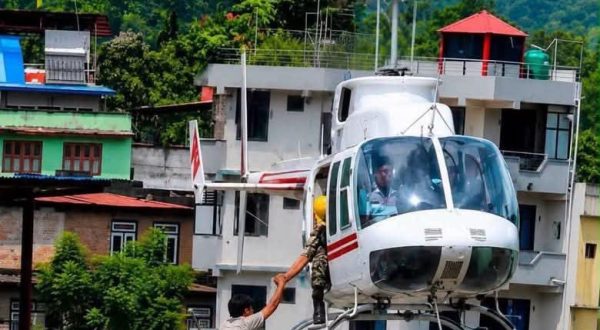
It has appealed for national and international assistance to support search and rescue operations, emergency relief and long-term rehabilitation. Security forces, medical personnel and rescue teams have been deployed across the affected regions.
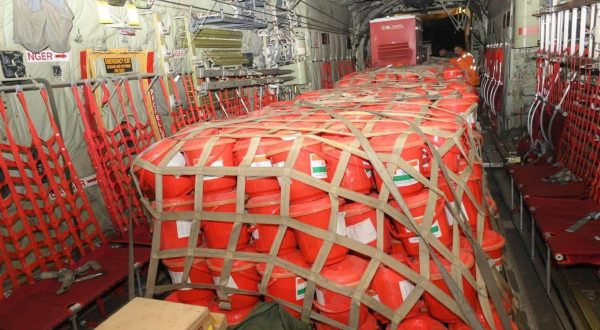
India has already sent an initial 10 tonnes of humanitarian assistance and essential relief supplies to Nepal, with additional assistance expected to follow.
Political parties have also called for national unity and cooperation with the government during the disaster. They have urged citizens, organisations and political forces to join the rescue and relief effort.
The Challenge Ahead
The Bhotekoshi flood is no longer simply a local disaster affecting one district. It has exposed the vulnerability of Nepal’s Himalayan and cross-border river systems, hydropower infrastructure, transport networks, tourism industry and trade routes.
The immediate priority remains locating and rescuing missing civilians, tourists and security personnel. This will be followed by the urgent need to provide displaced families with temporary shelter, food, clean water, healthcare and long-term resettlement.
In the longer term, however, the disaster has raised a critical question for Nepal:
How prepared is the country to confront growing risks in Himalayan and cross-border river systems, particularly in terms of early-warning mechanisms, rescue capacity and resilient infrastructure?
The destruction that began in the Bhotekoshi has spread through the Trishuli river system and downstream toward the Narayani basin. The full number of those killed and missing is still unknown. Rescue teams continue to search day and night, while the true scale of the catastrophe is only gradually becoming clear.
Originally published on abcnews.com.np.

प्रतिक्रिया दिनुहोस्