

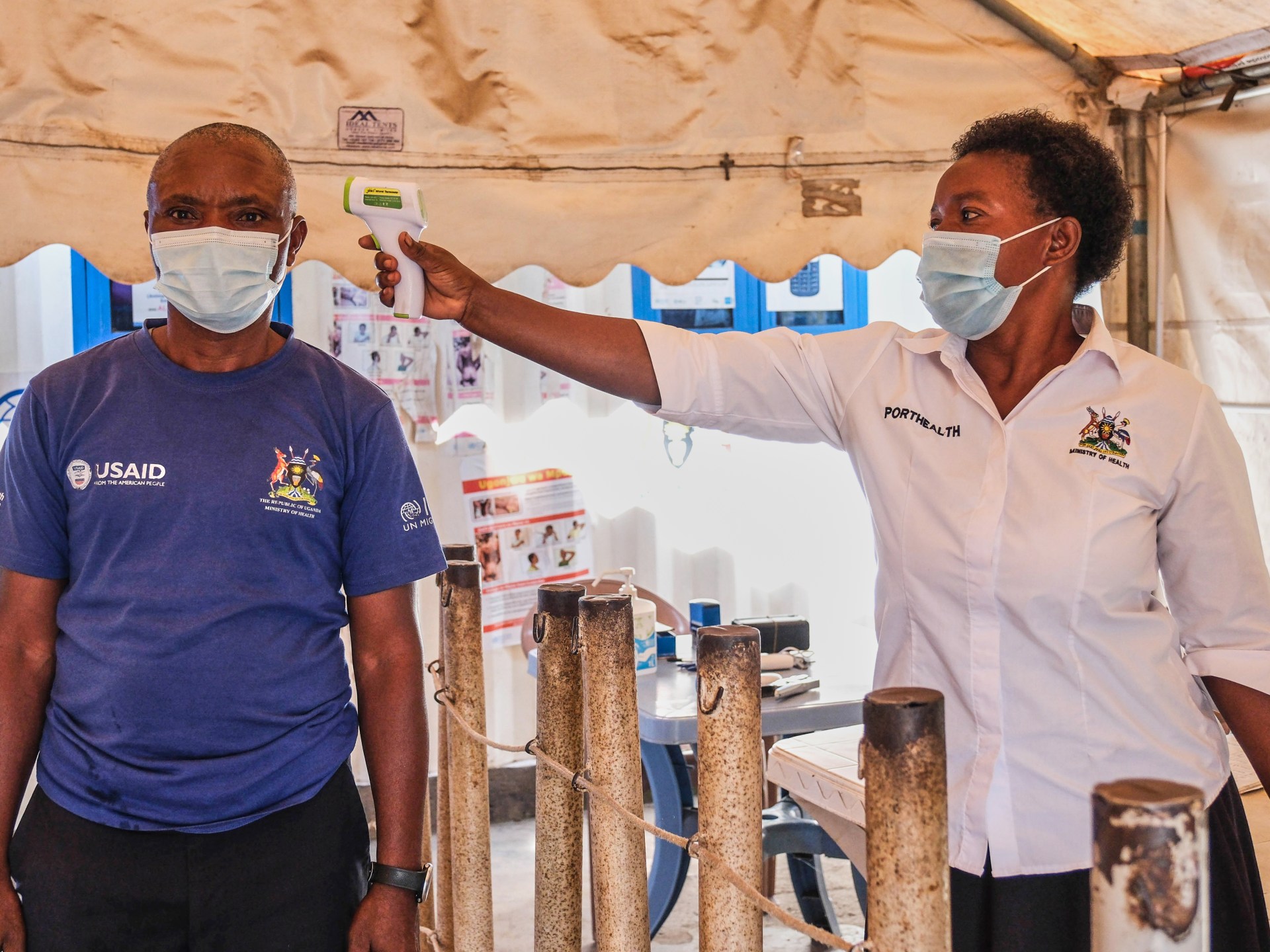
Kathmandu— The World Health Organization (WHO) announced Tuesday that Uganda is free of Ebola following a 42-day monitoring period with no new transmissions, marking a significant step forward for the East African nation's public health efforts. The declaration follows Uganda’s own assessment concluding the outbreak was over in July, though WHO protocol required the extended observation period to confirm eradication of the virus within its borders. Twenty cases were reported during the Ugandan outbreak, resulting in two deaths, with the last confirmed case recorded on June 21st and the final patient discharged from isolation on July 16th.
Confirmation Follows National Assessment
Uganda initially declared the local Ebola outbreak over based on its own analysis of the virus’s spread. Diana Atwine, the permanent secretary for Uganda’s Health Ministry, explained that while national authorities were confident in their assessment, WHO protocol necessitated a 42-day waiting period to officially declare the country free from the disease. “We had assessed the risk…and we knew that we were free from Ebola,” she told NTV, adding that the delay was simply due to adhering to established guidelines.
Call for Lifting Travel Restrictions
Atwine urged countries that imposed travel restrictions on Uganda during the outbreak to lift them now that the country is confirmed Ebola-free. “Unless they have other reasons, they should definitely lift the restrictions off the country, and Ugandans should be free to travel to any country,” she stated, emphasizing the impact of such measures on both tourism and individual freedoms.
DRC Outbreak Escalates
In contrast to Uganda’s success, the Ebola outbreak in the Democratic Republic of the Congo (DRC) is worsening. As of August 25th, confirmed cases in the DRC reached 5,656, a significant increase from the previous day, with a total of 2,715 deaths recorded. The Ituri province in northeastern DRC remains the epicenter of the outbreak, accounting for over 4,700 infections.
Cross-Border Collaboration
Uganda shares an 877km border with the northeast part of the DRC and is actively supporting treatment efforts across the border. Kasonde Mwinga, the WHO’s representative for Uganda, stated that the country is providing support to treatment and laboratory capacity at two sites in Ituri province – Aru and Kasenyi. Uganda has also announced plans to open two additional Ebola treatment centers in the DRC, bringing the total to four. Ugandan and Congolese officials recently met to review a bilateral memorandum of understanding on cross-border health security.
Appeal for Increased Resources
Kenneth Akiiri, the undersecretary for Uganda’s Health Ministry, called upon the WHO and Africa Centres for Disease Control and Prevention (CDC) to mobilize further resources to combat Ebola in the region. “When you are vulnerable and you have littler resources, you are supposed to raise an alarm for help,” he said in a joint statement. Adelard Lufungula, head of the DRC delegation, echoed this sentiment, urging strong action to fight the virus: “We want to fight Ebola like a war.”
The WHO continues to monitor the situation in both countries and support ongoing efforts to contain the spread of Ebola and provide assistance to affected communities.
(With inputs from Al Jazeera)
Originally published on abcnews.com.np.

प्रतिक्रिया दिनुहोस्