

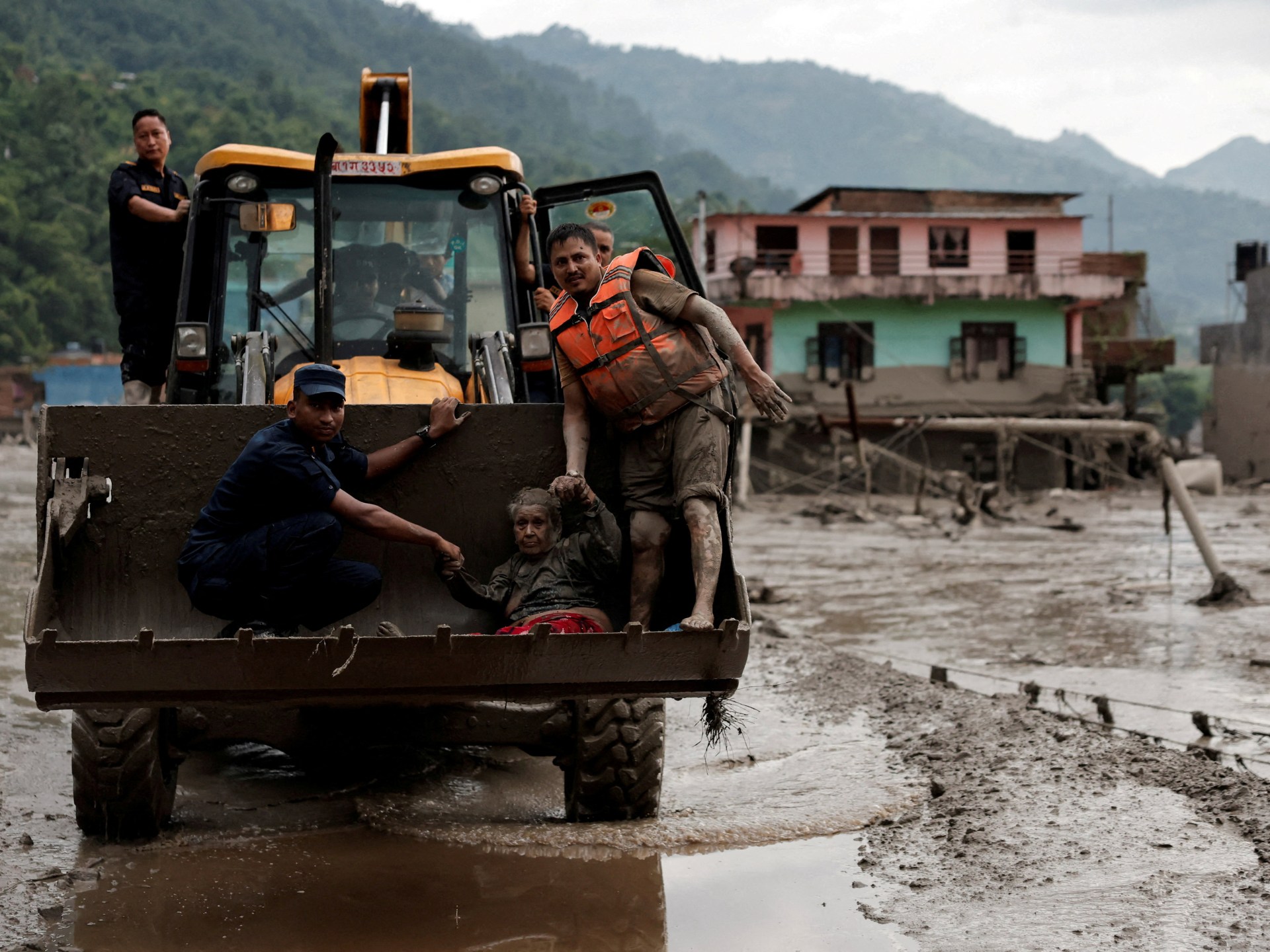
Kathmandu— Catastrophic floods swept through mountainous areas along the Nepal-Tibet border on Wednesday following the collapse of part of a Himalayan glacier, killing at least 160 people and leaving nearly 1,500 missing across both countries. The disaster began around 8:40 am local time when a surge of water, mud, and rocks engulfed villages and destroyed critical infrastructure in Nepal’s Rasuwa district and Tibet’s Gyirong County. Nepalese soldiers and Chinese rescue teams are working to reach affected areas, hampered by damaged roads, high river levels, and challenging terrain; the initial collapse triggered a chain reaction involving an ice-rock avalanche and a temporary dam that eventually gave way.
The Scale of the Disaster
At least 157 bodies have been recovered in Nepal, while authorities in Tibet’s Gyirong County confirmed three deaths with 558 people missing, including 260 foreign nationals. In total, nearly 1,500 individuals remain unaccounted for across the region. The floods caused widespread damage, washing away at least 19 bridges and approximately 40 kilometers (25 miles) of roads in Nepal. The Trishuli River saw water levels rise by as much as nine meters (27 feet) in just thirty minutes, inundating settlements downstream.
What Caused the Floods?
Officials initially considered a magnitude 4.4 earthquake as a potential trigger for the disaster, but the United States Geological Survey (USGS) later determined that the seismic signal was generated by the landslide itself, registering as a magnitude 5.2 event. Satellite imagery revealed that a substantial section of glacier broke away at an elevation of approximately 5,200 meters (17,000 feet), falling roughly 1,200 meters (3,900 feet) onto the valley floor and creating a debris flow. This debris temporarily blocked the Lhende River before a natural dam failed, releasing a powerful flood downstream.
Missing Tourists and Rescue Efforts
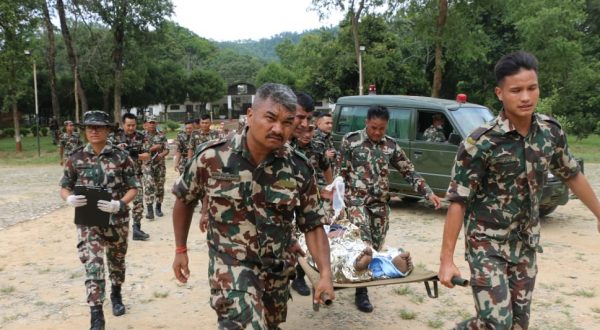
The missing individuals include a significant number of foreign tourists, with Nepal reporting 826 missing, including approximately 600 international visitors. Among those unaccounted for are 177 Indian nationals, 63 from the United States, 34 Australians, 33 Britons, and 25 Canadians. Many were pilgrims traveling towards Kailash Mansarovar in Tibet. More than 5,000 Nepalese army and police personnel have been mobilized for rescue operations, utilizing helicopters to deliver emergency supplies and evacuate survivors. South Korea has also dispatched a rapid-response team after several of its citizens working on a hydropower project went missing.
International Response and Aid
India swiftly responded by sending a rescue aircraft carrying 10 tonnes of emergency supplies, including shelters, blankets, and medical provisions. Indian Prime Minister Narendra Modi spoke with his Nepalese counterpart Balendra Shah, pledging support. The International Federation of Red Cross and Red Crescent Societies (IFRC) released 1 million Swiss francs ($1.2m) in emergency funding for the Nepal Red Cross Society. The United Nations has deployed personnel to assist government-led relief efforts, while the European Union activated its Copernicus Emergency Management Service to provide satellite imagery for damage assessment. The US is providing $500,000 in assistance and a disaster response advisor.
Rescue operations are ongoing as authorities work to reach isolated communities and assess the full extent of the damage; officials warn that the death toll is likely to increase as access improves. Chinese authorities continue to monitor a potentially unstable lake upstream from the affected area in Tibet, which could pose an additional flood risk.
(With inputs from Al Jazeera)
Originally published on abcnews.com.np.



प्रतिक्रिया दिनुहोस्