

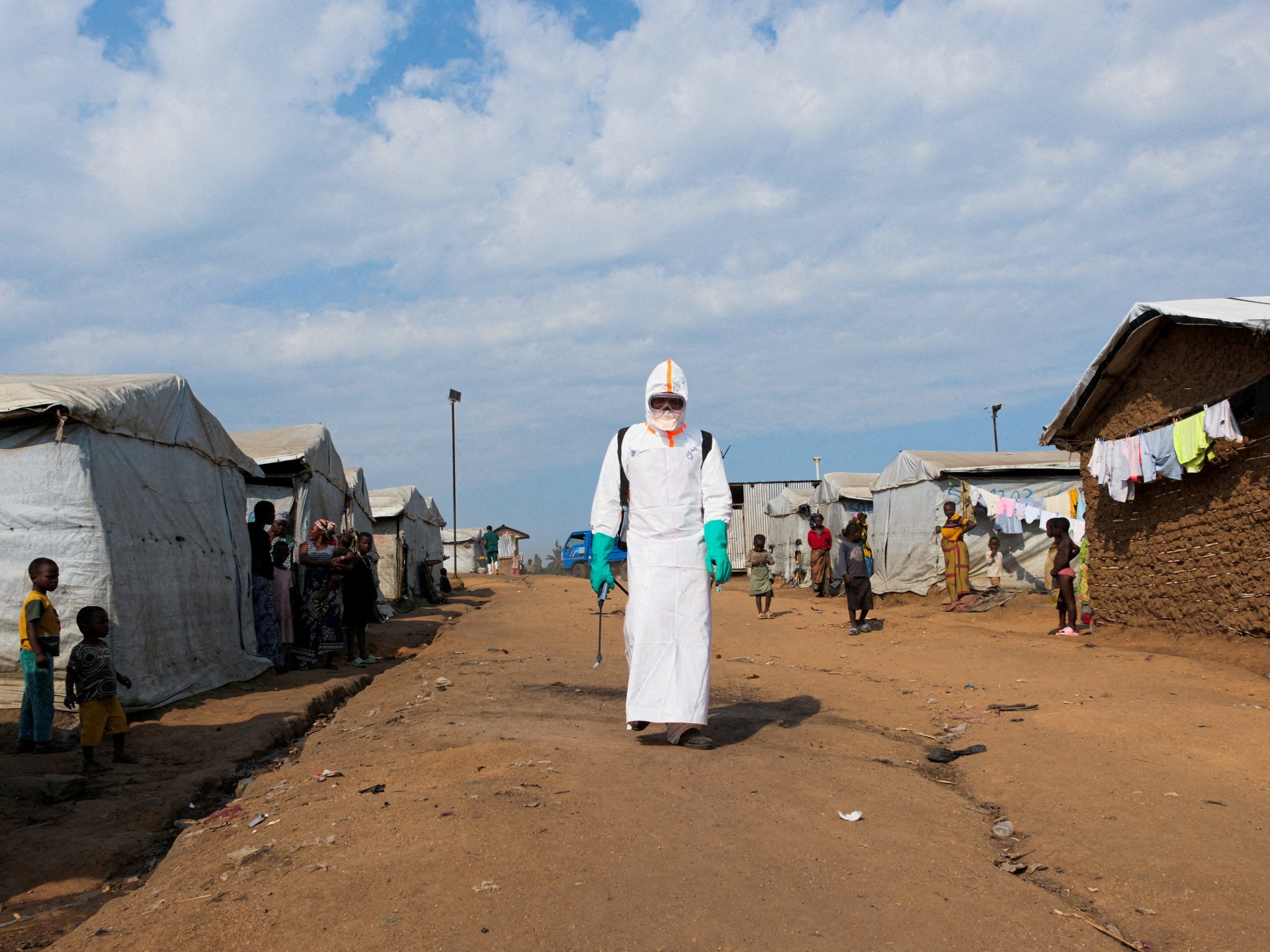
Kathmandu— A rapidly escalating Ebola outbreak in the Democratic Republic of Congo (DRC) has expanded to two new health zones – Biena and Manguredjipa in North Kivu province – bringing the total number of affected areas to 60. With 5,794 confirmed cases and 2,786 deaths recorded thus far, this outbreak is now the fastest-spreading Ebola epidemic ever documented, outpacing efforts to track and control its progression since it began in mid-May. The high fatality rate, particularly in newly affected zones, is attributed to delayed response times and ongoing challenges including armed conflict and limited infrastructure.
Unprecedented Spread and Fatality Rates
The DRC’s Ministry of Health released data on Friday detailing the alarming expansion of the outbreak. The current rate surpasses any previous Ebola epidemic, threatening to exceed the 2014-2016 West Africa outbreak which claimed over 11,000 lives. In Biena and Manguredjipa, fatality rates are significantly higher than the national average of 48 percent, indicating difficulties in providing timely medical intervention.
Challenges to Containment
Efforts to contain the virus have been severely hampered by a complex web of factors. Armed conflict within affected provinces continues to disrupt healthcare access and displace populations, while attacks on medical personnel and facilities further impede response efforts. A highly mobile population and a lack of essential infrastructure also contribute to the rapid spread. The outbreak is compounded by the fact that there is no approved vaccine or treatment for this particular strain of Ebola, known as Bundibugyo.
Aid Organizations Increase Support
Doctors Without Borders (MSF) announced Friday the opening of a new treatment center in Beni, North Kivu, to bolster response capabilities in one of the hardest-hit areas. Beni has recorded 122 confirmed cases and 87 deaths, resulting in an almost 69 percent fatality rate – among the highest in the country. MSF currently maintains 1,400 staff across DRC and operates treatment centers with a combined capacity of 400 beds. Albert Stern, MSF’s emergency coordinator, emphasized that “early diagnosis and treatment…significantly increase people’s chances of survival.”
International Calls for Action
UN Secretary-General Antonio Guterres issued a warning on Thursday stating the outbreak is growing faster than containment efforts. In a post on X (formerly Twitter), he stated, “The Ebola outbreak in the Democratic Republic of the Congo is the fastest-spreading Ebola epidemic ever recorded…It’s growing faster and wider than the response to contain it.” Guterres affirmed that effective methods for controlling Ebola exist but urged the world to urgently increase its support.
As of Friday, aid organizations are working to expand treatment capacity and bolster contact tracing efforts. The situation remains critical, with ongoing challenges hindering containment and raising concerns about a further escalation of the outbreak.
(With inputs from Al Jazeera)
Originally published on abcnews.com.np.



प्रतिक्रिया दिनुहोस्