

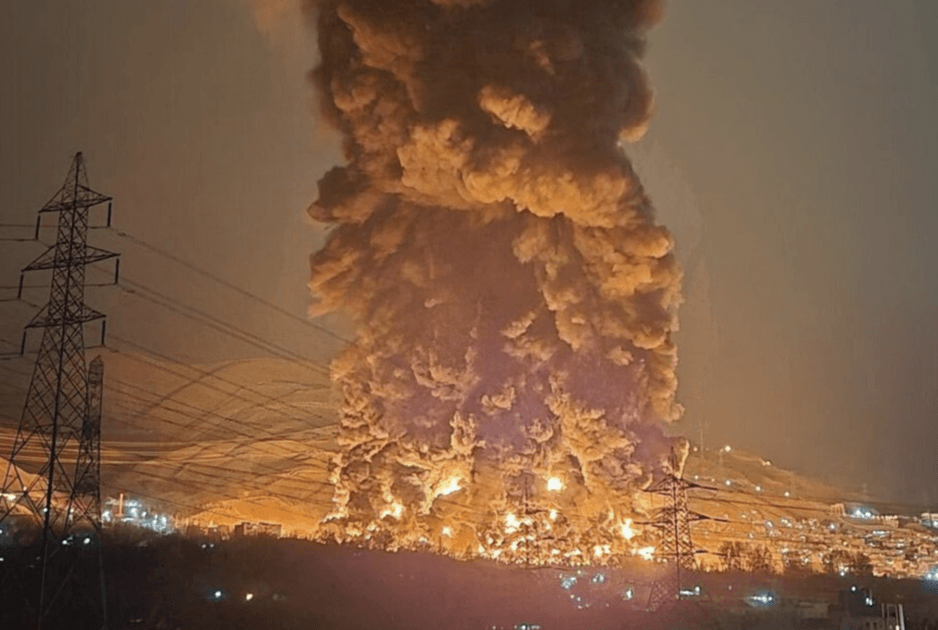
Kathmandu— The United States has a decades-long history of waging war with significant ecological consequences in the Middle East, extending from Operation Desert Storm in 1991 to recent actions targeting Iran. While figures detailing monetary costs and casualties are readily available – such as the $37.5 billion spent on conflict with Iran and 7.6 million tons of bombs dropped – these numbers obscure the true human and environmental toll of US/Israeli aggression, reducing complex crimes to statistics. The impacts range from poisoned water sources and soil contamination to greenhouse gas emissions and damage to vital ecosystems.
Ecological Devastation in Iraq
Following massive bombing campaigns in Iraq, tangible ecological damage became apparent, including poisoned aquifers, widespread soil contamination with depleted uranium and other toxic metals, and air pollution from scorched oil infrastructure. This pattern of environmental destruction is not limited to the US; Saddam Hussein also committed ecocidal acts by deliberately draining the Mesopotamian marshlands and setting fire to Kuwaiti oil fields. The ongoing bombardment of Iran follows this established pattern of belligerence.
Iran's Vulnerable Ecosystems
Recent US and Israeli actions targeting Iranian oil infrastructure have released millions of tons of greenhouse gases, creating toxic rain clouds, and caused oil spills impacting biologically important island ecosystems. Experts anticipate severe soil and groundwater contamination similar to that seen in Iraq, which will likely plague Iranians for decades. The full extent of the damage inflicted by these bombings remains unknown, but the potential long-term consequences are significant.
Glacial Floods Threaten Nepal
A recent catastrophic mudslide on the Nepal-Tibet border, triggered by a dislodging glacier and registering as a 5.2 magnitude geological event, killed hundreds and highlights the growing threat of climate change in the Himalayas. The region’s 15,000 glaciers are receding rapidly, creating unstable conditions prone to such disasters. Despite contributing less than 0.1% of global emissions, Nepal is exceptionally vulnerable to these impacts, with projections indicating a loss of 70% of its glacial ice by 2100.
Carbon Footprint of Metal Production Underestimated
A new study reveals that the carbon footprint of metal production is ten times higher than previously estimated. This is due to acid-laden runoff reacting with surface waters and releasing significant amounts of carbon, casting doubt on the viability of relying on mining as a solution to the climate crisis.
The long-term ecological consequences of ongoing conflicts and accelerating climate change remain largely unknown but are expected to intensify in vulnerable regions like Iran and Nepal. Further research and documentation of these impacts are crucial for understanding the full scope of environmental damage.
(With inputs from CounterPunch)
More from the source

Originally published on abcnews.com.np.





प्रतिक्रिया दिनुहोस्