

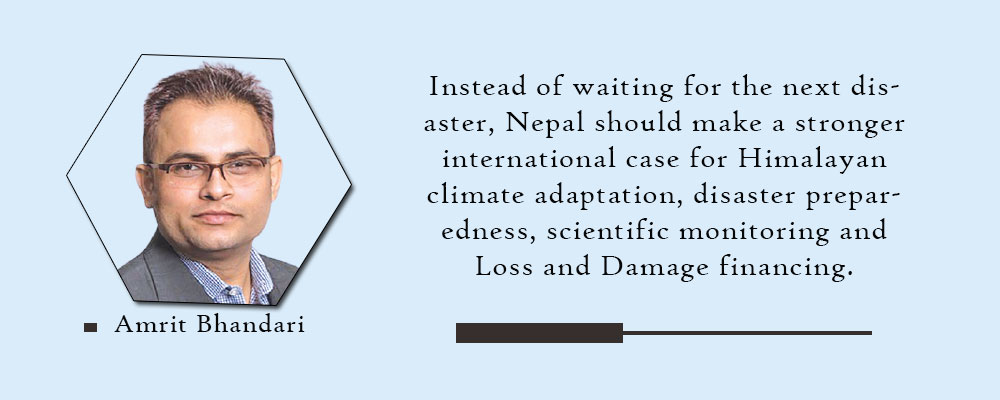
Kathmandu— A catastrophic flash flood hit the district of Rasuwa, Nepal, on a recent day, causing widespread destruction and loss of life. The disaster swept away roads, bridges, homes, and businesses, leaving families anxiously awaiting news about their loved ones. This event highlights the urgent need for climate justice as Nepal faces increasing risks from climate change despite contributing minimally to global emissions.
Nepal's Minimal Contribution To Global Emissions
Nepal, a country with negligible industrial power, contributes only around 0.1 percent of the world’s greenhouse gas emissions according to the World Bank. Despite this minimal contribution, Nepal is disproportionately affected by climate change impacts such as melting glaciers and increased landslide risks.
Risks To The Himalayas And South Asia
The disaster in Rasuwa serves as a stark reminder of the broader implications for the entire region. The Himalayas, which feed major river systems supporting millions across South Asia, are facing unprecedented threats. A 2020 study by ICIMOD and UNDP identified 47 potentially dangerous glacial lakes across Nepal, Tibet, and India, highlighting the urgent need for monitoring and mitigation.
Early Warning Systems And Community Preparedness
To mitigate future risks, Nepal must urgently assess its glacial lakes using modern technology such as satellites, drones, and sensors. Early warning systems should be established to inform communities about potential dangers, and relocation of high-risk areas may also be necessary.
International Commitments To Climate Justice
The concept of Loss and Damage has been recognized by the international community, leading to the creation of a fund aimed at supporting vulnerable countries like Nepal. However, turning this commitment into practical support remains crucial for addressing both economic and non-economic losses linked to climate change.
(With inputs from RN)
Originally published on abcnews.com.np.





प्रतिक्रिया दिनुहोस्