

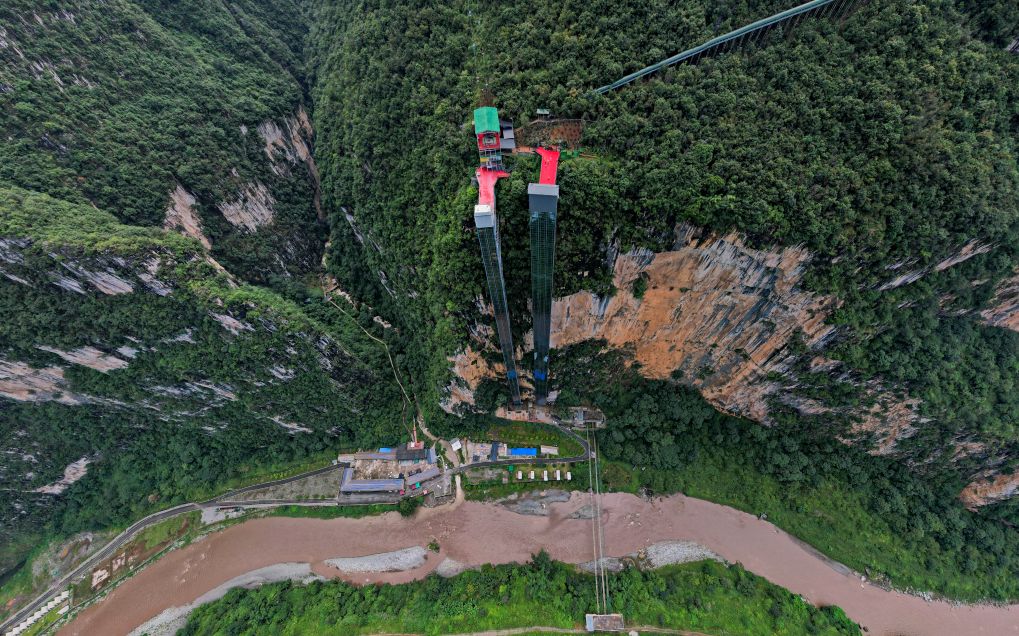
Kathmandu— In southwest China's Yunnan Province, a new 288-meter-high elevator has been installed to transport children from Nizhuhe Village up the cliffs to Guanzhai Primary School. This follows the installation of a 268-meter-high elevator and an aerial cable car system in 2022, significantly reducing the three-hour trek that students previously faced. The initiative is part of broader national efforts to ensure equitable access to education for children living in remote areas.
Navigating Treacherous Terrain
For years, reaching school meant a perilous journey through rugged terrain for Lei Xin and his peers from Nizhuhe Village. The village sits at the bottom of the Nizhu River Grand Canyon, while their school is perched more than 500 meters above on cliffs. Parents like Zhao Suzhen worried constantly about their children's safety as they navigated a narrow trail strewn with loose gravel and barely half a meter wide in some sections.
The 'Sky Shuttle' Solution
In 2022, the development of the Nizhu River Grand Canyon scenic area introduced a 268-meter-high elevator and an aerial cable car system. A second elevator, rising 288 meters, opened in July this year to accommodate growing visitor numbers. Together, these systems can carry up to 1,200 passengers per hour, significantly reducing the journey time from three hours to about 30 minutes.
Tailored Solutions Across China
Across China's vast and rugged regions, governments are implementing tailored solutions to ensure school access. In Puli Township, a ferry system now safely transports students across waterways. Chengkou County in Chongqing Municipality has launched the 'Hope Line' school bus service with 33 dedicated routes, while Panxi Town in Guizhou uses customized school buses to reach remote areas.
Broader Impact on Rural Communities
The new transportation systems have not only made schooling more accessible but also contributed to rural revitalization. In Nizhuhe Village, the influx of tourists has spurred local economic growth, with villagers opening guesthouses and selling local specialties. The improved educational conditions support community stability and provide a foundation for tourism and other industries.
These efforts reflect China's broader commitment to ensuring equitable access to education across its vast and diverse regions.
(With inputs from Xinhua)
More from the source


Originally published on abcnews.com.np.






प्रतिक्रिया दिनुहोस्