

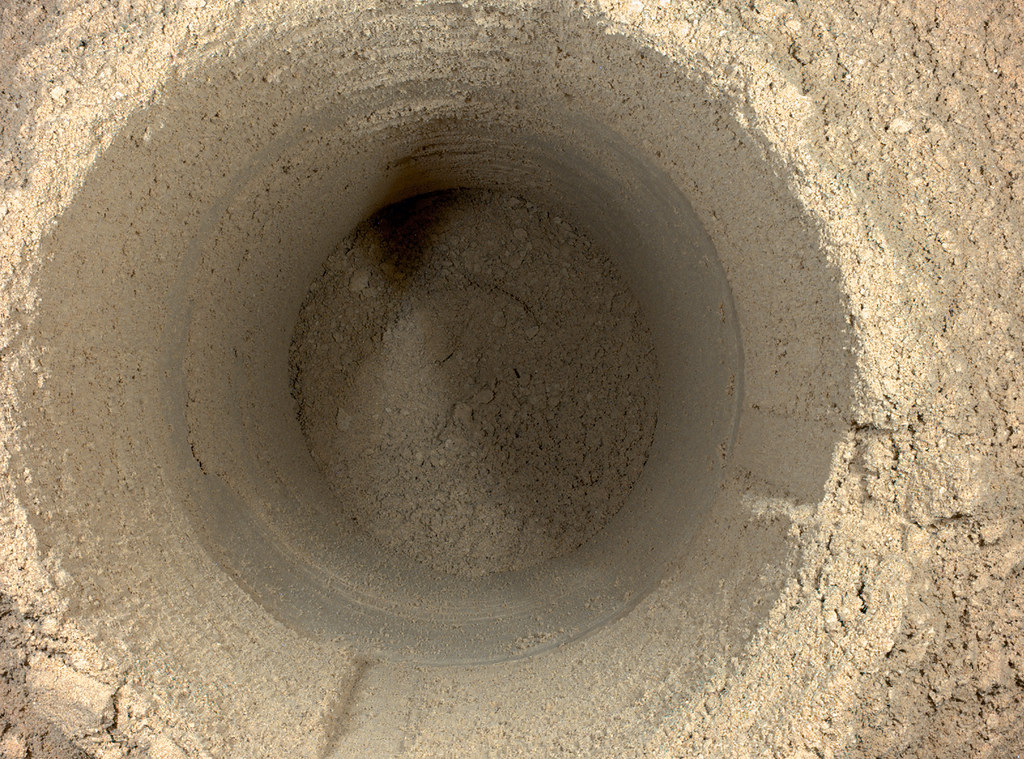
Kathmandu— China's Tianwen-3 mission, scheduled for launch around 2028, aims to become the first Mars sample-return mission in human history by collecting high-value Martian samples and conducting detailed analyses on Earth, with the search for potential signs of past life on Mars identified as its top scientific goal, according to chief scientist Hou Zengqian, who spoke at the 2026 International Deep Space Exploration Conference in Hefei.
Historic Sample Return Mission
China's Tianwen-3 mission, planned for launch around 2028, is expected to become the first Mars sample-return mission in human history, according to chief scientist Hou Zengqian. Unlike NASA's Perseverance rover, which has collected shallow surface samples and will rely on a follow-up mission to return them to Earth, Tianwen-3 aims to accomplish both sampling and return in a single mission.
Hou, an academician of the Chinese Academy of Sciences, stated that China expects to finalize the landing site for the mission by the end of 2026, while scientists are advancing work on a new-generation geological map of the entire Mars, integrating data from the Tianwen-1 mission and multiple international sources.
Search for Life Beyond Earth
Searching for potential signs of life on Mars is the top scientific goal of the Tianwen-3 mission, Hou said. The mission will look for microbial traces potentially similar to early forms of life on Earth, while also considering the possibility of unknown forms of life that may have emerged through Mars' unique evolutionary history.
"The returned Martian samples will have irreplaceable scientific value regardless of whether signs of life are found," Hou emphasized, noting that analyses at microscopic, molecular and isotopic scales could deepen understanding of Mars' geology, environment, and the conditions under which life may originate.
Technical Challenges and Innovations
Hou highlighted that Mars sample return is an extremely complex project, with key challenges including landing-site selection, planetary protection, contamination control, and the identification of potential signs of life.
To address these challenges, Chinese scientists are selecting candidate landing sites based on geological age, history of water activity, habitability, and the potential for preserving biosignatures. China will also build the world's first planetary protection laboratory to prevent terrestrial microorganisms from contaminating Mars while ensuring the safe isolation of returned samples.
The mission has now entered the stage of developing engineering prototypes, with a new-generation geological map of Mars scheduled for completion by 2028, as China advances its role in global planetary science through open cooperation with international scientists.
(With inputs from Xinhua)
Originally published on abcnews.com.np.




प्रतिक्रिया दिनुहोस्