

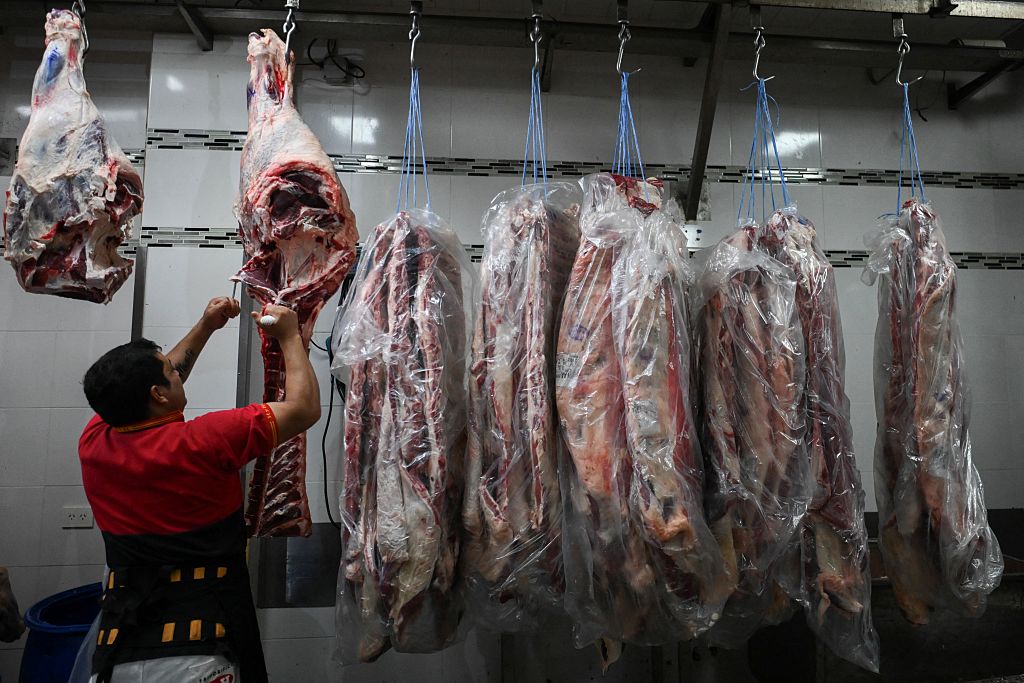
Kathmandu— Tyson Foods abruptly shut down its plant in Joslin, Illinois, in August, laying off 2,500 workers, mostly immigrants, who had been employed there for years. The closure, driven by corporate consolidation and a nationwide cattle shortage, has sent shockwaves through the local community and raised questions about labor practices and union effectiveness.
Immediate Impact on Workers
Ouano Tante, a worker from Togo, described the plant closure as traumatic. 'People were crying, shaking,' she said. 'When we were leaving the parking lot, there were so many car accidents. People were so upset.' The workers received no severance or explanation for the sudden closure, leaving them with financial uncertainty and emotional distress. 'They gave no reason, nothing,' said Ahoro Asselissime, who had worked at the plant for eleven years. 'People have no job. No money to pay our bills.'
Community and Economic Fallout
Joslin, a small town of just 56 residents, is home to a large number of Tyson workers. The closure has sent the community into a tailspin, with local businesses and services facing potential economic downturns. 'We’re going to see a crisis in every sector,' said Nana Ouro-Agoro, founder of Akwaaba, a nonprofit organization that supports the Quad Cities' immigrant population. The closure has also highlighted the economic dependence of the local area on Tyson, with many workers and their families facing financial hardships. 'I got $500 this week,' said Asselissime. 'My rent is $925. I have to put gas in my car, buy food for my kids. Everything is so expensive now.'
Union Response and Worker Mobilization
The union, UFCW Local 1546, released a statement expressing disappointment at not receiving advance notice of the closure. However, many workers feel that their union leadership has left them in the lurch. 'The union doesn’t care about us, Tyson doesn’t care about us,' said Asselissime. 'A lot of immigrants work for this company, from Mexico, from Africa. That’s why they don’t care.' Workers have been organizing independently, demanding Tyson make a plan to keep the plant open or provide six months of severance pay. On September 3, workers and community supporters will march on the state capitol building in Springfield to demand fair severance pay and state ownership of the plant.
Corporate Consolidation and Its Impact
The closure of the Tyson plant in Joslin is part of a broader trend of consolidation in the meatpacking industry. The 'Big Four' — Tyson, Cargill, JBS, and National Beef — own over 80 percent of the US beef industry. These companies have been accused of colluding to fix prices, driving down wages for workers and ranchers. The cattle shortage, while a factor, is exacerbated by the consolidation, as meatpackers squeeze cattle producers. 'Tyson isn’t the only one closing plants,' said Ouro-Agoro. 'JBS, the world’s largest meatpacker, closed a facility in Memphis in June, laying off two hundred. JBS also announced plans to close a 1,500-worker processing plant in Souderton, Pennsylvania, but efforts from union and political leaders pushed JBS to convert the plant to a smaller facility, saving four hundred jobs.'
The closure of the Tyson plant in Joslin continues to reverberate through the community, with workers and their families facing financial and emotional challenges. The situation highlights the broader issues of corporate consolidation and its impact on workers, as well as the need for stronger labor protections and community support.
(With inputs from Jacobin)
Originally published on abcnews.com.np.


प्रतिक्रिया दिनुहोस्