


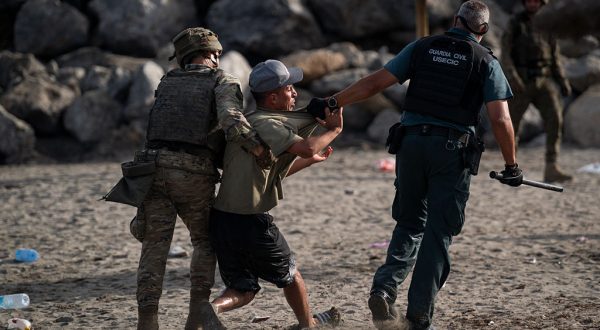
Kathmandu— Last week, an unprecedented mass movement saw approximately 60,000 migrants cross from Morocco into Spain’s enclave of Ceuta on the African side of the Strait of Gibraltar. At least 72 people died during this attempt as border police used water cannons, tear gas, and warning shots to deter further crossings. The sudden influx overwhelmed the city's residents, leading to a humanitarian crisis that was short-lived, with nearly all migrants returning to Morocco within a day.
Driving Factors Behind the Mass Movement
Miriyam Aouragh, an anthropologist and daughter of Moroccan immigrants to Europe, attributes this mass movement to shifting entry policies in Spain and increasing economic inequality in Morocco. She explains that these factors have provided a 'sort of empowering incentive' for people to attempt crossing into Ceuta. The city's strategic location along the Strait of Gibraltar has made it a focal point for migration attempts, with its five-mile-long border surrounded by Moroccan territory.
Historical and Political Context
Ceuta’s history dates back to the Phoenician era, but it has been under Portuguese or Spanish control since 1415. The city is strategically important due to its location on the African side of the Strait of Gibraltar. However, this strategic importance also makes it a point of contention between Morocco and Spain. While Morocco claims Ceuta as occupied territory, Spain considers it an integral part of its state, leading to ongoing disputes over sovereignty.
(With inputs from Democracy Now)
Originally published on abcnews.com.np.




प्रतिक्रिया दिनुहोस्