

Kathmandu— Every monsoon season in Nepal brings the same scenario of waterlogged roads, submerged houses, stalled vehicles, overflowing drains, and families waiting to be rescued. The catastrophic flood that hit Kathmandu in late September 2024 highlighted the urgent need for an integrated urban water management system to address infrastructure and public safety issues.
Historical Context of Urban Flooding
Once upon a time, the Kathmandu Valley was characterized by rivers, ponds, wetlands, agricultural fields, and traditional stone spouts that stored, absorbed, and slowly released water. However, rapid urbanization has led to the loss of much of this natural system, replaced by buildings, roads, and concrete surfaces. Rainwater that used to soak into the ground now rushes into undersized drains and swollen rivers, exacerbating flooding issues in cities like Lalitpur, Biratnagar, Pokhara, Butwal, and others.
Integrated Urban Water Management Solutions
To address these challenges, Nepal needs a comprehensive approach to urban water management. Each municipality should develop a digital stormwater master plan using rainfall records, topographic surveys, satellite images, and hydraulic models to identify flood-prone areas and prioritize infrastructure improvements. This includes designing drainage systems for future rainfall intensity rather than outdated averages.
Protecting river corridors is another critical step. Floodplains must be mapped, legally defined, and kept free of further construction. Restoring public greenways and overflow spaces with vegetation on riverbanks can help manage flood risks without transferring them downstream.
Decentralized Solutions for Stormwater Management
Cities should implement 'sponge city' measures such as rain gardens, permeable pavements, detention ponds, recharge pits, rooftop harvesting, and restored wetlands to capture stormwater close to its point of fall. These decentralized systems are often cheaper and more flexible than relying solely on large underground pipes. Schools, government buildings, residential colonies, shopping malls, and industrial areas should be required to hold back a portion of their stormwater before releasing it into city drains.
Maintenance and Coordination
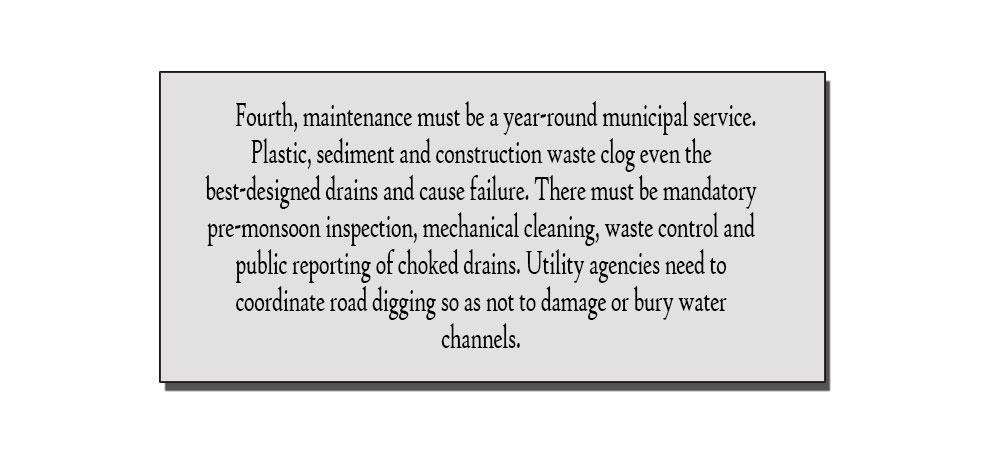
Regular maintenance must become a year-round municipal service. This includes mandatory pre-monsoon inspections, mechanical cleaning, waste control, and public reporting of choked drains. Utility agencies need to coordinate road digging to avoid damaging or burying water channels. Real-time rainfall monitoring, river sensors, neighborhood sirens, mobile alerts, and clearly marked evacuation routes are also essential for effective flood management.
While urban flooding cannot be entirely eliminated due to climate change-induced extreme rain events, the number of deaths, damage, and disruption can be significantly reduced. Nepal’s cities must treat each monsoon flood as an engineering and governance issue rather than an isolated natural disaster.
(With inputs from Rising Nepal)
Originally published on abcnews.com.np.




प्रतिक्रिया दिनुहोस्