

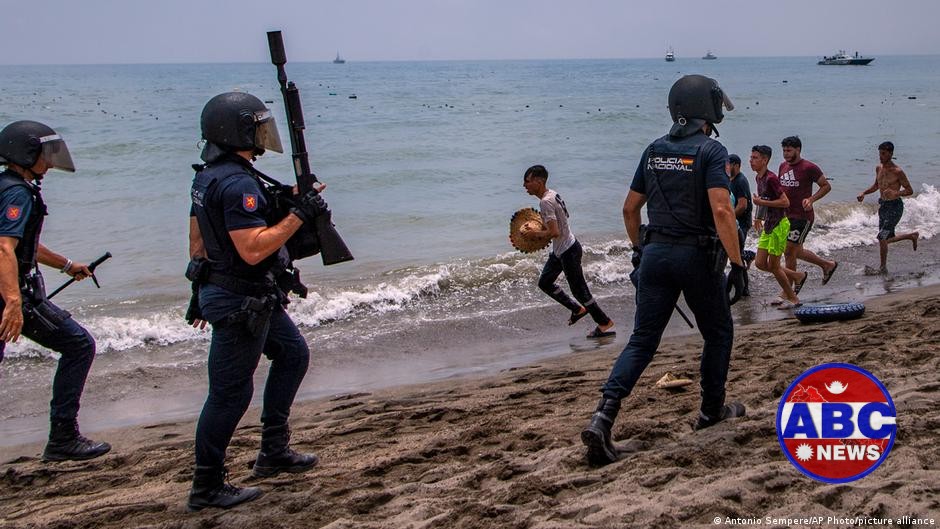
Kathmandu— Tens of thousands of migrants attempted to cross from Morocco into Spain’s North African exclave of Ceuta in late July, triggering a humanitarian crisis. European and Moroccan authorities blamed misleading social media posts for the sudden influx, which was fueled by incorrect interpretations of a recent Spanish Supreme Court ruling on migrant returns.
Misleading Claims Spread Widely
Posts claiming that migrants arriving by sea could not be immediately deported spread rapidly across social media platforms. These posts often omitted crucial details, such as the fact that the ruling only applied to those who did not cross official border barriers. Many accounts linked to migration-focused pages promoted these claims under slogans like 'All opportunities for immigration abroad are in your hands.'
Fact Check Reveals Misinterpretations
DW Fact Check examined the spread of misleading posts and found that they often quoted the ruling without explaining its legal scope. For example, a TikTok user claimed that the law prohibited sending anyone back if they arrived by swimming to Spain, ignoring the broader context of the Supreme Court’s decision.
The fact check concluded that while these claims were misleading, they did not alone explain the scale and timing of the mass movement towards Ceuta.
Political Dispute Over Crisis Causes
Spanish officials accused organized networks of exploiting the situation by spreading inaccurate information. Prime Minister Pedro Sánchez stated that such misinformation played a role in encouraging people to attempt the crossing.
Moroccan authorities, however, rejected accusations that they had allowed the crossings and instead pointed to misleading social media claims as the cause.
The surge of migrants into Ceuta remains a complex issue with political dimensions. While misinformation played a role in triggering the crisis, experts suggest broader factors were likely at play.
(With inputs from DW)
Originally published on abcnews.com.np.






प्रतिक्रिया दिनुहोस्