

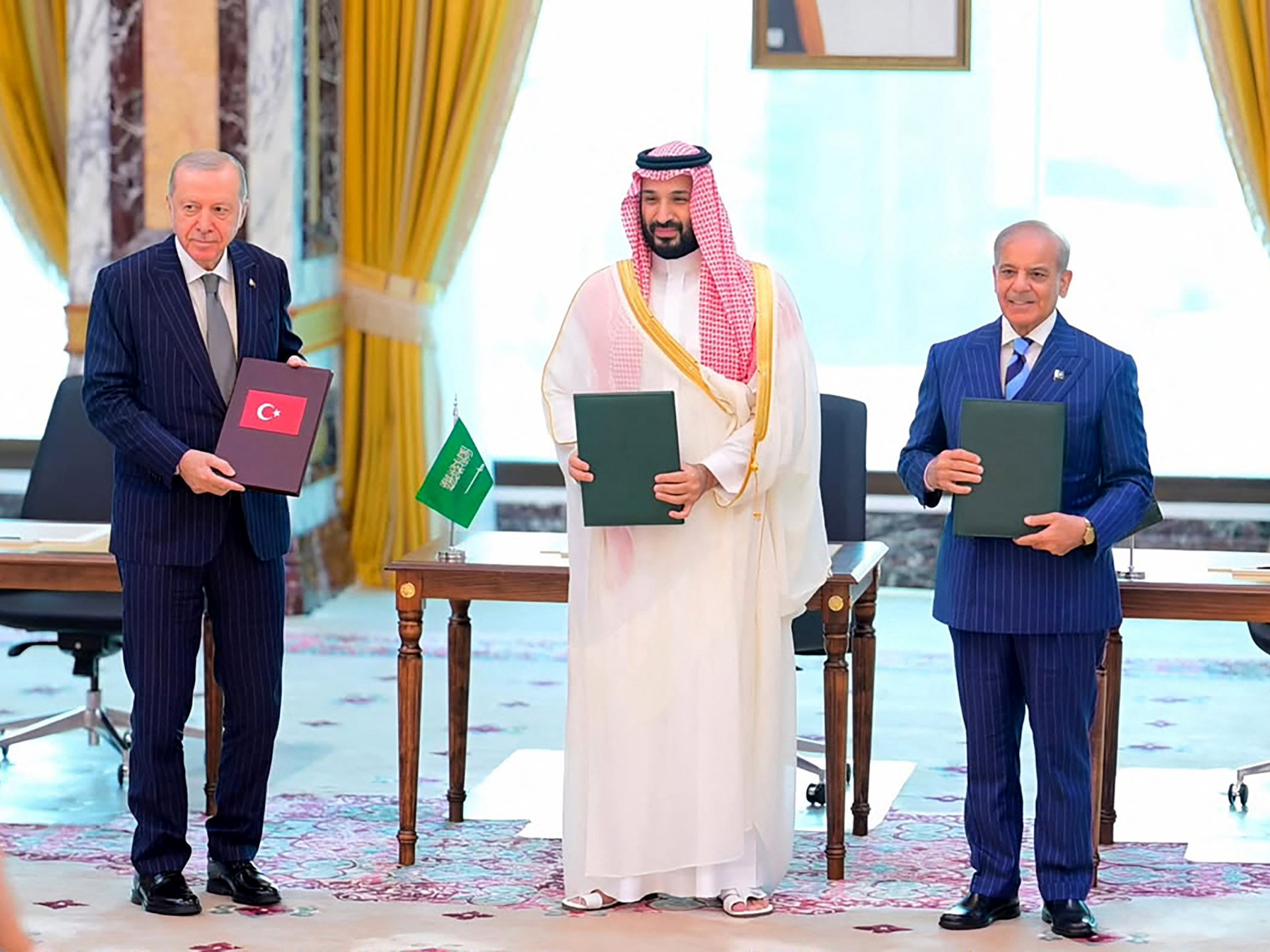
Kathmandu— Saudi Arabia, Pakistan, and Turkey recently signed a mutual defense pact in Mecca, raising questions about a new security architecture in the Middle East at a time of ongoing conflict and evolving US involvement. The agreement stipulates that an attack on one nation will be considered an attack on all three, prompting analysis of Iran’s response, which has been largely subdued with officials focusing on diminished American influence in the region. While Tehran currently does not view the pact as an immediate threat, some analysts suggest it could eventually facilitate coordinated pressure on Iran and its allies, particularly given recent attacks by Houthi forces in Yemen and escalating tensions in the Red Sea.
Pact Emerges Amid Regional Conflict
The trilateral agreement follows months of conflict triggered by a bombing campaign against Iran, which disrupted maritime traffic through the Strait of Hormuz. Pakistan, Saudi Arabia, and Turkey have emphasized that the pact is not targeted at any specific country, including Iran, and does not replace existing agreements. However, the timing of the deal – occurring after repeated attacks on Saudi Arabia from Yemen’s Houthi rebels and armed groups in Iraq – has raised concerns within Tehran about potential implications for regional stability.
Iranian Officials Focus on US Role
Iran's Foreign Minister Abbas Araghchi emphasized the importance of Muslim unity, stating on X that “when Muslims stand together, we can face every challenge by malicious outsiders head-on.” Hossein Noushabadi, a director general for parliamentary and legal affairs at Iran’s Ministry of Foreign Affairs, described the pact as indicative of a collapsing US security presence in West Asia. He suggested it signals a shift towards a new regional security order based on cooperation among regional states, marking “the end of the prevailing security and geopolitical paradigm.”
Analysts Weigh Long-Term Implications
Hamidreza Azizi, a researcher at the Clingendael Institute, believes Tehran is concerned that the pact could strengthen Saudi deterrence and potentially facilitate coordinated pressure on Iran in Yemen, Iraq, and even economically through Turkey and Pakistan. Political scientist Vali Nasr views the agreement as part of a post-American security order in the Middle East, balancing against the Abraham Accords and US efforts to normalize relations between Israel and regional Arab states. Mehran Kamrava, a professor at Georgetown University of Qatar, suggests that Iranian decision-makers do not currently feel threatened by the pact due to existing cordial relations with both Pakistan and Turkey.
Internal Debate Within Iran
Despite the official subdued response, some hardline lawmakers in Iran have expressed concerns that the pact could be directed against Tehran’s regional allies. Ebrahim Azizi, a member of the Iranian parliament’s National Security and Foreign Policy Commission, warned against miscalculation and asserted that Iran has proven “every error comes at a cost.” Another commission member, Ebrahim Rezaei, argued that the agreement will not provide Saudi Arabia with lasting security any more than its reliance on the United States did.
Future Prospects for Regional Cooperation
Analysts suggest Tehran’s priority is to avoid turning the pact into an explicitly anti-Iranian coalition by maintaining individual relations with each member. The possibility of Iran seeking membership in the pact at a later date has been raised, contingent on a sustainable end to attacks in the Strait of Hormuz and broader regional stability. Expansion of the agreement to include other Arab states, such as Egypt, is also considered plausible.
Experts believe the trilateral pact reflects both short-term security concerns and long-term opportunities for Riyadh, Islamabad, and Ankara, driven by perceptions of US unreliability and Iranian retaliation.
(With inputs from Al Jazeera)
Originally published on abcnews.com.np.



प्रतिक्रिया दिनुहोस्