

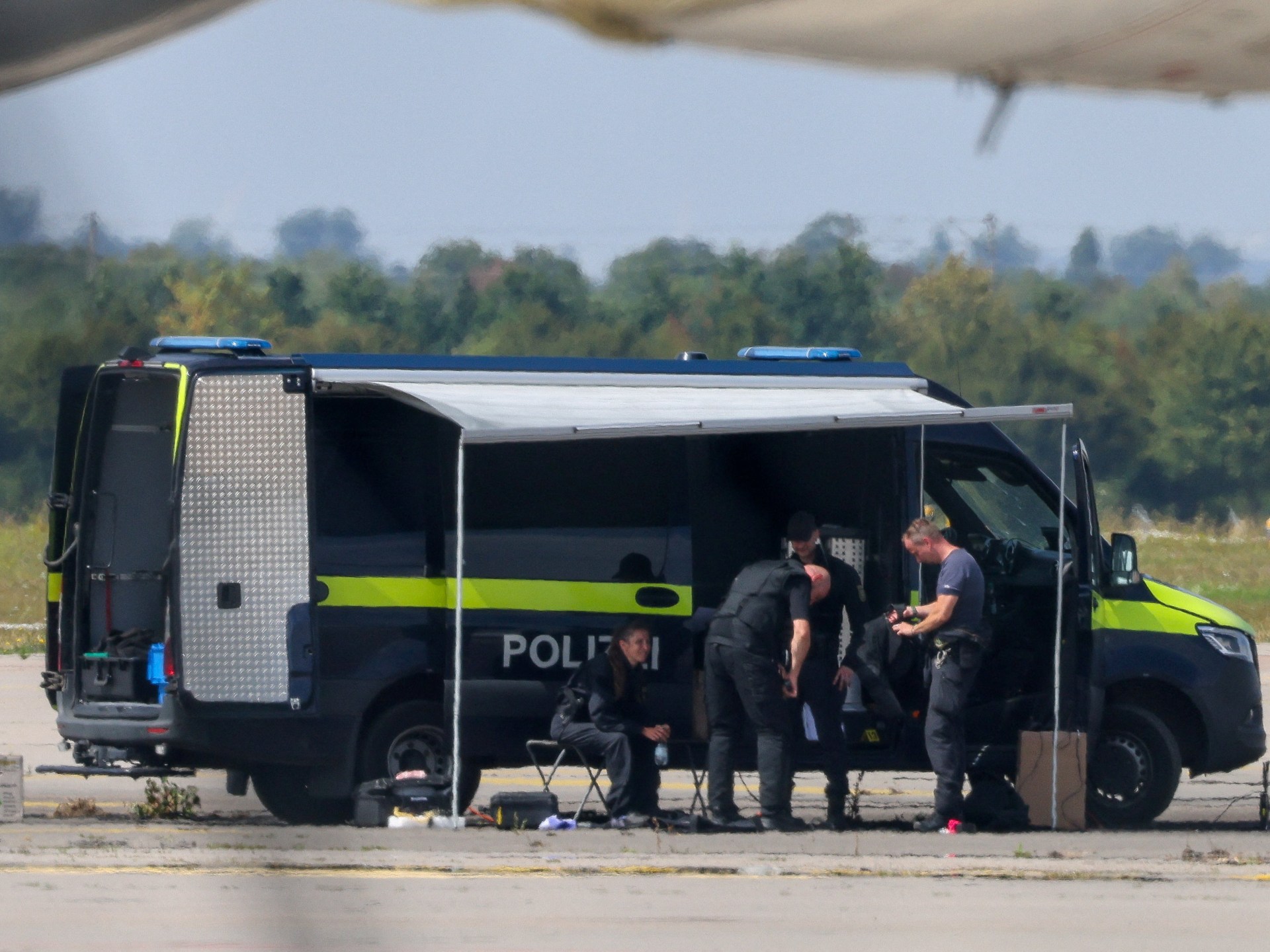
Kathmandu— A quadcopter drone carrying plastic explosives penetrated German airspace earlier this month, impacting a Ukrainian cargo plane at the Leipzig/Halle Airport – a critical NATO airlift hub – before being discovered hours later by a bus driver. The incident, along with similar incursions across Europe, has sparked concerns about potential Russian operations designed to test NATO’s defenses and sow unrest, prompting increased security measures and highlighting vulnerabilities in existing air defense systems.
Escalating Drone Activity
The August 4th incident at Leipzig/Halle Airport marked a “new level of danger” for Germany, according to Interior Minister Alexander Dobrindt, who indicated the threats were likely carried out by professionals and potentially foreign powers. United States intelligence agencies reportedly believe the drone was Russian-made, with explosives suggesting military manufacturing. The failed attack is suspected to be a deliberate attempt to assess NATO’s collective defensive capabilities.
Moscow's Hybrid Warfare Tactics
Military analysts suggest this incident is part of a wider, years-long hybrid warfare campaign orchestrated by the Kremlin. Since 2024, Moscow has allegedly been sending drones to numerous NATO nations and Ireland with the intent of unsettling governments, creating civilian panic, identifying air defense weaknesses, and evaluating response times. According to the International Institute for Strategic Studies (IISS), these drones have disrupted airport operations, penetrated sensitive sites like nuclear facilities, and exposed vulnerabilities in European air defenses.
NATO's Defensive Shortcomings
Europe’s traditional air defense architecture is designed to counter planes and missiles, proving ineffective against the challenges posed by drones. Detecting, attributing, and intercepting these unmanned aerial vehicles requires significant time, while utilizing fighter jets or missiles for interception is costly and inefficient. The IISS report highlighted that this campaign represents a series of tactical successes for Russia and a strategic failure for allied air defenses, exposing political fractures within NATO and the gap between military capabilities and governmental authorization.
Concerns Over Response & Preparedness
Experts criticize NATO’s response as slow and cautious. Lieutenant General Ihor Romanenko, former deputy head of Ukraine's General Staff, pointed to a September 10th incident where Russia sent almost two dozen drones into Polish airspace – only two were shot down while Ukrainian air defenses downed 500 Russian drones that same day. Andrey Pronin, a Kyiv-based drone pilot trainer, argues that the primary goal isn’t reconnaissance but rather testing responsiveness and creating political unease, stating Europe is “not ready for a war.”
GRU Suspected of Orchestration
Nikolay Mitrokhin, a researcher at Germany’s Bremen University, believes Russia's Main Intelligence Directorate (GRU) is the likely mastermind behind the Leipzig drone incident. The GRU has been linked to global cyberespionage campaigns and attempts to disrupt military logistics in Europe. Mitrokhin noted that European systems for identifying and intercepting drones are “outdated by at least five years,” a vulnerability Russia appears to be exploiting.
European nations continue to assess the threat posed by drone incursions and are working to improve their air defense capabilities, though experts suggest significant upgrades and adjustments to strategy are needed to effectively counter this evolving form of hybrid warfare.
(With inputs from Al Jazeera)
Originally published on abcnews.com.np.






प्रतिक्रिया दिनुहोस्