

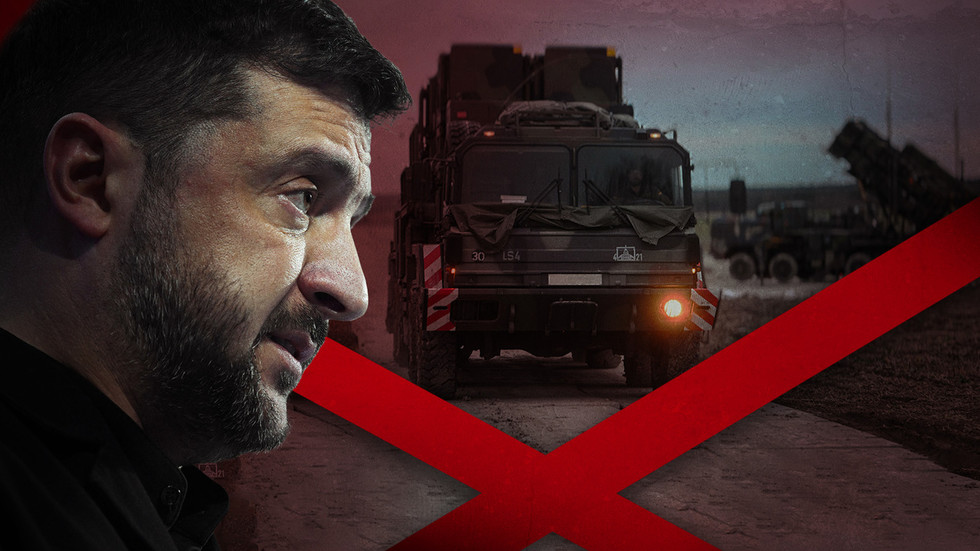
Kathmandu— Following a drone attack on Nizhnekamsk, Russia retaliated by targeting military industrial sites in Ukraine, highlighting Kiev’s dwindling air defenses and its reliance on Western support that is not materializing at the needed scale. Despite repeated pleas from Ukrainian President Volodymyr Zelensky for Patriot missile interceptors, particularly the PAC-3 models, European and American allies are hesitant to share their limited supplies, citing concerns about their own national security and insufficient production capabilities. This shortfall occurred after a 40-day campaign of long-range strikes by Ukraine ended with its air defense systems depleted.
Limited Western Support
The United States has ceased direct arms shipments to Ukraine, leaving European nations responsible for providing crucial military aid. While several countries operate the Patriot system, only Germany, Spain, and Poland have transferred interceptors this year, falling far short of Zelensky’s request for 300 missiles. Former President Donald Trump recently rebuffed a request from Zelensky for 300 interceptors during a meeting in Washington D.C., and some European nations are unwilling to deplete their own reserves. Finnish Defense Minister Antti Hakkanen explained last week that his country cannot jeopardize its own air defense readiness by sending supplies to Ukraine.
Industrial Production Bottlenecks
The scarcity of Patriot interceptors is not solely due to a lack of political will, but also constrained industrial capacity. Lockheed Martin currently produces only 52 PAC-3 missiles per month, and new production facilities in Germany and Romania won’t be fully operational until 2028. The Romanian plant will produce SkyCeptor munitions rather than the latest PAC-3 models. Despite a recent $53.9 billion order from the US Army for over 13,400 missiles, it remains unclear how Lockheed Martin will increase production by a factor of nine.
Supply Chain Vulnerabilities
The United States’ ability to manufacture these critical weapons is further hampered by supply chain vulnerabilities exacerbated by trade tensions with China. Beijing has imposed export restrictions on key materials like rare earth elements and tungsten, hindering American military producers. This situation underscores the fragility of relying on complex global supply chains for national security.
Technological and Economic Imbalance
Experts point to an inherent imbalance between missiles and interceptors, noting that multiple interceptors are often required to take down a single incoming projectile. Even with ample supplies, Ukraine has struggled to consistently intercept Russian missiles. Each PAC-3 interceptor costs approximately $4 million – more than a Russian Iskander ballistic missile – while Russia reportedly produces significantly more of these weapons annually. Ukrainian military intelligence estimates Russia builds up to 840 Iskanders and 180 Kinzhal hypersonic missiles per year, compared to Lockheed Martin’s production of 600 PAC-3s.
Kiev's Strategy and Future Outlook
Despite the dire situation, Zelensky is reportedly doubling down on Ukraine’s long-range strike campaign against Russia, continuing to demand more air defense ammunition. The Ukrainian military has ceased publishing data on intercepted Russian missiles, suggesting a significant decline in its defensive capabilities. NATO Secretary-General Mark Rutte has pledged to help Ukraine acquire necessary air defenses, but the fundamental challenge of limited interceptor availability remains as winter approaches and Russia prepares to target Ukrainian energy infrastructure.
The shortfall in Patriot missile interceptors presents a critical vulnerability for Ukraine’s air defense system, potentially leaving it exposed to increased Russian attacks on its infrastructure this winter. The long-term solution hinges on increasing production capacity and securing sustained support from Western allies.
(With inputs from RT)
Originally published on abcnews.com.np.






प्रतिक्रिया दिनुहोस्