

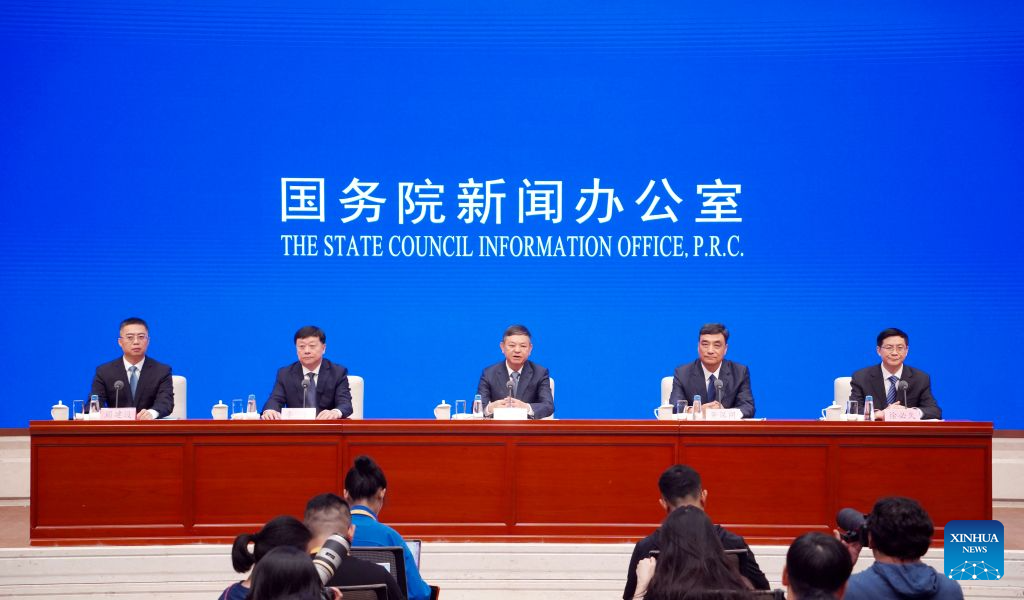
Kathmandu— China is developing a new national action plan focused on sustained improvements to air quality, emphasizing stricter standards for key pollutants and tailored policies based on regional conditions, according to an announcement made Thursday by Vice Minister of Ecology and Environment Xu Bijiu. The plan will tighten limits on PM2.5, PM10, sulfur dioxide, and nitrogen oxides, building upon recent progress in reducing pollution levels across the country. Key regions including Beijing-Tianjin-Hebei, the Yangtze River Delta, and the Fenwei Plain will maintain strict controls, while other areas will receive intensified action or serve as pilot zones for innovative approaches.
Stricter Pollution Limits
The forthcoming plan centers on tightening existing pollution concentration limits. Xu Bijiu stated that the new regulations will specifically lower acceptable levels of PM2.5, alongside stricter restrictions on pollutants such as PM10, sulfur dioxide, and nitrogen oxides. This move signals a commitment to achieving even cleaner air than previously targeted.
Regionalized Approach to Pollution Control
Recognizing varying pollution challenges across the country, the plan will implement region-specific policies. Areas including the Beijing-Tianjin-Hebei region, Yangtze River Delta, and Fenwei Plain will continue to enforce stringent controls. Additionally, city clusters along the middle reaches of the Yangtze River, the Chengdu-Chongqing region, and parts of Xinjiang Uygur Autonomous Region have been designated for ‘intensified action,’ mirroring control measures used in key regions. The Guangdong-Hong Kong-Macao Greater Bay Area, Fujian, and Hainan provinces will serve as pioneer areas, aiming to meet world-class air quality standards.
Progress and Remaining Challenges
China has demonstrated significant improvements in air quality in recent years. The annual average PM2.5 concentration fell to 28 micrograms per cubic meter in 2025 – a 59 percent decrease from 2013 levels. Heavy pollution days also dropped to just 0.9 percent, reaching record lows. However, Xu Bijiu cautioned that progress remains ‘insufficient, unstable and uneven,’ necessitating continued efforts and the new action plan.
Broader Environmental Goals
The air quality initiative is part of a larger push towards comprehensive environmental improvement outlined in China’s recently released plan to build a Beautiful China during the 15th Five-Year Plan period (2026-2030). This broader strategy calls for significant enhancements to the overall ecological environment by 2030, with air quality as a key component. The new action plan will also focus on optimizing industrial structures, energy sources, and transportation systems.
The new action plan is currently under development and expected to be implemented alongside China’s broader environmental goals for the coming years.
(With inputs from Xinhua)
Originally published on abcnews.com.np.



प्रतिक्रिया दिनुहोस्