

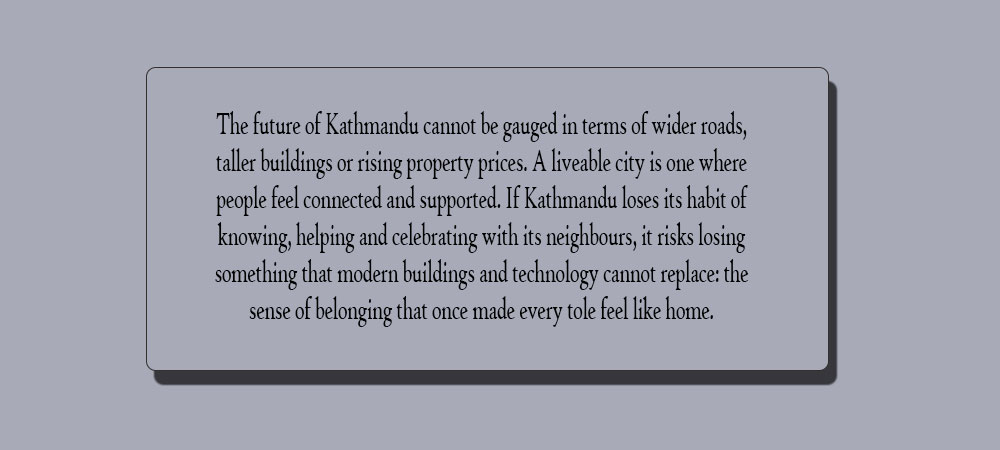
Kathmandu— For generations, Kathmandu’s neighborhoods, known locally as toles, were characterized by strong communal ties where residents knew one another, children played together, and neighbors supported each other through life’s challenges. However, rapid urbanization, increased migration, and evolving lifestyles are gradually eroding this traditional culture, leaving many long-time residents concerned about the loosening of social connections within the city.
The Heart of Traditional Neighborhood Life
In Kathmandu Valley's older settlements, community life revolved around shared spaces like courtyards, temples, stone spouts, and public squares. These weren’t merely physical locations but vital hubs for social interaction where people exchanged news, shared experiences, and strengthened relationships. Neighbors routinely visited one another without invitation, offered assistance during significant life events such as weddings and funerals, and shared food during festivals, effectively functioning as an extended family network.
Impact of Urban Growth and Migration
Kathmandu has experienced substantial population growth as people from across Nepal migrate to the capital seeking opportunities in education, employment, healthcare, and business. This influx has led to a surge in concrete housing, apartment buildings, commercial centers, and roads, replacing farmland and traditional homes. While this development brings progress, it also diminishes the personal connections that once defined neighborhood life.
Changing Social Patterns
Many current residents live in rented accommodations or apartments, often lacking familiarity with their neighbors. Frequent moves make establishing long-term relationships difficult, while modern work schedules limit social interaction. Parents and young people spend extended hours at school or work, increasingly confining evenings to indoor activities.
Loss of Communal Play for Children
Older generations fondly recall a childhood filled with outdoor games like football, marbles, and hide-and-seek played in open fields and courtyards. However, construction projects and increased traffic have diminished these spaces, while parental concerns about safety further restrict children’s ability to play freely outside. Mobile phones, television, and internet-based games are increasingly replacing traditional community play.
Threats to Cultural Heritage
The decline in neighborhood culture also poses a threat to Kathmandu's cultural heritage. Festivals like Indra Jatra and Gai Jatra rely on active community participation, with traditional guthis historically responsible for organizing ceremonies, maintaining temples, and supporting social activities. If younger generations become disconnected from these institutions, there is a risk of losing valuable knowledge related to rituals, music, food, language, and local history.
Despite the challenges, neighborhood culture persists in Kathmandu through continued cooperation during festivals, emergencies, and community events, with guthis remaining active in older settlements and youth clubs emerging in newer areas. The city’s future hinges on balancing modernization with the preservation of these vital social connections.
(With inputs from RN)
Originally published on abcnews.com.np.






प्रतिक्रिया दिनुहोस्