

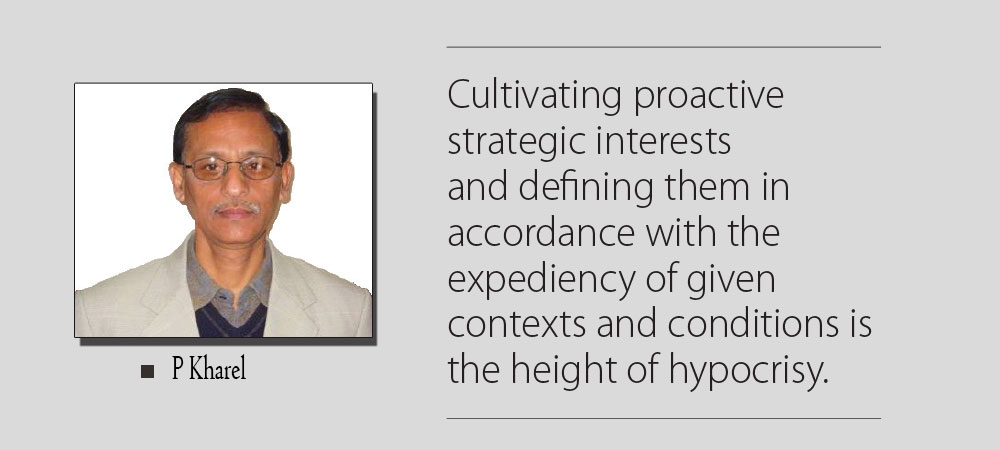
Kathmandu— The global landscape is undergoing significant shifts as nations grapple with a changing balance of power and intensifying competition for resources, leading to strategic hypocrisy and potential escalation. The pursuit of national interests often overshadows principles of cooperation and respect for sovereignty, creating a volatile environment where middle powers are even considering nuclear options in response to perceived threats. This dynamic is fueled by the actions of major players like Russia, China, and the United States, each vying for influence and control while exhibiting double standards in their foreign policies.
Echoes of Imperialism
The current geopolitical climate bears striking similarities to historical patterns of imperialism and aggression. The author notes that Trump’s assertive language resonated with Europe only after the continent experienced similar pressures, recalling decades of post-World War II dynamics. This suggests a cyclical nature to international relations, where power imbalances and exploitative practices resurface over time. The pursuit of strategic interests is often framed as legitimate, but can quickly devolve into hypocrisy when driven by expansionist ambitions or expediency.
The Rise of Counterweights
Russia’s military strength and China’s economic might are increasingly challenging the dominance of the US-led West. This has created a formidable counterweight in the international arena, prompting bewilderment and reactive measures from Western powers. The emerging Asian arc – encompassing Russia, North Korea, China, Pakistan, Iran, and parts of West Asia – represents a significant shift in global power dynamics that was largely unanticipated in the 2010s. This realignment is forcing a reassessment of long-held assumptions about international order.
Double Standards and Selective Governance
The article highlights a pattern of double standards in Western foreign policy, where adherence to principles like sovereignty and the UN Charter appears conditional. Taiwan’s future is seen as mirroring Hong Kong's trajectory, while leaders in regions like West Asia, Latin America, and Africa face limited scrutiny regarding their democratic credentials as long as they align with Western interests. The International Criminal Court’s warrant for Israeli Prime Minister Benjamin Netanyahu has received minimal coverage from mainstream media, despite his travels to the United States.
Preemptive Measures and Personal Immunity
The author predicts a continuation of Trump-era policies by future US administrations, even if those policies are considered ethically questionable. Drawing parallels between past leaders, the article suggests that both Biden and Trump will prioritize protecting their families and close associates from legal scrutiny, with Trump potentially extending this protection to an unprecedented degree. This emphasis on self-preservation underscores a broader trend of prioritizing personal interests over accountability.
A Dangerous Path
Duplicity in diplomacy is described as setting off a dangerous bell, signaling a breakdown in trust and transparency. The West’s actions – deterring Russia, containing China, controlling resources, intimidating some nations, threatening others, and attacking a few – are presented as part of a broader strategy to maintain its dominance. This approach risks escalating tensions and undermining international stability.
The article concludes by painting a picture of an increasingly complex and unpredictable world order, where established norms are being challenged and the potential for conflict is growing.
(With inputs from RN)
Originally published on abcnews.com.np.




प्रतिक्रिया दिनुहोस्