

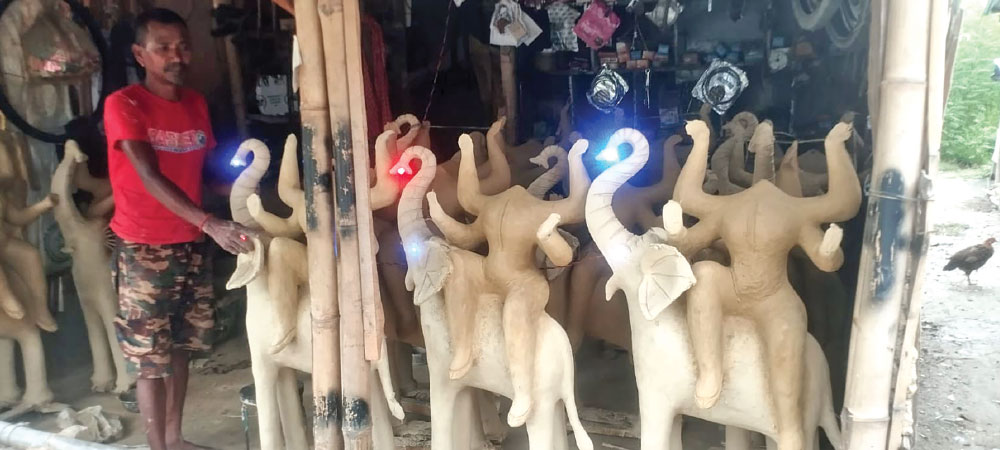
Kathmandu— Forty-five-year-old Jitan Chaudhary of Barahakshetra, Nepal, continues a 28-year tradition of creating religious idols and intricate carvings for concrete homes, finding consistent employment through skilled craftsmanship. As demand surges ahead of Bishwokarma Puja and other festivals like Dashain, Tihar, Chhath, and Saraswati Puja, Chaudhary remains busy year-round, utilizing locally sourced materials to create his art. His success highlights the potential for self-employment and cultural preservation within local communities, though concerns remain about younger generations’ interest in learning these traditional skills.
A Year-Round Craft
Chaudhary has been dedicated to idol making and decorative carving for nearly three decades, following in his father's footsteps. The work provides a steady income as he transitions between crafting idols for various festivals throughout the year. He explained that immediately after completing orders for Bishwokarma Puja, preparations will begin for Dashain, ensuring continuous employment. “As soon as one festival ends, preparations begin for the next,” he said.
Valuing Traditional Skills
Chaudhary emphasizes the economic benefits of skilled labor compared to general wage work. He noted that while daily wages for other laborers average around Rs. 1,000, artisans like himself can earn up to Rs. 1,500 per day due to the specialized nature and perceived value of their craft. The use of locally available resources – bamboo, straw, and clay – further reduces production costs, though he stresses that skill, hard work, and experience are crucial for creating attractive idols.
Passing Down the Tradition
Local resident Dilli Karki believes skilled individuals can achieve self-sufficiency. However, a concern is the dwindling interest among younger generations in learning these traditional crafts. Chaudhary himself observed this trend, stating, “Young people today do not pursue this work.” Despite this challenge, he remains busy and confident that possessing a skill ensures consistent employment.
Local Resources, Lasting Impact
Chaudhary’s practice of utilizing locally sourced materials not only minimizes expenses but also contributes to the preservation of traditional artistry. The continuation of these skills is seen as vital for maintaining local art and culture while simultaneously providing economic opportunities within the community. Passing on this knowledge to younger generations could ensure its longevity.
Chaudhary continues to fulfill orders, demonstrating a sustainable livelihood built upon ancestral skill and locally available resources, though the future of the craft depends on attracting new apprentices.
(With inputs from RN)
Originally published on abcnews.com.np.


प्रतिक्रिया दिनुहोस्