

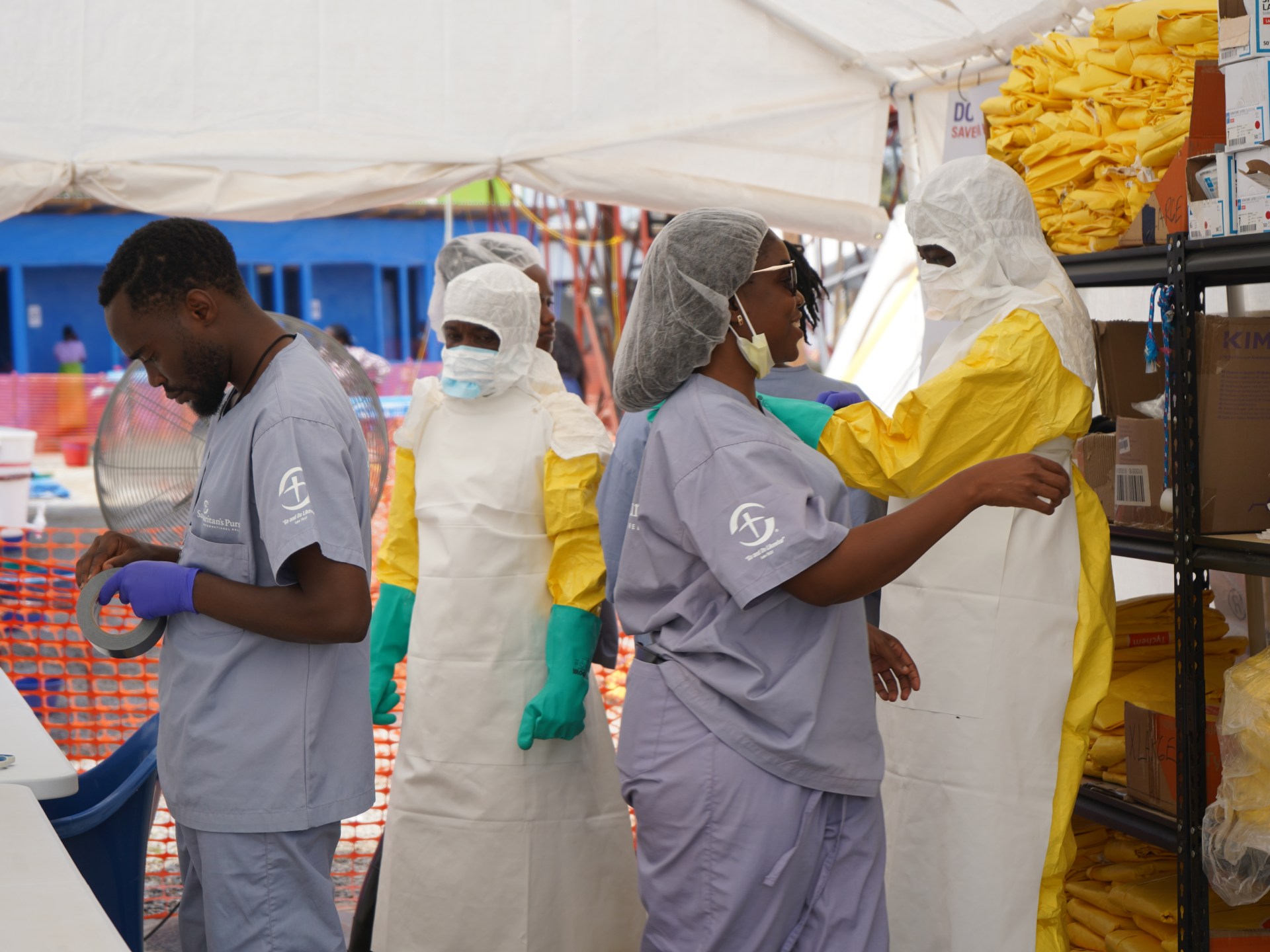
Kathmandu— The Democratic Republic of Congo (DRC) is currently battling its deadliest Ebola outbreak on record, caused by the Bundibugyo virus disease (BVD), a rare strain for which no licensed vaccines or specific treatments exist. Since authorities officially declared the outbreak on May 15th, more than 4,900 confirmed cases and over 2,300 deaths have been recorded, surpassing the previous record set between 2018-2020. The outbreak originated in Ituri Province and has spread due to factors including armed conflict, population movement, delays in detection, and a lack of trust within affected communities, complicating efforts to contain the virus.
Early Warning Signs Missed
Dr. Richard Lokudu, from Mongbwalu General Hospital in Ituri Province, suspected Ebola was spreading before the official declaration after three members of his team died shortly after treating a patient who arrived for surgery in early April. Authorities confirmed the outbreak weeks later, but by then transmission had already taken hold within communities, allowing infection chains to grow rapidly. Health officials acknowledge that delays in identifying cases contributed significantly to the virus’s spread.
Unique Challenges of Bundibugyo Virus
The current Ebola outbreak is caused by the Bundibugyo virus disease (BVD), first identified in Uganda in 2007. This presents a unique challenge as, unlike the more common Zaire strain, there are currently no licensed vaccines or approved therapies for BVD. Health workers are therefore reliant on early detection, supportive care, infection-prevention measures, and community engagement to limit transmission. The DRC has experience responding to Ebola outbreaks since 1976, but this outbreak demands a different approach due to the lack of specific treatments.
Conflict and Mistrust Hamper Response
Efforts to contain the virus are severely hampered by ongoing armed conflict in Ituri Province, where various groups fight for control over mineral-rich areas. This makes movement difficult and limits access to some communities. Dr. Justus Nsio of Africa CDC described the situation as unfavorable, noting that the province is under a state of siege. Beyond logistical challenges, mistrust among some communities also hinders response efforts, requiring health workers to build rapport and address concerns.
Expanding Laboratory Capacity
Professor Pierre Akilimali, head of the DRC’s Ebola response, stated that laboratory capacity in Ituri has expanded since the outbreak began. Initially, samples had to be sent outside the province for confirmation, causing significant delays. Now, with over 12 laboratories established within Ituri, officials hope to expedite diagnosis and improve their ability to track the virus's spread. However, even with increased capacity, conflict continues to disrupt testing and treatment efforts.
Community Impact and Fears
The outbreak is taking a heavy toll on communities already struggling with insecurity, poor governance, and poverty. Furaha Gisèle, whose uncle died of Ebola in Rwampara, expressed her fear for the future, stating, “Only God can spare us from this disaster.” Dr. Charles Kashindi, head of Nyakunde Hospital, emphasized that stopping Ebola is not just a medical challenge but also a race against conflict and access, as gunfire often forces health workers to abandon their positions.
Health officials continue to work on strengthening surveillance, improving laboratory capacity, and fostering community trust in order to contain the outbreak. The situation remains critical, with ongoing transmission and limited resources posing significant challenges.
(With inputs from Al Jazeera)
Originally published on abcnews.com.np.



प्रतिक्रिया दिनुहोस्