

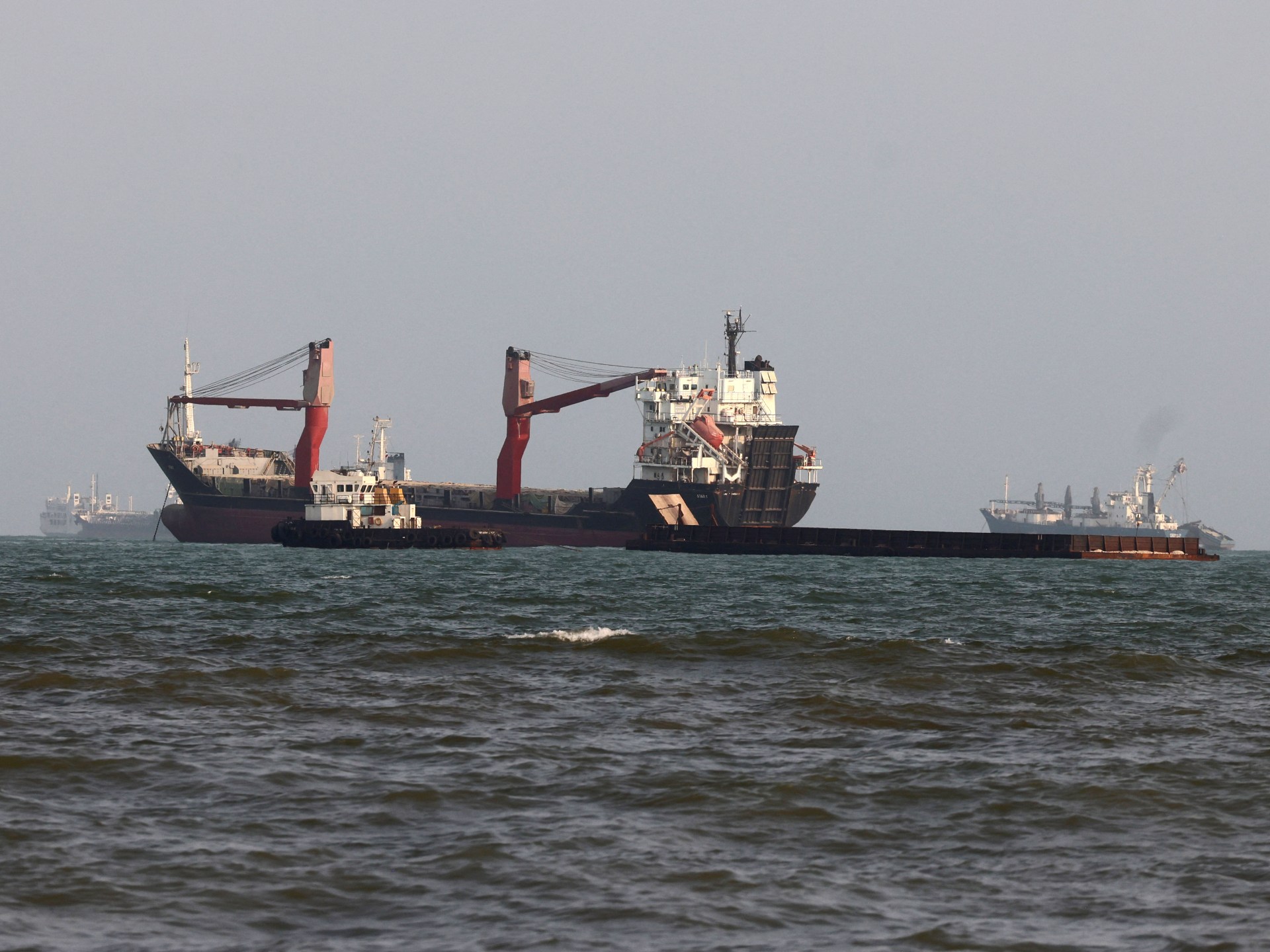
Kathmandu— Amid escalating tensions and competing claims of control over the Strait of Hormuz, data on ship traffic reveals a surprising trend: vessels are more likely to openly defy U.S. restrictions than those imposed by Iran. While both countries have threatened ships navigating the vital waterway – with instances of attacks and warnings issued – analysis from maritime intelligence firm Kpler shows that a significant majority of vessels are masking their routes, but those who do declare a path are far more inclined to use the Iranian route than the one favored by Washington.
Fractured Waterway: Two Routes Emerge
Prior to recent conflicts, the Strait of Hormuz was navigated using established traffic separation schemes without distinction between “Iranian” or “Omani” routes. Ship routing decisions were based on practical considerations like port calls and safety. However, escalating tensions have effectively divided the strait into two main paths: a northern route hugging the Iranian coast, and a southern route closer to Oman, which is favored by the U.S. and protected by its naval presence.
‘Dark’ Vessels Dominate Traffic
Between August 1st and 19th, Kpler tracked 112 vessels carrying crude oil, LPG, and LNG through the Strait of Hormuz. Of these, only two formally used the Omani route, while 21 openly utilized the Iranian route. A striking 89 – over 80 percent – employed ‘dark’ or unclassified routes, obscuring their movements by switching off Automatic Identification System (AIS) transponders or providing data that doesn't fit neatly into defined corridors. Mohamed Rafik Halitim of Kpler explained that while these vessels are observable upon reappearance, determining their precise routing remains difficult.
Beyond Oil: Broader Pattern of Defiance
The trend extends beyond energy shipments. Of 236 total ships transiting the strait during the same period – including dry cargo and chemical carriers – 83 openly used the Iranian route, while only three publicly used the Omani route. A substantial 148 vessels went dark or used unknown routes, representing over six in ten ships passing through Hormuz. This indicates that approximately 35 percent of all vessels openly chose the Iranian route, compared to a minimal number opting for the Omani or pre-war central route.
Motivations Behind ‘Dark’ Routing
The prevalence of switched-off transponders stems from threats and attacks by both Iran and the U.S. against vessels perceived as violating their respective rules of navigation. Neil Quilliam, an associate fellow at Chatham House, notes that while this practice raises safety concerns, some operators believe the commercial and security benefits outweigh the risks in the current environment. Experts also suggest ‘dark’ routing facilitates ship-to-ship cargo transfers without detection, allowing countries to circumvent sanctions or blockades.
Iran's Continued Influence
Despite a U.S. naval blockade, a fifth of all energy-carrying ships openly transited the Iranian route, defying threats from Washington. This contrasts sharply with the minimal number openly using the Omani route. Experts believe Iran still retains significant capacity to disrupt maritime traffic and exert pressure through the strait, though regional security measures and alternative logistics are emerging. Marc Ayoub suggests that if perceptions of Tehran’s influence diminish, it could weaken its negotiating position.
While the situation remains fluid, current data indicates that vessels appear more cautious about provoking Iran than defying U.S. restrictions, suggesting a complex dynamic in controlling this vital waterway.
(With inputs from Al Jazeera)
Originally published on abcnews.com.np.






प्रतिक्रिया दिनुहोस्