

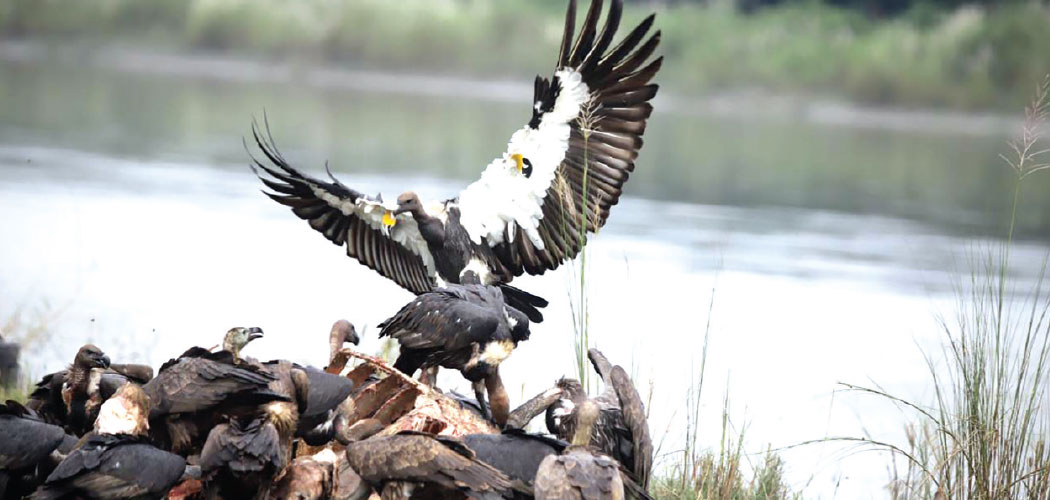
Kathmandu— Nepal is experiencing a significant rebound in its white-rumped vulture (Gyps bengalensis) population, with numbers increasing by approximately 13 percent each year since 2012. The recovery, detailed in a recent study published in Ibis, is largely attributed to the elimination of diclofenac, a veterinary drug that decimated vulture populations across South Asia during the 1990s. Researchers from the Department of National Parks and Wildlife Conservation, Bird Conservation Nepal, IUCN Vulture Specialist Group, and other organizations conducted the research, which involved long-term monitoring of nesting success, satellite tracking, and demographic analysis.
The Diclofenac Crisis and its Aftermath
During the 1990s, vulture populations in Nepal, India, Pakistan, and Bangladesh plummeted by 20 to 50 percent annually. This catastrophic decline was caused by diclofenac, a non-steroidal anti-inflammatory drug (NSAID) used in livestock. Vultures that consumed carcasses of animals treated with the drug suffered severe kidney failure and death, according to ornithologist Krishna Prasad Bhusal. Nepal responded by banning veterinary diclofenac in 2006, followed by comprehensive awareness campaigns, monitoring programs, and enforcement efforts involving various stakeholders.
High Survival and Breeding Rates
The study revealed exceptionally high annual survival rates for white-rumped vultures: approximately 95 percent for adults and 96 percent for immature birds. Long-term monitoring between 2007 and 2025 showed an average nesting success rate of around 69 percent, based on the observation of 6,410 vulture nests. Satellite tracking data and demographic analysis confirmed that the population increase is primarily due to high survival rates and successful reproduction within Nepal, rather than immigration from neighboring India.
Vulture Safe Zones and Conservation Initiatives
Nepal established South Asia’s first Vulture Safe Zone, integrating safe veterinary practices, habitat protection, population monitoring, community involvement, and secure food sources. The creation of “Jatayu Restaurants” – designated feeding areas providing vultures with livestock carcasses free from harmful drugs – has further bolstered conservation efforts. These initiatives demonstrate a coordinated approach to protecting the species and its habitat.
While the recovery is encouraging, Nepal’s white-rumped vulture population remains well below pre-1990s levels. Conservationists emphasize the need for continued vigilance, including strict monitoring of veterinary drugs and safety testing of new pharmaceuticals, to prevent future declines.
(With inputs from RN)
Originally published on abcnews.com.np.




प्रतिक्रिया दिनुहोस्