

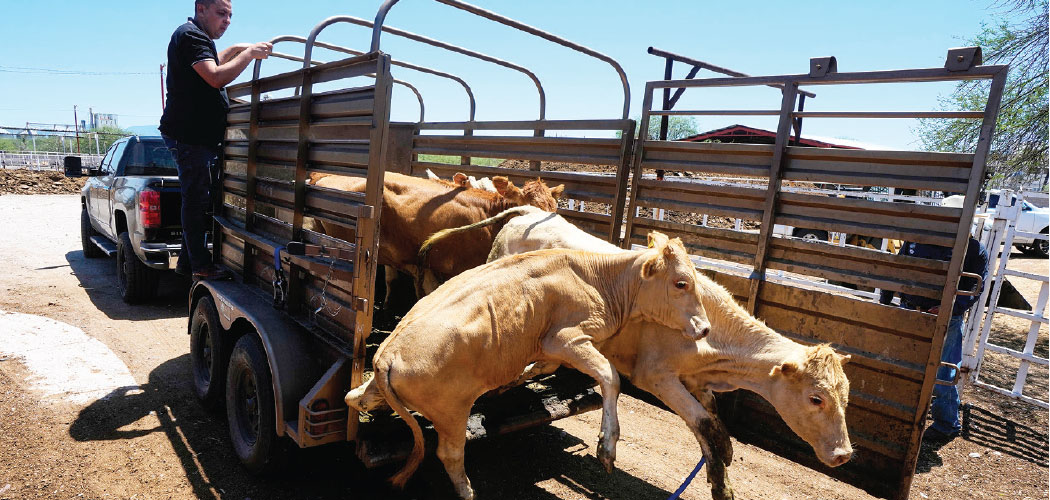
Kathmandu— After a year-long suspension, Mexico is set to resume livestock exports to the United States beginning August 24th at the Douglas, Arizona, border crossing. The ban, implemented due to fears of the New World screwworm fly—a flesh-eating parasite—significantly impacted cattle and beef industries on both sides of the border, contributing to a livestock shortage in the U.S. and financial hardship for Mexican ranchers already struggling with drought conditions. While Mexico has seen a decline in active cases of the parasite, new restrictions will initially limit the number of cattle allowed across the border.
Economic Impact Of The Ban
The year-long ban on Mexican cattle imports dealt a significant blow to both economies, with Mexico’s cattle export business generating $1.2 billion annually prior to the suspension. In the U.S., the sudden loss of supply contributed to record-high beef prices and forced some meat-processing plants to close or scale back operations. Juan Carlos Anaya, general director of agricultural consulting firm Grupo Consultor de Mercados Agrícolas, noted that U.S. ranchers were unable to compensate for the lost imports.
The Screwworm Threat
The New World screwworm fly poses a threat to all warm-blooded animals, including livestock, pets, and even humans, by laying its eggs in open wounds. The resulting maggots burrow into the flesh, causing significant discomfort and potential complications. Mexico detected an outbreak of the parasite in November 2024, which spread to 30 of its 32 states, with a recent case reported Wednesday in Sonora. While active cases have decreased to 1,969—less than half the number reported last year—authorities acknowledge that complete eradication will take time.
New Restrictions And Concerns
Although exports are resuming, new U.S. protocols will initially restrict the flow of cattle across the border. Only 700 head of cattle will be permitted through the Douglas crossing in the first week, increasing to 900 in the second and eventually reaching a maximum of 1,300 per day. All cattle will be required to have radio-frequency identification tags and undergo screening by electronic readers and trained dogs before being allowed entry into Arizona. Ranchers like Juan Carlos Ochoa, president of the Regional Livestock Union of Sonora, expressed frustration with these restrictions, arguing they are unnecessarily limiting shipments and hindering efforts to address supply shortages in both countries.
Rancher Optimism Tempered By Reality
Martín Alfonso Ibarra, a rancher in Sonora, is cautiously optimistic about resuming exports but remains wary. He estimates the export halt reduced his income by 40% last year and hopes to send his 16 calves north soon. However, he plans to wait until October when they have gained sufficient weight before finalizing any sales. “There’s no need to get too excited,” Ibarra said.
The initial success of the reopening at Douglas will be closely monitored by U.S. authorities, who may consider allowing imports through additional ports if the new protocols prove effective in preventing the spread of the screwworm fly.
(With inputs from RN)
Originally published on abcnews.com.np.




प्रतिक्रिया दिनुहोस्