

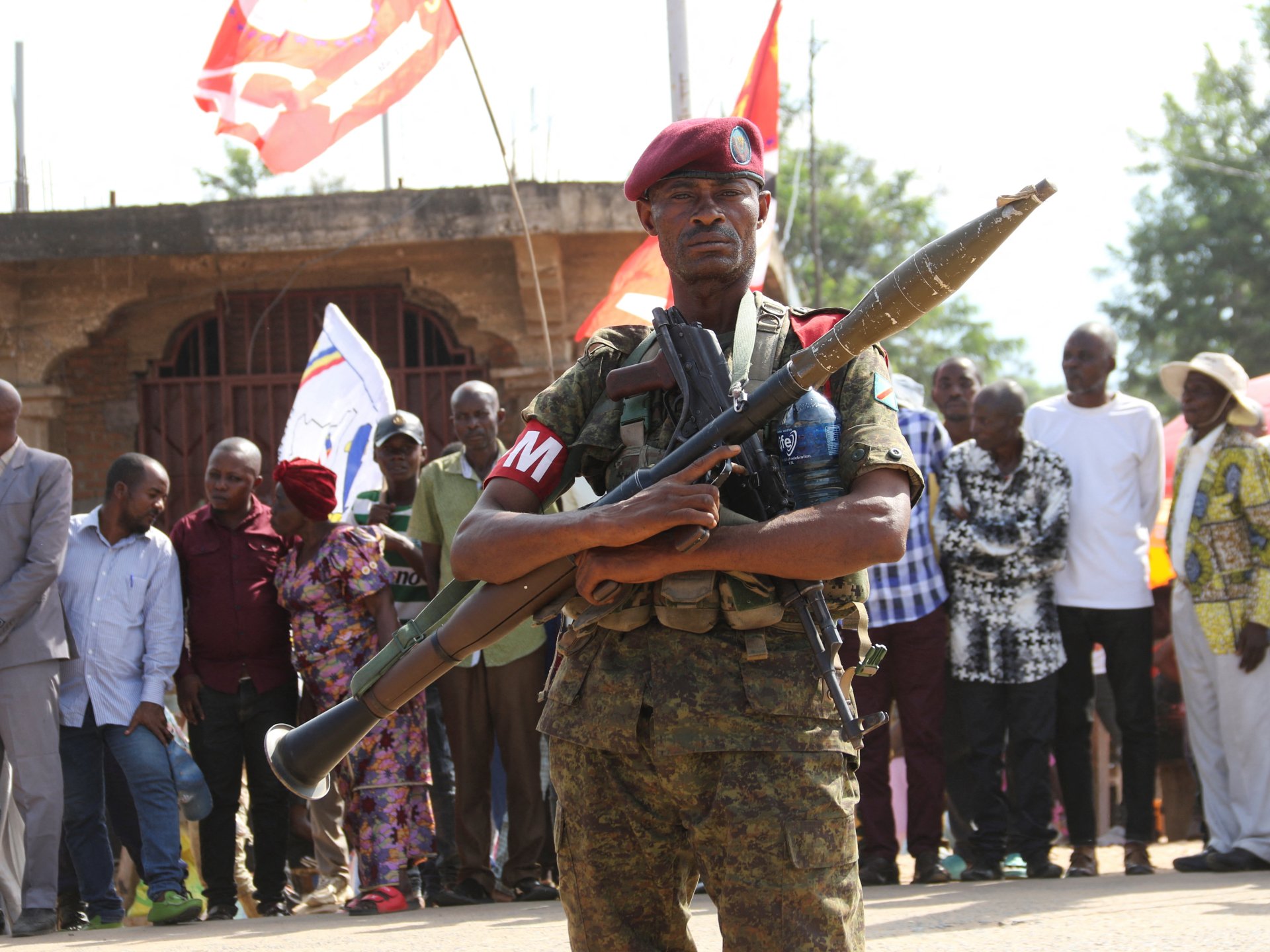
Kathmandu— The Democratic Republic of the Congo (DRC) and the M23 rebel alliance have agreed on a roadmap for peace talks, seeking to resolve fighting that has killed thousands and displaced an estimated 5.3 million people in the country’s east since 2021. The agreement, reached after five days of discussions in Switzerland involving representatives from multiple nations and organizations, establishes sequenced steps and timelines for negotiations building on a framework signed last November in Doha, Qatar. While the roadmap includes provisions for ceasefire verification and addressing implementation issues, fighting continues to occur on the ground amidst a fragile security situation compounded by an ongoing Ebola outbreak.
Negotiation Framework Established
The joint statement released Saturday detailed a “roadmap setting out sequenced steps and timelines for negotiations” stemming from the November agreement. Discussions in Switzerland, which ran from August 17 to August 21, included representatives from the United States, Qatar, Togo, Switzerland, and the African Union Commission. The parties agreed on a standardized method for reporting ceasefire violations and will establish a mechanism to address challenges in implementing the Doha agreement.
Ceasefire Verification Planned
A ceasefire verification mission is scheduled to arrive in Minembwe, located in South Kivu province, on Monday. This deployment aims to monitor adherence to the agreed-upon cessation of hostilities and investigate reported violations. Earlier this month, as part of the peace process, the DRC handed over 15 prisoners to both the Congo River Alliance (AFC) and M23, a transfer facilitated by the International Committee of the Red Cross.
Continued Clashes and Accusations
Despite the progress in negotiations, fighting persists. Lawrence Kanyuka, an AFC/M23 spokesman, claimed on Saturday that DRC “coalition forces” conducted air raids using kamikaze drones against populated areas in Minembwe, alleging civilian casualties and damage to infrastructure. Al Jazeera has not yet independently verified these claims. The United Nations previously warned in July about the increasing use of drones by warring parties further destabilizing security in North and South Kivu provinces.
Complex Roots of Conflict
The current conflict reignited in 2021 with a renewed M23 offensive, leading to the capture of territory including provincial capitals. The roots of the instability extend back to the 1994 genocide in Rwanda and the subsequent collapse of Zaire’s government under Mobutu Sese Seko. Accusations of external support for armed groups further complicate the situation; the DRC, UN, and Western governments accuse Rwanda of backing M23, while Kigali denies these allegations and counters that the DRC supports Hutu militias like the FDLR.
The security situation remains fragile despite the agreement, with ongoing fighting and a concurrent Ebola outbreak posing significant challenges to lasting peace. The arrival of the ceasefire verification mission on Monday will be a key test of commitment from both sides.
(With inputs from Al Jazeera)
Originally published on abcnews.com.np.

प्रतिक्रिया दिनुहोस्