

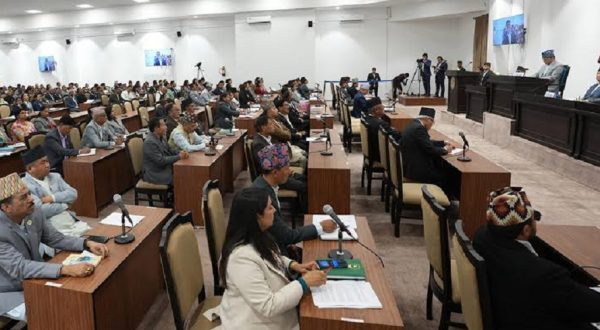
Kathmandu— Nepal’s Nepali Congress (NC) is experiencing significant internal strife following last year’s Gen Z movement and subsequent general elections, which signaled public dissatisfaction with existing governance. The party, historically a key agent of change in the country, now finds itself deeply divided between an establishment faction led by Gagan Kumar Thapa and an anti-establishment group headed by former president Sher Bahadur Deuba, who are contesting the legitimacy of the current leadership and control over the upcoming 15th general convention scheduled for October 2026.
The Role of Political Parties
A strong relationship exists between political parties and democratic systems; parties thrive within democracies and are essential to their function. Throughout history, they have often led struggles against autocratic regimes in favor of establishing democratic governance, providing citizens with platforms for advocating freedom, equality, and human rights. In a functioning democracy, these parties serve as vital links between the government and the populace, earning votes based on performance both in power and opposition.
Electoral Discontent and Party Response
Last year’s protests led by Gen Z highlighted issues of bad governance, corruption, political syndicates, and unemployment, contributing to a desire for change reflected in recent elections. While the electorate sought new leadership through these polls, electoral losses have triggered internal rifts within some parties, particularly Nepali Congress. The party has struggled to institutionalize past achievements and deliver tangible improvements to citizens’ lives, leading to recurring unrest.
Leadership Dispute Intensifies
The current division within NC stems from a disagreement over the legitimacy of a Special Convention that elected Gagan Kumar Thapa as president; Sher Bahadur Deuba's faction contests its validity. A Supreme Court review petition filed by Deuba and Purna Bahadur Khadka has further fueled the conflict, with the anti-establishment group anticipating a reversal of the court’s recognition of the Thapa-led central working committee. Both factions are now at odds over control of the 15th general convention.
Calls for Unity
Supporters of the Special Convention maintain it reflects public demand for reform and generational leadership change, claiming over half of party representatives backed the move. Despite the deep divisions, voices within the party advocate for unity, emphasizing that strong and unified parties are essential to fulfilling promises made to the electorate. Reconciliation and finding common ground between the factions are seen as crucial steps forward.
The future direction of Nepali Congress remains uncertain as the dispute over leadership continues, with both sides awaiting a potential ruling from the Supreme Court that could reshape the party’s structure and influence its upcoming convention.
(With inputs from RN)
Originally published on abcnews.com.np.
प्रतिक्रिया दिनुहोस्