

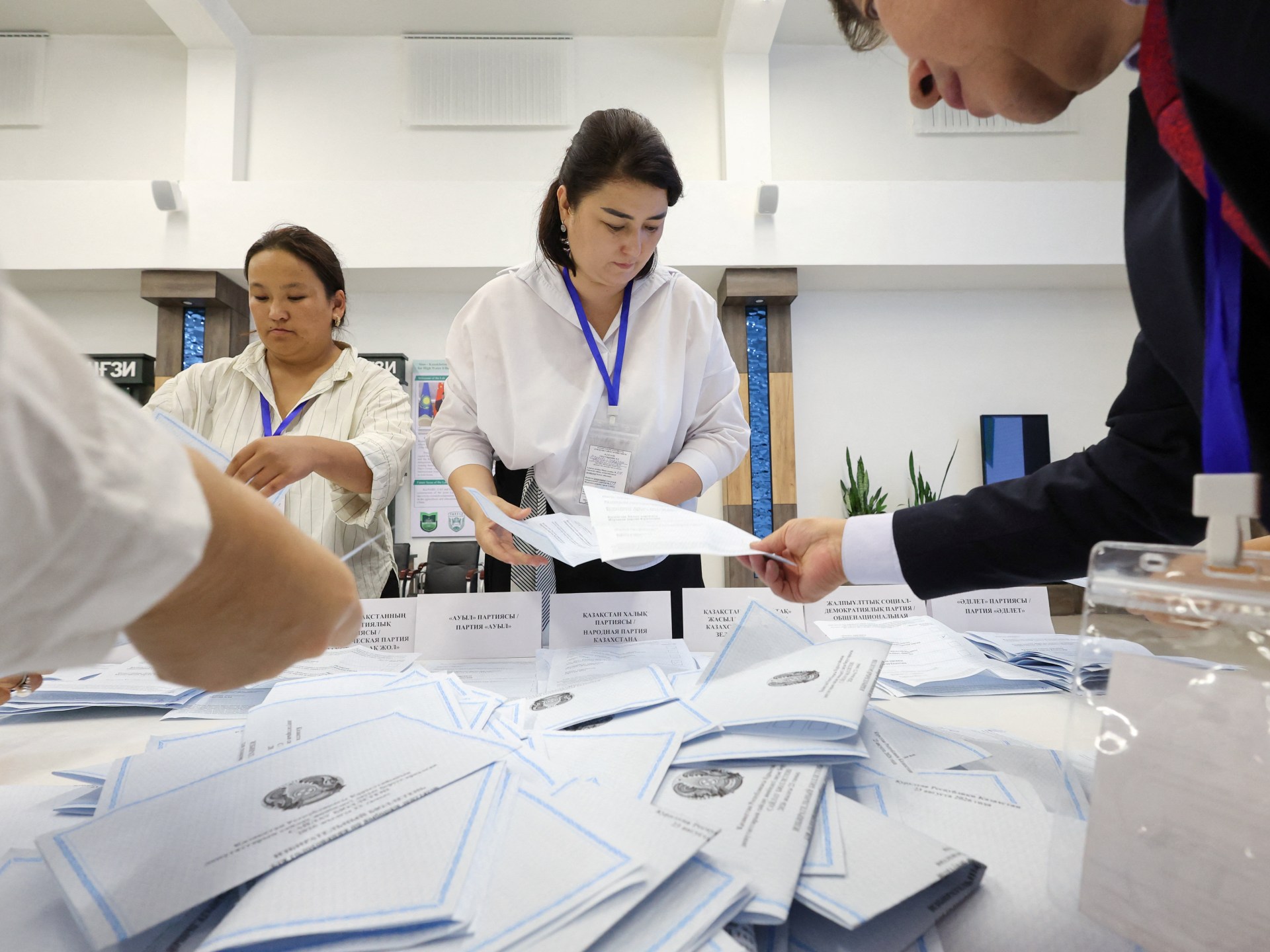
Kathmandu— Kazakhstan held parliamentary elections on Sunday, resulting in a decisive victory for the newly established Adilet party, which secured more than 71 percent of the vote according to electoral commission results announced Monday. The win is expected to further consolidate power around President Kassym-Jomart Tokayev, who founded the party earlier this year by absorbing the previous ruling party, Amanat. Approximately 74 percent of eligible voters participated in selecting the new 145-member parliament, known as the Kurultai, which will also include representatives from four other parties broadly supportive of the administration.
Election Results and Parliamentary Composition
In addition to Adilet’s dominant performance, the Respublika and Ak Zhol parties – representing business interests – along with the Nationwide Social Democratic Party and Auyl party, which focuses on rural voters, also secured seats in parliament. The electoral commission reported that around 12.6 million of Kazakhstan's 20 million eligible citizens cast ballots. This election marks a significant shift in the country’s political structure following the adoption of a new constitution earlier this year.
Constitutional Changes and Presidential Power
The parliamentary elections were prompted by constitutional reforms that streamlined the legislature from a bicameral system to a single-chamber Kurultai. These changes are intended to grant parliament greater influence in political decision-making, moving away from a historically presidential-centric governance model. Last month, Kazakhstan’s Supreme Court affirmed that the new constitution allows President Tokayev to seek another seven-year term in office.
Tokayev's Reforms and Political Transition
President Tokayev assumed leadership of Kazakhstan in 2019 and has since initiated a reform program known as “Just Kazakhstan,” responding to widespread unrest that occurred in 2022, resulting in 238 fatalities during cost-of-living protests. He has positioned himself as a leader seeking to distance the country from the legacy of his predecessor, Nursultan Nazarbayev, who ruled for three decades after the collapse of the Soviet Union. While Tokayev initially came to power as Nazarbayev’s chosen successor, he is now charting a new course for the nation.
Future Appointments and Regional Relations
While casting his vote in Astana, President Tokayev indicated it was premature to confirm whether he would run for another term. He also announced plans to appoint a vice president – a newly created position under the revised constitution – within the next week or ten days, stating that the individual selected would be “well-known.” Kazakhstan, Central Asia’s largest economy, continues to maintain strong relationships with Western nations, Russia, and China.
The composition of the new Kurultai is expected to reflect President Tokayev's vision for a reformed political landscape in Kazakhstan. The appointment of a vice president will further clarify the direction of his administration.
(With inputs from Al Jazeera)
Originally published on abcnews.com.np.


प्रतिक्रिया दिनुहोस्