

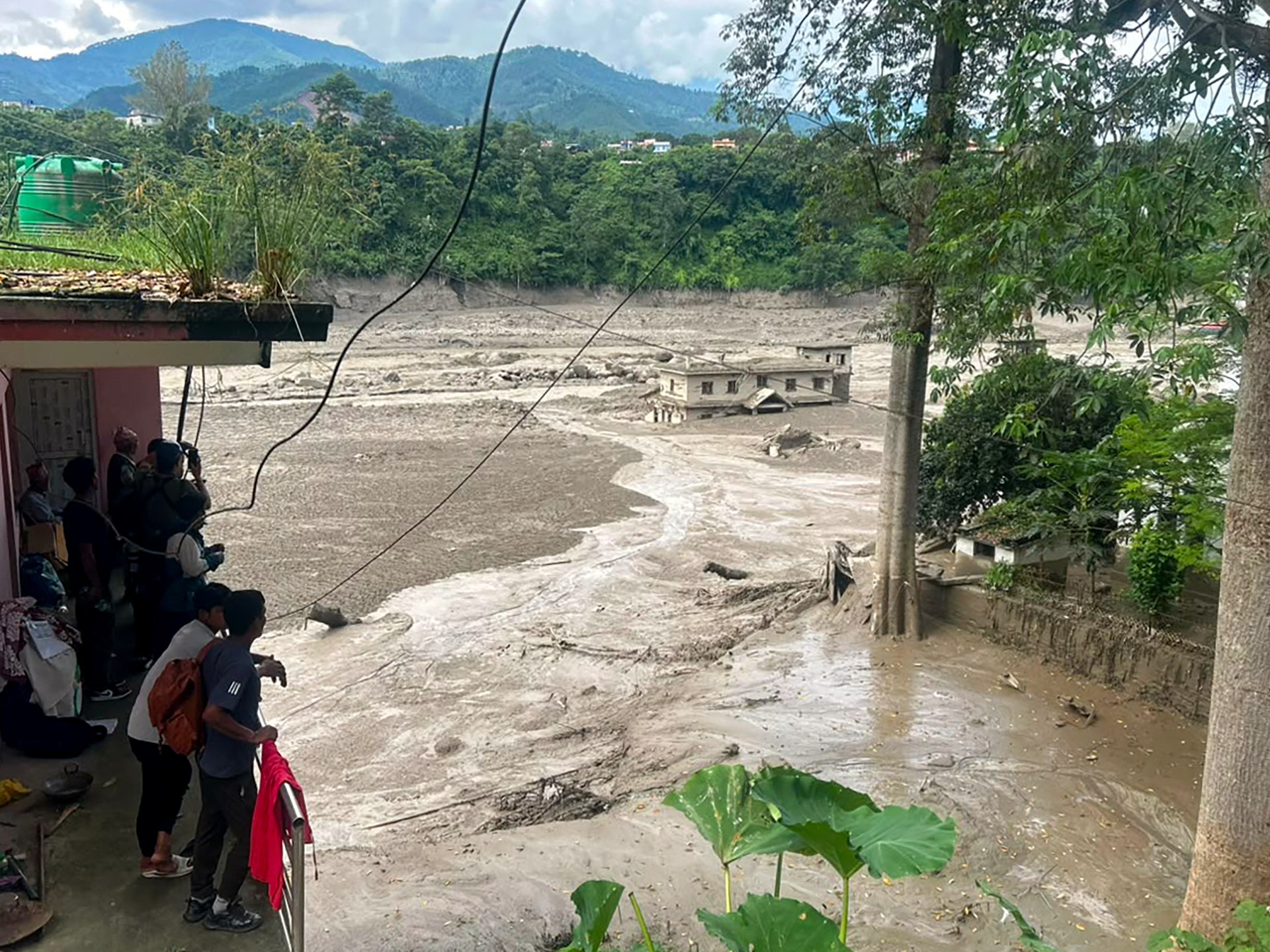
Kathmandu— At least eight people have been killed and significant infrastructure damaged after devastating flash floods swept through areas of Nepal near the border with Tibet on Wednesday, authorities reported. The flooding impacted villages in the mountainous Rasuwa district, disrupting transportation networks, damaging hydropower and solar energy facilities, and cutting off roads and communications in neighboring regions of China. Rescue efforts are underway, hampered by high water levels preventing helicopter landings, while officials assess the full extent of casualties and property loss.
Devastation in Rasuwa District
Nepal deployed helicopters to rescue those affected after the flash floods swept through Syapru Besi and Timure in Rasuwa district, a region home to approximately 50,000 people. District administrator Narendra Pariyar stated that casualties could be much higher and property losses substantial, though a full assessment was still underway. Residents living near the Bhote Koshi River were urged to move to higher ground as reports surfaced of villages and infrastructure project sites being washed away.
Cross-Border Impact in Tibet
The flooding extended across the border into Tibet, with Xinhua news agency reporting “major casualties” and missing persons in Gyirong county following a mudslide at a land crossing between China and Nepal. The mudslide severed roads, communications, and power supply in the Shigatse region. Chinese President Xi Jinping has called for “all-out” efforts to locate those missing and strengthen monitoring systems to prevent further disasters.
Infrastructure Damage and Response
The disaster significantly impacted Nepal’s energy infrastructure, with approximately 430 megawatts of production capacity – including hydropower and solar facilities – damaged. The Nepal Electricity Authority reported disruptions to electricity supply across affected areas. Multiple highways were also closed, hindering rescue and relief operations. Prime Minister Balendra Shah convened an emergency meeting of the National Disaster Risk Reduction and Management Authority, coordinating efforts with medical teams, scouts, and the Red Cross.
Recurring Flood Risks
The Bhote Koshi River, which originates in Tibet and flows into Nepal’s Trishuli River (eventually becoming the Gandak River in India), has experienced similar flooding events in the past. Last year, a flood on the same river killed nine people and left 24 missing, also washing away the “Friendship Bridge” connecting Nepal and China, disrupting trade for months. That previous event was linked to the draining of a supraglacial lake in Tibet.
Authorities continue to assess the full extent of the damage and coordinate rescue efforts as monsoon rains persist across South Asia, raising concerns about potential secondary disasters.
Originally published on abcnews.com.np.



प्रतिक्रिया दिनुहोस्