

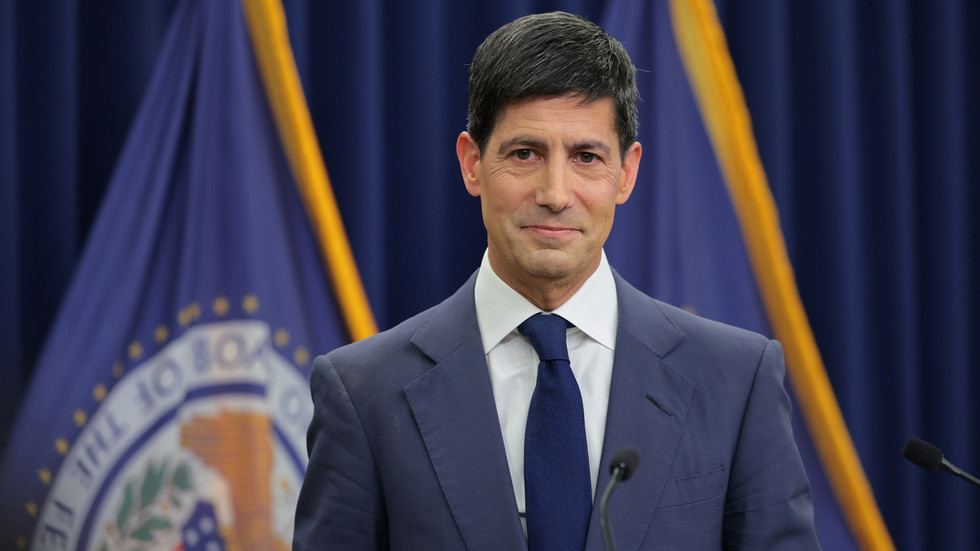
Kathmandu— Federal Reserve Chairman Kevin Warsh is scheduled to speak Friday at the annual Jackson Hole Economic Policy Symposium in Wyoming, offering markets their first opportunity to hear from the new Fed chief as concerns grow regarding Treasury market interventions and the direction of interest rates. The event comes after Treasury Secretary Scott Bessent announced a plan to increase buybacks of long-dated Treasuries – an effort to lower yields that some see as conflicting with the Federal Reserve’s messaging on inflation. With the US national debt exceeding $40 trillion, rising interest rates pose significant risks to the financial system, and investors are closely watching for signals about future monetary policy.
Treasury Intervention Draws Criticism
A recent move by Treasury Secretary Bessent to increase buybacks of long-dated Treasuries aimed at lowering yields has been met with skepticism on Wall Street. While framed as a liquidity operation, the intervention occurred at a time when the Treasury sought to reduce long-term yields, raising questions about its effectiveness and intent. The US currently spends over $1 trillion annually on interest payments, and rising rates could further strain the financial system.
Conflicting Signals from Washington
The Treasury’s attempt to lower yields appears at odds with the Federal Reserve's stance that higher yields can help curb inflation and reduce pressure for immediate interest rate hikes. This disconnect has created confusion among investors, particularly as the Fed also considers reducing its $6.7 trillion portfolio of government bonds – a move that would further tighten monetary policy. Experts note this conflicting approach is unusual and unsettling for financial markets.
Mounting Fiscal Concerns
The US national debt recently surpassed $40 trillion and continues to grow rapidly, adding roughly $1 trillion every five months. A significant portion of federal spending is locked into existing programs like entitlements, interest payments, and veterans’ benefits, limiting the government's ability to address its growing fiscal challenges. Analyst Luke Gromen estimates these fixed outlays now equal 105% of federal receipts and are increasing at a faster rate than revenue.
Market Reaction and Expert Commentary
Billionaire investor Stanley Druckenmiller recently argued that governments attempting to defend prices against market fundamentals will ultimately fail. Economist Philip Pilkington suggested the Treasury’s intervention signals a fear that high yields could trigger a financial crisis, reminiscent of conditions preceding the 2008 recession. Politico reported that Secretary Bessent's credibility is “under threat” due to the unsuccessful intervention and perceived lack of coordination with the Fed.
Investors are anticipating Warsh’s address at Jackson Hole for insights into the Fed’s economic outlook and inflation strategy, though his tendency towards discretion suggests a potentially limited disclosure. The speech will be closely watched for any indication of how the Federal Reserve plans to navigate the current environment of conflicting policies and mounting fiscal pressures.
(With inputs from RT)
Originally published on abcnews.com.np.



प्रतिक्रिया दिनुहोस्