

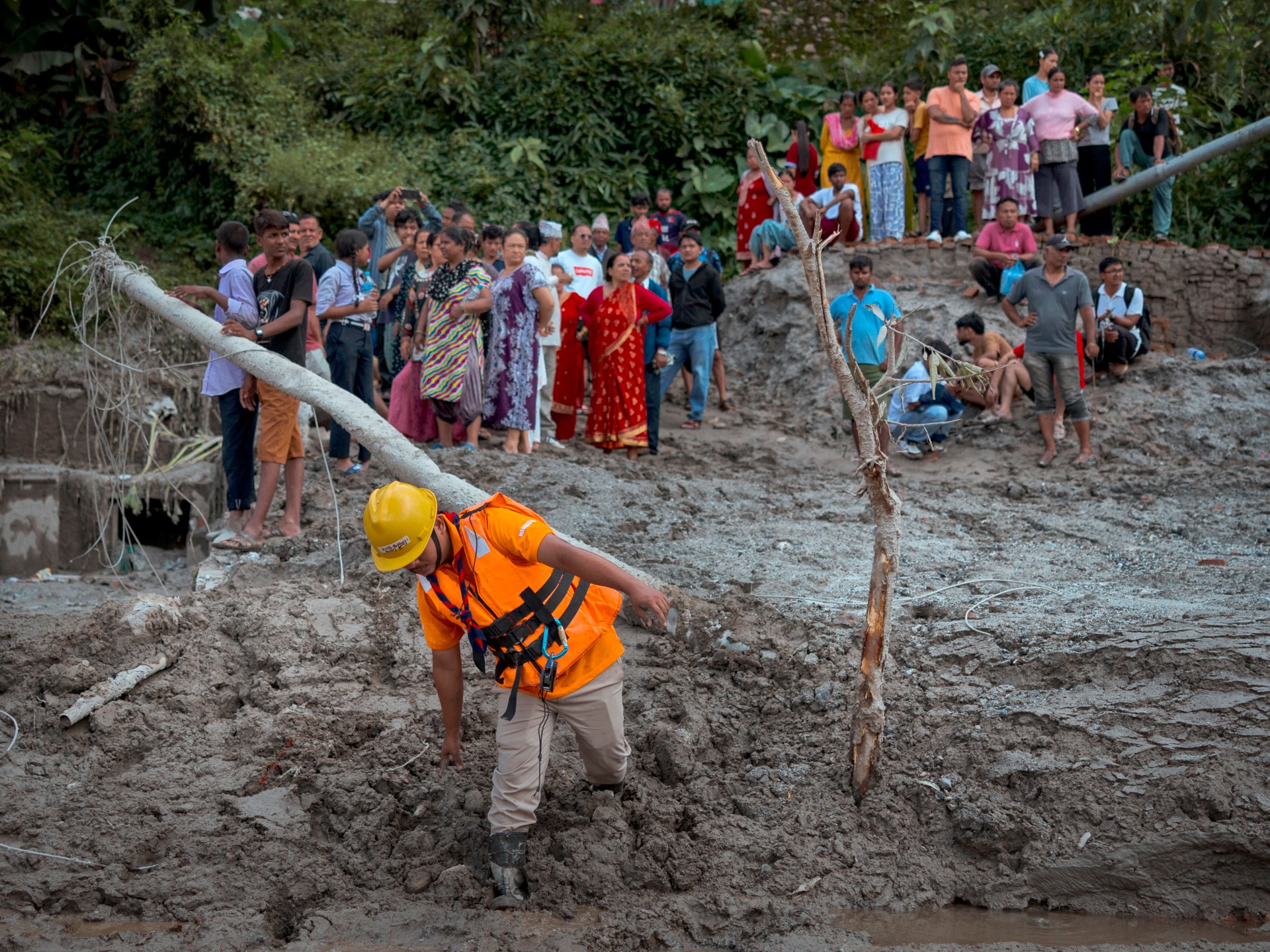
Kathmandu— Catastrophic flooding and landslides struck Nepal and Tibet on Wednesday following a glacier collapse in the Himalaya mountains, burying villages and towns along the Trishuli and Bhotekoshi river systems. The disaster has claimed at least 781 lives with nearly 2,500 people missing in Nepal alone, including hundreds of foreign nationals working on hydropower projects and Nepali citizens traveling with them. Rescue efforts are hampered by challenging terrain, damaged infrastructure, and ongoing risks from a newly formed barrier lake, while international aid begins to arrive.
Search Efforts Hampered by Terrain and New Lake Threat
Rescue operations have been complicated by adverse weather conditions and the destruction of roads and bridges. On Friday, rising water levels in a lake created by debris prompted a temporary halt to searches due to fears of another flood; operations resumed after authorities deemed the threat manageable. Chinese authorities are closely monitoring this “barrier lake” using satellites, radar, and drones, confident they can provide 30 minutes’ notice if conditions deteriorate. Nepal has mobilized 19,000 security personnel and 16 helicopters in search and rescue efforts, with Nepali soldiers seen wading through mud to reach workers at hydropower projects.
Hydropower Workers Among the Missing
Approximately 933 people remain unaccounted for, many of whom were working at 11 hydropower project sites in Nepal’s Rasuwa and Nuwakot districts. The missing include citizens from Nepal, India, South Korea, and China. Baburaj Maharjan, executive director of the Chilime Hydropower Company, reported that rescue efforts are impossible at one site due to tunnels filled with mud, requiring a specialized rock-climbing team. An 11-member Indian medical and tunnel-rescue team arrived Saturday to assess conditions in the Chilime and Langtang regions.
Identifying Victims Proves Difficult
Nepal’s National Disaster Risk Reduction and Management Authority has confirmed 781 deaths, with bodies washing up downstream. Authorities are struggling to store and identify the increasing number of corpses due to a lack of refrigeration capacity, sending unidentified remains to 21 hospitals for preservation and DNA testing. In Tibet, Chinese authorities reported 16 deaths in Gyirong County as of Saturday evening. The full scale of devastation on the Chinese side is difficult to assess, as foreign journalists are restricted from entering the area, relying solely on government reports.
International Aid Arrives
International aid has begun arriving from the United Nations, Red Cross Federation, Australia, India, South Korea and the United States. The US and Canada have each pledged $3.6m in humanitarian assistance, while the UK offered $6.8m. The UN released $2.5m in emergency funding, and the IFRC allocated over $1m with an appeal for a further $31m. Nepal’s finance minister estimates total losses from the disaster to exceed $4bn.
Climate Change Concerns Raised
Nepali journalist Rojita Adhikari criticized world leaders for not prioritizing climate change, stating that Nepal is paying the price for inaction. “This catastrophe is not Nepal’s fault,” she said, describing scenes of devastation and families swept away by the floods. She noted that while Nepal has experienced disasters before, Wednesday's event was unprecedented.
Rescue operations are ongoing as authorities continue to search for missing individuals and assess the full extent of the damage. The focus will soon shift towards providing humanitarian assistance and rebuilding infrastructure in the affected areas.
(With inputs from Al Jazeera)
Originally published on abcnews.com.np.





प्रतिक्रिया दिनुहोस्