

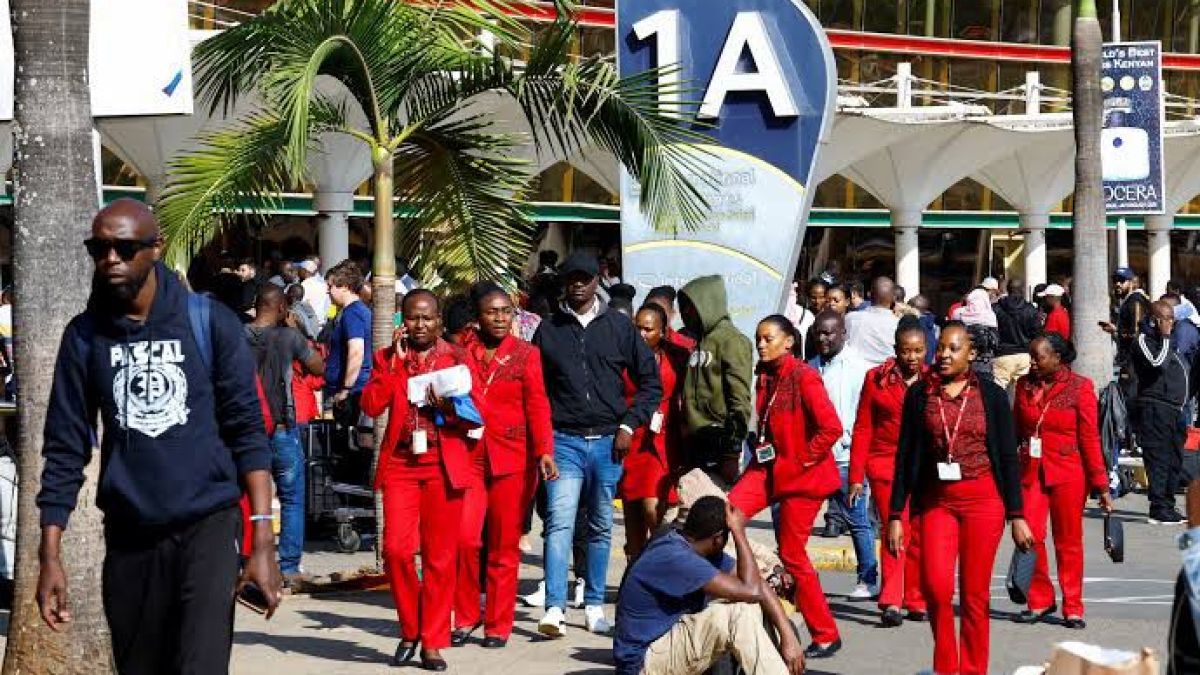
Kathmandu— After a two-day strike that disrupted operations at several Kenyan airports, aviation workers returned to their stations on September 1 following negotiations between government officials, union leaders, and aviation executives. The dispute, which involves issues such as collective bargaining agreements, salary negotiations, agency fees, and union recognition, is far from settled despite the return-to-work agreement.
Background of the Dispute
The latest strike followed a series of failed agreements that did not resolve underlying disputes. In February, the Kenya Aviation Workers Union (KAWU) reached a return-to-work agreement with the government and aviation agencies. By July, another agreement was reached to suspend a planned strike and allow negotiations to continue. However, key commitments were not sufficiently addressed, leading KAWU to resume industrial action in August.
Negotiations and Agreements
The return-to-work agreement addresses several issues at the center of the dispute. One immediate commitment concerns agency fees owed to KAWU, with outstanding fees held by the Kenya Airports Authority (KAA) to be remitted immediately. Another major issue is the collective bargaining agreement between KAWU and the Kenya Civil Aviation Authority (KCAA). The Salaries and Remuneration Commission issued new parameters on September 1 to guide negotiations.
Impact of the Strike
The strike disrupted operations at Jomo Kenyatta International Airport in Nairobi, Moi International Airport, Kisumu International Airport, and Eldoret International Airport. Passengers faced missed flights, cancelled journeys, and long waits for information. Airlines had to rebook travelers and rebuild schedules, while cargo movements were also affected.
Future of the Dispute
The agreement includes protection for workers who participated in the strike, ensuring they are not victimized or subjected to disciplinary action solely for their involvement. However, KAWU’s dispute with Jambojet over trade union recognition remains unresolved and is now before the courts. The test will be whether the commitments made during negotiations produce progress on collective bargaining agreements and other outstanding grievances.
For passengers, airlines, and businesses, the priority is to avoid another disruption. While flights are operating again, the real test lies in whether the agreement can deliver where previous commitments did not.
(With inputs from Al Jazeera)
Originally published on abcnews.com.np.






प्रतिक्रिया दिनुहोस्