

Kathmandu— Nepal’s road network has seen remarkable expansion since the country transitioned to democracy in 1990. From a mere 376 kilometers of roads in 1951 under the Rana regime, Nepal now boasts approximately 90,000 kilometers of roads by 2026. However, this growth has been marred by corruption and environmental concerns.
Historical Milestones
The Amlekhgunj-Bhimphedi Road, completed in 1917, marks Nepal's first motorable road, while the Churiyamai Tunnel stands as its inaugural road tunnel. In a more recent development, the Nagdhunga Tunnel on Tribhuvan Highway was inaugurated on July 27, 2026, marking another significant milestone in Nepal’s infrastructure history. However, these achievements often overshadow earlier contributions by figures like Dilli Jung Thapa, who engineered critical road and tunnel projects that were instrumental but largely forgotten.
Political and Economic Implications
Roads are not merely transportation arteries; they serve as pathways for political integration, social transformation, and economic development. King Mahendra’s initiative in 1962 to lay the foundation stone at Gaidakot aimed to enhance national integrity and reduce Nepal's reliance on India. This project underscored the importance of infrastructure in fostering economic independence and trade.
However, the road construction has also been marred by political instability and corruption. The period following the abolition of the Panchayat system saw a significant increase in road network expansion, but it was often accompanied by 'dozer terror,' where elected officials used road projects to enrich themselves rather than serve their constituents.
Challenges Ahead
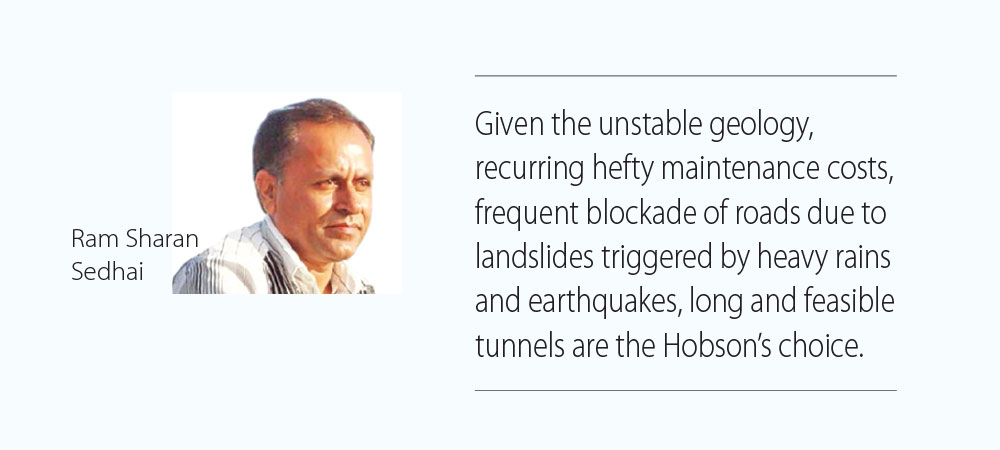
Despite the impressive growth in Nepal’s road infrastructure, numerous challenges persist. The country faces significant engineering hurdles such as recurrent floods, landslides, steep gradients, and seismic risks. These factors necessitate a shift towards tunnel construction where feasible to mitigate maintenance costs and ensure continuous connectivity.
Moreover, while roads are crucial for economic development and disaster response, they also contribute to environmental degradation, including air pollution in cities and soil erosion in rural areas.
(With inputs from Rising Nepal)
Originally published on abcnews.com.np.





प्रतिक्रिया दिनुहोस्